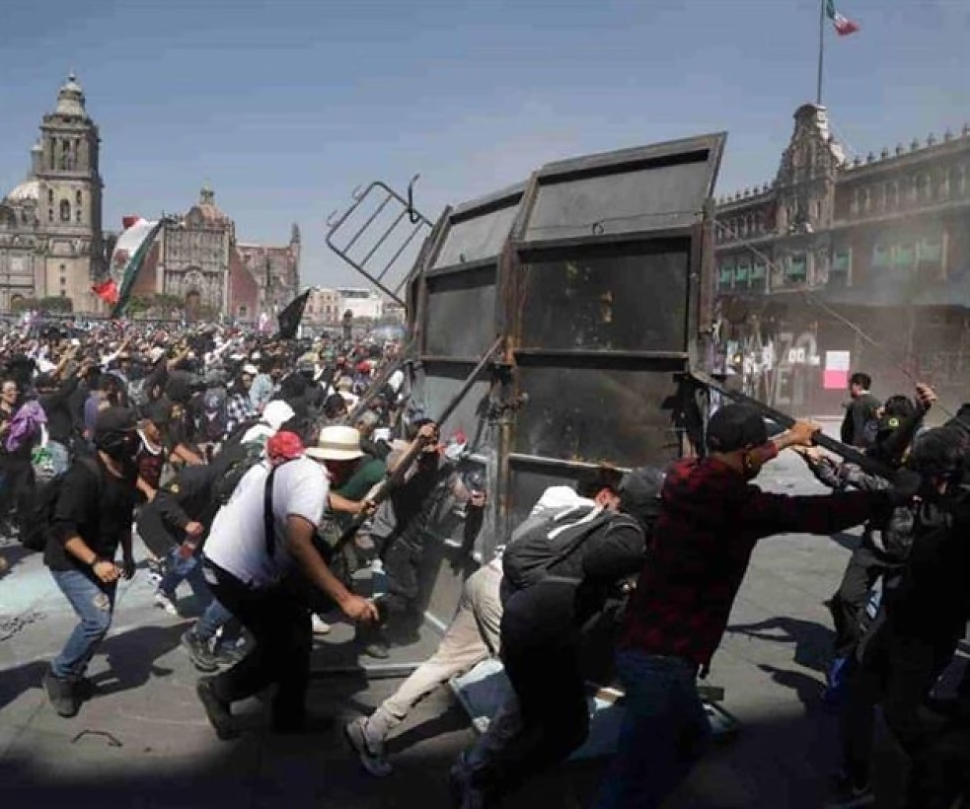
The Supreme Court of Mexico rejects violent acts at its headquarters
Following the demonstration called by Generation Z in Mexico City, the Supreme Court of Justice of the Nation (SCJN) issued an official statement to strongly condemn the episodes of violence recorded in the vicinity of its main headquarters. The highest court in the country detailed that direct attacks against security elements, considerable damage to the infrastructure of the property and attempts to force entry to the judicial premises were documented.
The institution expressed its deep concern about these events, arguing that this type of behavior distorts the legitimate purpose of any social protest and erodes the bases of democratic dialogue, which must be developed in an environment of mutual respect and adherence to legality. The riots generated a preliminary toll of one hundred police officers and twenty civilians injured, in addition to various damage to the Court facilities, located in the emblematic Historic Center of the capital.
A call for dialogue in the new judicial context
In its position, the Judicial Branch of the Federation emphasized that, with the installation of the new integration of the Court, the ministers have maintained a policy of open doors to dialogue and listening to citizen demands. From this perspective, the organization considered absolutely unnecessary to resort to violence to express any claim or position, since the institutional channels and spaces for dialogue exist for this.
This incident highlights the tension between the expression of social discontent and the preservation of public order and the integrity of institutions. The Court reaffirmed its commitment to the protection of the rights of assembly and free expression, but made it clear that these rights cannot be exercised through acts of vandalism that put people at risk and threaten public property. The situation raises a complex debate about the limits of protest and accountability mechanisms in a rule of law.
Analyzing these events requires understanding the delicate balance between national security and civil liberties. The institutional response not only seeks to sanction the events that occurred, but also to set a precedent for the future management of large-scale social mobilizations. The effective administration of justice and the credibility of judicial institutions depend on their ability to guarantee both security and respect for fundamental rights.
Does this institutional position seem relevant to you? Share this analysis on your social networks and explore more content on the evolution of social dialogue and justice in our country.