The Arbitration Commission recognizes errors before America

The azulcrema board reveals an official recognition of failures in the first leg, while the team gets ready for the comeback at home.

Analysis of a Controversial Party and its Institutional Consequences

Club América’s 1-0 defeat against Rayados de Monterrey at the BBVA stadium, colloquially known as the Steel Giant, during the first leg of the Quarterfinals, constituted a significant tactical and emotional setback for the capital team. However, the analysis of this match transcends the scoreboard, delving into two critical dimensions: the referee controversy and the institutional response of the club. Far from representing an isolated episode, this event activated the communication protocols between the institution and the governing bodies of arbitration, revealing an internal procedure little known to the fans.

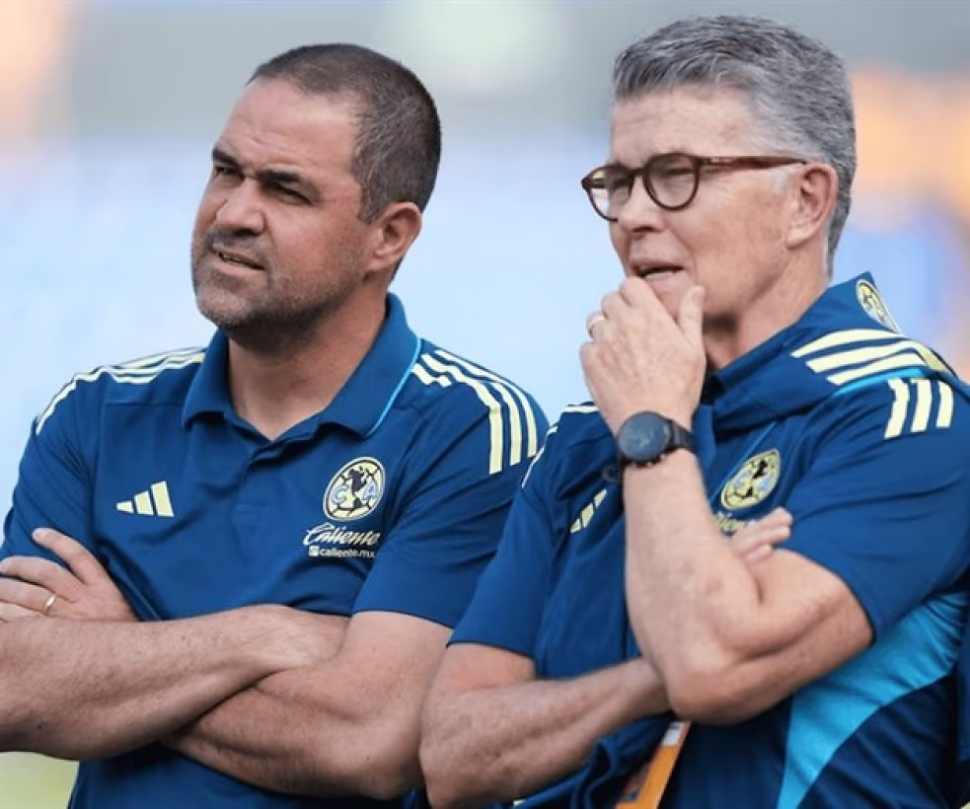
The confidence to reverse the score in the second leg, held at the Ciudad de los Deportes stadium, was publicly supported by Héctor González Iñárritu, operational president of América. In statements made during a commercial event, the manager emphasized the preparation and quality of the azulcrema squad, underlining the faith placed in the coaching staff and the players to achieve the qualifying feat. However, the most revealing aspect of his interventions did not lie in the usual rhetoric prior to a crucial match, but in the presentation of formal administrative management.

RelatedPumas questions the refereeing after the defeat against América

The Official Recognition of Arbitration Errors

The performance of the central referee Jesús López and the Video Assistant Referee (VAR) team, led by Adonai Escobedo, generated an intense debate at the end of the match. The non-sanction of two specific plays, considered by América as fouls worthy of a red card against Álvaro Fidalgo and Brian Rodríguez, was the core of the controversy. The subsequent investigation shows that the American institution was not limited to the media complaint, but rather established direct communication channels with the Referee Commission of the Liga MX.

The result of this management, according to the statements of González Iñárritu, was an explicit recognition by the referee body of the existence of errors in the criteria applied during the match. This act of institutional transparency, although unprecedented in its public disclosure, does not modify the sporting result, but sets a precedent in accountability. The manager was categorical in separating this recognition from defeat, admitting that the setback “did hurt” and that the primary responsibility falls on the team’s football response on the field of play.

Financial Solidity as the Basis of Sports Projection

Parallel to the analysis of the sporting event, the operational president took the opportunity to detail the state of the club’s economic health. He explained that the finances of America remain healthy, with positive balances consolidated for several consecutive annual years. This panorama of prosperity is not the product of chance, but the result of a structured and measured financial strategy that involves all areas of the organization.

The business model, according to the explanation provided, is based on sustained growth in income, accompanied by a controlled expense policy and strategic investment to boost growth. This economic discipline has allowed the club to maintain a position of leadership and solvency in the often volatile environment of Mexican professional football, constituting a fundamental pillar to face sporting challenges with greater guarantees of stability and long-term planning.

Was this analysis of the internal mechanisms of football revealing to you? Share this article on your social networks and help us encourage informed debate. For more research and in-depth breakdowns of sports news, explore more related content on our website.
Naomi Osaka: goodbye to Wimbledon with pain and self-criticism

Osaka falls in the Wimbledon quarterfinals and reflects on injury and age.

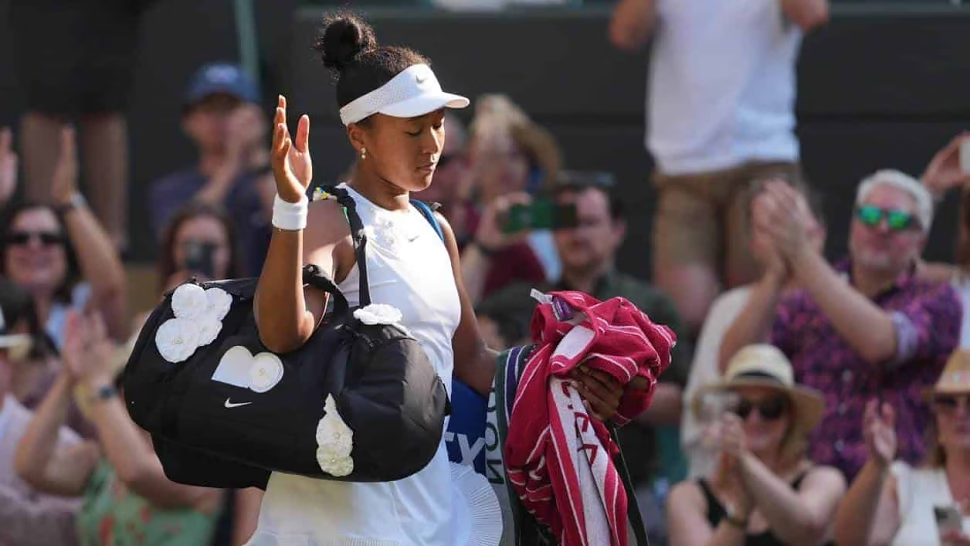
Osaka says goodbye to Wimbledon amid annoyances and reflections

Naomi Osaka, a four-time Grand Slam champion, was eliminated in the quarterfinals of the grass-court tournament. She lost to Czech Karolina Muchova 7-6 (4), 6-4.

The 28-year-old Japanese had arrived in great shape, after eliminating world number one, Aryna Sabalenka, in the previous round. But on Tuesday he didn’t find his rhythm. “It’s hard because I played so well my last game, and then today I feel like I just didn’t play well and I had no energy,” he said.

The physical wear and tear was evident. Osaka revealed that she has plantar fasciitis, a discomfort that appeared last preseason and worsened on the grass. “I started to feel it because I am more elastic with the balls of my feet. On a hard court it doesn’t bother me,” she explained.

She humorously joked about her age: “I’m just getting old.” But he also reflected on the load of matches. He had played two weeks in a row without rest, something he would not repeat.

Despite the defeat, this was his best result at Wimbledon. Osaka, who took breaks for mental health and motherhood, still believes it is possible to win another major: “In my head there is still a chance to win a Grand Slam.”

The next big event will be the United States Open, where he has already won two titles.

Continue reading

Russia closer to returning to the Olympic Games

The IOC relaxes restrictions and allows the return of Russian athletes with national identity.

The IOC takes a step towards Russian reintegration

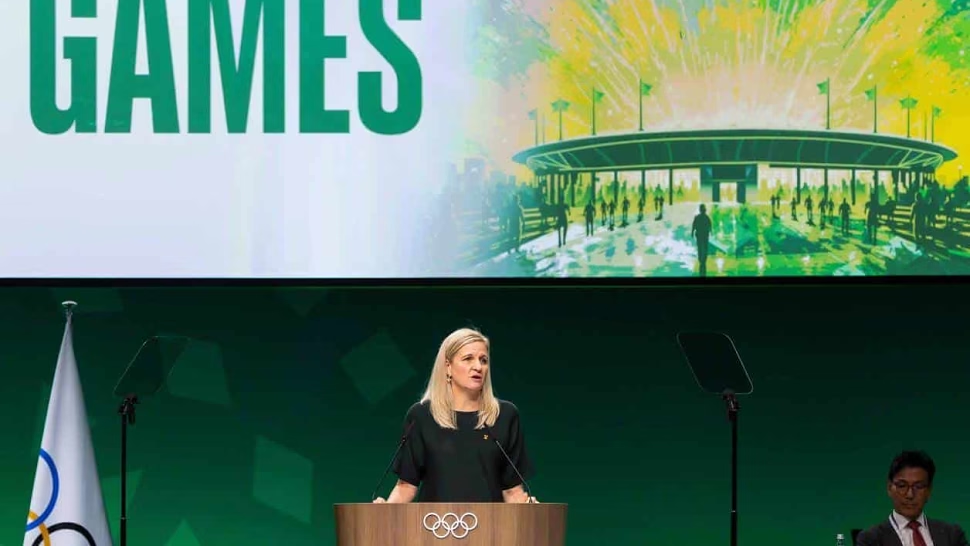
The International Olympic Committee (IOC) on Tuesday relaxed its requirements for Russian athletes and teams to compete with the national flag and anthem at Los Angeles 2028. The decision includes provisionally lifting the suspension of the Russian Olympic Committee, in force since October 2023.

The organization justified the change by the start of the qualifying events and the need to offer equal access to all competitors. “We do not want to hold athletes responsible for the actions of their governments,” said IOC President Kirsty Coventry.

Ukraine’s stance and persistent barriers

Ukrainian Sports Minister Matvii Bidnyi questioned the measure: “Nothing changed in the war. The situation got worse.” He noted that on Monday Ukraine suffered missile and drone attacks that left at least 22 dead. “We don’t understand it. On a day of mourning, when peaceful citizens were deprived of their lives, the IOC decides this,” he said.

However, the IOC guidance is not binding for every sport. World Athletics maintains the ban on Russians and Belarusians in its events. FIFA and UEFA continue to exclude Russia from competitions such as the World Cup.

Among top-level sports, World Aquatics already lifted restrictions in April. The IOC assures that the Russian Olympic Committee confirmed that it does not carry out activities in occupied Ukrainian territories, although kyiv described that promise as “empty words.”

Control and next steps

Russian athletes have yet to prove they have no military ties nor have they supported the war. The IOC will monitor your social networks. The final decision on the flag and anthem will come “at the appropriate time”, probably before the Youth Olympic Games in Dakar in October 2026.

The return could mean Russia sends more than 300 athletes to Los Angeles, compared to just 32 who competed as neutrals at Paris 2024.

Continue reading

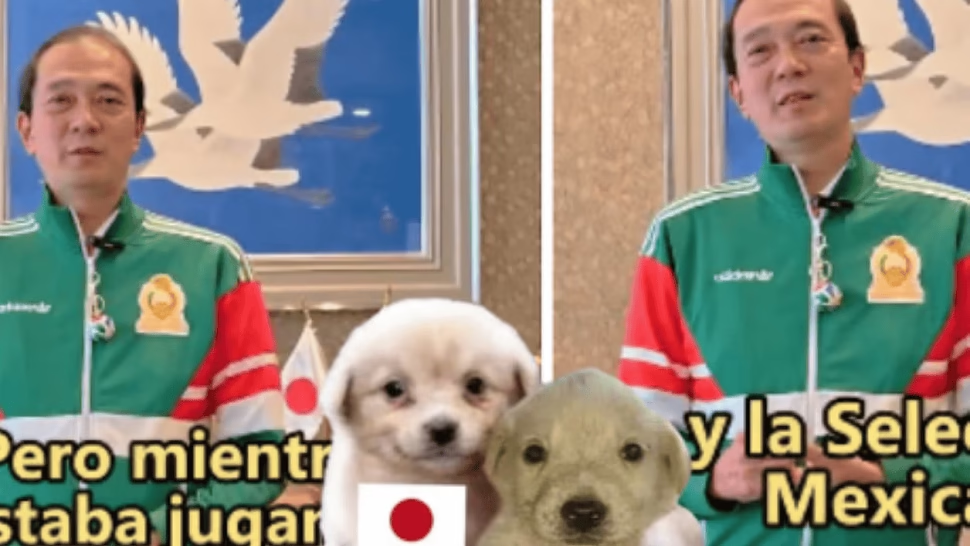
The gesture of the Japanese ambassador that moves Mexico

Diplomat Kozo Honsei expressed his solidarity with the Mexican fans after the defeat against England.

The Mexican National Team was left out of the 2026 World Cup after losing 3-2 to England in the round of 16. The defeat left a feeling of sadness among fans, but also opened space for gestures of international solidarity.

Solidarity from Japan

Japan’s ambassador to Mexico, Kozo Honsei, posted a video on his X account to express his support. In the message, lasting just over a minute, the diplomat recognized the effort of the Mexican team.

“While I was playing I received many messages, not only from Mexico but from Japan, saying that the Mexican National Team played well and with determination until the end,” said Honsei.

He added that both teams were eliminated, but stressed that “both towns can advance even more for the future.”

The ambassador also thanked the Mexicans for receiving the visitors with “a lot of kindness and stability.” He noted that many foreigners, including Japanese, ended up becoming fans of the local team because of the treatment they received.

He concluded with a forceful recognition: Mexicans “have been the best hosts of this World Cup and in history.”

The diplomat’s gesture was well received on social networks, where users highlighted the empathy and respect shown towards the Mexican fans at a time of sporting disappointment.

Continue reading