The Twilight of an Era and the Dawn of a New Administration
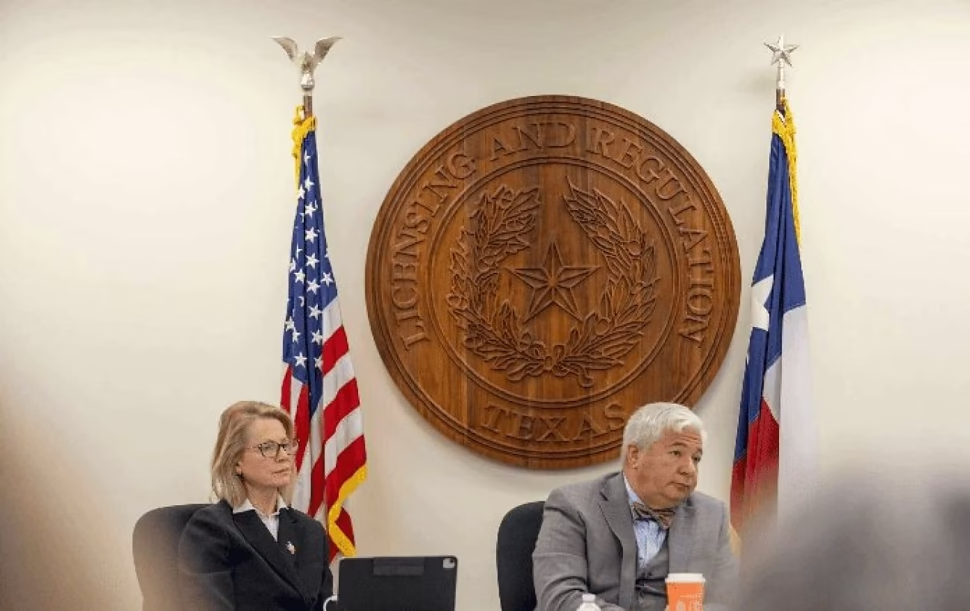
In a dramatic twist that shook the very foundations of the game in Texas, the first day of September was no ordinary day. With the weight of thirty-two years of history behind it, the Texas Lottery Commission was officially abolished, dissolved in an instant by the relentless hand of the legislative branch. That agency, designed to operate one of the few legal forms of gambling in the state, the monumental state-run lottery operation, ceased to exist. However, in a mysterious act of continuity, most of the Commission’s employees showed up to work in the same office, doing the same jobs, supporting the same games. The only difference, a detail that changed everything, was that they would now report their actions to the Texas Department of Licensing and Regulation, the omnipresent TDLR.
A Transition Full of Intrigue and Controversy
Under the mandate of a new state law, TDLR rose to take the reins of an $8 billion operation, a gargantuan legacy originally proposed by then-Governor Ann Richards as a beacon of hope for generating revenue for public schools. “One thing that plays into this that makes the transition a little easier from a scale movement standpoint is that no one is really moving right now,” said Glenn Neal, the director of this lottery transition, in words that hid more than they revealed. “Right now, it’s incorporating people into a new agency, but physically, they will remain more or less where they are right now,” he added, sowing the seed of intrigue about what was really moving behind the scenes.
This monumental change in leadership was nothing more than a fragile compromise, an armistice forged in the fire of controversy. The Texas Lottery, recently mired in a scandal of epic proportions, had been on the verge of coming to an absolute end during the state’s regular legislative session. Legislators, with hearts full of suspicion, expressed their deep concern about two million-dollar prizes won in 2023 and 2025, a mystery that provoked deep investigations and resounding resignations. Led by the powerful figure of Lt. Governor Dan Patrick, lawmakers launched an accusation that resonated in the halls of power: They accused the Lottery Commission of ‘turning a blind eye’ to a shadowy scheme of money laundering and illegal online ticket sales, a betrayal of the public trust.
These concerns, like rivers converging into an ocean of outrage, finally came together in Senate Bill 3070. This document was not a simple legal text; It was the final verdict that announced the end of the Lottery Commission and decreed the transfer of the games to the TDLR. But their mission was even deeper: to establish powerful new protective barriers aimed at preventing illegal gambling forever.
The Enormous Challenge of a New Custody
Courtney Arbour, its executive director, stated that the TDLR is no stranger to the Legislature handing over new agencies or responsibilities. Since 2015, this department has had twenty-five different programs placed under its supervision, an empire that spans everything from midwife licensing to motor fuel metering, overseeing an incredible universe of 919 thousand different licenses. However, the lottery is a completely different beast, the biggest transition the TDLR has been tasked with managing. With almost three hundred employees, this acquisition represents a fifty percent increase to its current staff. The addition of the lottery will multiply the department’s budget by six, an astronomical figure, while assuming oversight of more than 20,000 retailers and the state’s charitable bingo games.
For the average citizen looking to buy a ticket, the administration of the TDLR alone will not bring immediately visible changes. But SB 3070 is a storm that does bring with it a series of new regulations on state gaming. These include draconian restrictions on the number of tickets a person can buy and the criminalization of couriers who sold printed tickets online, two loopholes that the Lottery Commission had been furiously criticized for failing to police.
The ghost that drove these restrictions was an event that seemed straight out of a suspense novel: in 2023, a single group bought 99% of the 26 million possible combinations of the Lotto Texas game to seize a prize of 95 million dollars, all with the assistance of stores linked to courier companies. The legislators accused the Commission of being complicit in possible money laundering through this “massive purchase”. Furthermore, they vehemently claimed that these messengers’ online ticket sales were always illegal, launching a successful campaign to ban these services that operated for five years, dominating the state digital market with an advantage that their opponents described as unfair.
Navigating an Uncertain Future and a Plummet
As the fiscal year came to a close in August, the Texas Lottery was on track to finish with approximately $500 million less in revenue, marking the second consecutive year of decline for the game. This plummet has cruelly reduced the income allocated to the State Public Education Fund, the primary reason why legislators chose not to give the final touch to the lottery.
Dawn Nettles, a veteran watchdog and editor of lottoreport.com, a fierce critic of the Commission for decades, is cautiously optimistic but warns of the immediate challenge. “They have to make changes to the rules, but they can’t come in on day one and address everything that’s wrong with the lottery,” he declared with the voice of experience. “Your first and foremost goal should be to evaluate how many giveaways are being offered and how it is really harming sales.” She attributes the decline in sales to the decline in the frequency of jackpots. Courtney Arbour, for her part, is already exploring new ticket options and ways to play to rekindle the flame of interest, stating: “What I’ve come to learn about lottery players is that they like change… They like new drawing options. And so the staff here meets regularly to talk about strategies and how to continue to provide options for players that encourage play.
”
The road to redemption is full of obstacles. Although recent sales show a glimmer of hope and immediate controversies appear to have faded from public view—with investigations by the Department of Public Safety and Attorney General Ken Paxton’s office eerily silent—the shadow of 2029 looms over TDLR. SB 3070 directs that the state’s Sunset Advisory Commission will conduct a definitive audit of the lottery operation. Without approved legislation to support it, the lottery will be completely abolished on September 1, 2029. The fate of billions for schools and the local economy hangs in the balance, at the climax of a legislative soap opera where every move is crucial and the end is far from being written.
Do you think this reform will save the Texas lottery? Share this crucial story on your social networks and explore more about the future of public finances and state regulation.