Jalisco reports 33 clandestine graves with 107 victims in 2025

A detailed analysis reveals the alarming increase in finds in the entity, with figures that exceed previous years.

Alarming findings in Jalisco: an overview in figures

In the first five months of 2025, Jalisco has recorded the discovery of 33 clandestine graves, with a total of 107 victims identified, according to official data from the Special Deputy Prosecutor’s Office for Missing Persons. This figure reflects a monthly average of 21.4 recovered bodies, which shows a worrying increase compared to previous years.

Historical comparison and context

Statistics reveal that, in all of 2024, 21 illegal burial sites were intervened with 121 victims, while in 2023 22 graves with 299 human remains were located. The year 2022 marked a peak with 41 graves and 301 bodies, which suggests fluctuations in criminal dynamics related to forced disappearances.

RelatedCollectives discover eleven clandestine graves with human remains in Sinaloa

Currently, the average number of bodies per grave is 3.2, although this number could increase, since investigations in 11 of the sites discovered this year have not yet been concluded. Among the most notable cases is Rancho Izaguirre in Teuchitlán, initially detected in September 2024 but recently incorporated into official statistics. This place, allegedly used as a training center by criminal groups, has been the focus of attention after the dissemination of findings of skeletal remains by the Guerreros Buscadores collective.

Geographic distribution and emblematic cases

The municipality of Tlajomulco leads the list with 11 graves located, followed by Zapopan (5), Tlaquepaque (4) and Tonalá (3). Guadalajara, despite being the state capital, registers only 2 sites. In the interior of the state, the discovery of two graves in Lagos de Moreno stands out, as well as cases in Ameca and Ixtlahuacán de los Membrillos.

The site with the highest number of victims in 2025 is the one located on the Camino a las Agujas (Zapopan), where 35 bodies were recovered. It is followed by the grave of San Bernardo in Lagos de Moreno, with 15 remains exhumed and declared as “work completed” by the authorities.

Forensic implications and challenges

The proliferation of clandestine graves poses significant challenges in terms of forensic identification and judicial prosecution. The lack of specialized resources and the saturation of medical-legal services complicate the delivery of results to families of missing persons. Furthermore, collusion between criminal groups and local actors in rural areas makes access to land where there could be more burial sites difficult.

Security experts emphasize that these findings are only a fraction of the real problem, given that many cases are not reported or investigated. Historical impunity in crimes of disappearance—with clarification rates of less than 10%—aggravates the human rights crisis in the region.

What’s next? The figures demand an urgent review of search strategies and public policies. Share this analysis to make the magnitude of the problem visible and explore our special on disappearances in Mexico to understand the national context.

Spread this information on your social networks and help us keep the focus on one of the most serious humanitarian crises in the country.

Profeco warns about fraud in offers for the 2026 World Cup

The agency detected fake sites with unrealistic prices for tickets and tourist packages.

The Federal Consumer Prosecutor’s Office (Profeco) warned about misleading promotions related to the 2026 FIFA World Cup. In a statement, it noted that offers with very low prices for tickets, exclusive experiences, tourist packages and accommodation are circulating on social networks. These come from accounts without verifiable means of contact or clear change or cancellation policies.

Protection measures

Profeco explained that it has identified sites that appear to be trustworthy, but do not comply with electronic commerce requirements to guarantee secure transactions. Therefore, it recommended purchasing products and services only from official or authorized suppliers, and avoiding secondary markets.

In addition, the agency constantly monitors digital platforms and responds to complaints to punish those who spread misleading advertising. It urged consumers to report any suspicious practices, which allows unsubstantiated ads to be modified or removed. Citizen collaboration is key to protecting their rights in large-scale events such as the World Cup.

Continue reading

CIEP: 2026 World Cup mobility should not be isolated

The CIEP warns that mobility projects for the 2026 World Cup must be integrated into a strategic mass transportation plan.

Investment in public transport: beyond the World Cup

The Center for Economic and Budgetary Research (CIEP) presented the study “Mobility at the subnational level: Investment in public transportation within the framework of the 2026 World Cup.” Its conclusion is clear: mobility projects for the 2026 World Cup should not be isolated events. They must be part of a strategic plan that contemplates the construction of more mass transportation lines and connectivity between the host cities.

The CIEP emphasizes that investment in public transport must guarantee the right to mobility beyond the World Cup celebration. The benefits cannot be limited to visitors. They have to be the beginning of a more modern, efficient and inclusive transportation system for the entire population.

The study also diagnoses the current state of public transportation in Mexico. The urban development model is dispersed and is disconnected from territorial planning policies. As a result, the existing service is old, lacks adequate maintenance, and insecurity within units and stations reduces user confidence.

Headquarters cities and use of transportation

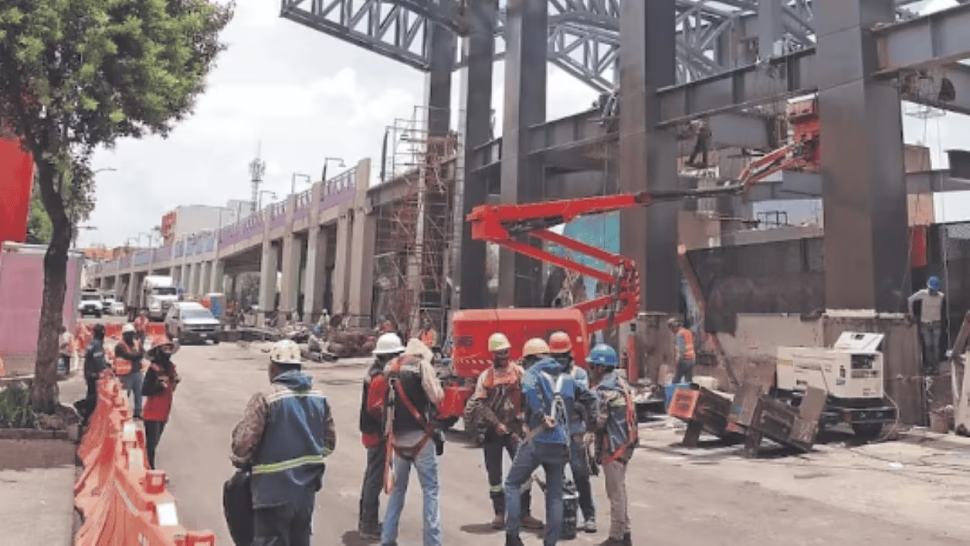
In 2026, the World Cup will be held in three cities: Mexico City, Guadalajara and Monterrey. In these cities, different mobility projects have been implemented to facilitate the movement of visitors. But the CIEP insists: these works must be the foundation of a long-term public transportation system.

The key fact: in the country’s main metropolitan areas, 40% of the population uses public transportation to go to work. In Mexico City, the figure rises to 49.2%; in Guadalajara, 38.6%; and in Monterrey, 33.4%. Not counting travel on foot or by bicycle, public transportation is the most used motorized means in Mexico.

Continue reading

Michoacán obtains Geographical Indication for its avocado

Recognition that benefits 48 thousand producers and opens new international markets.

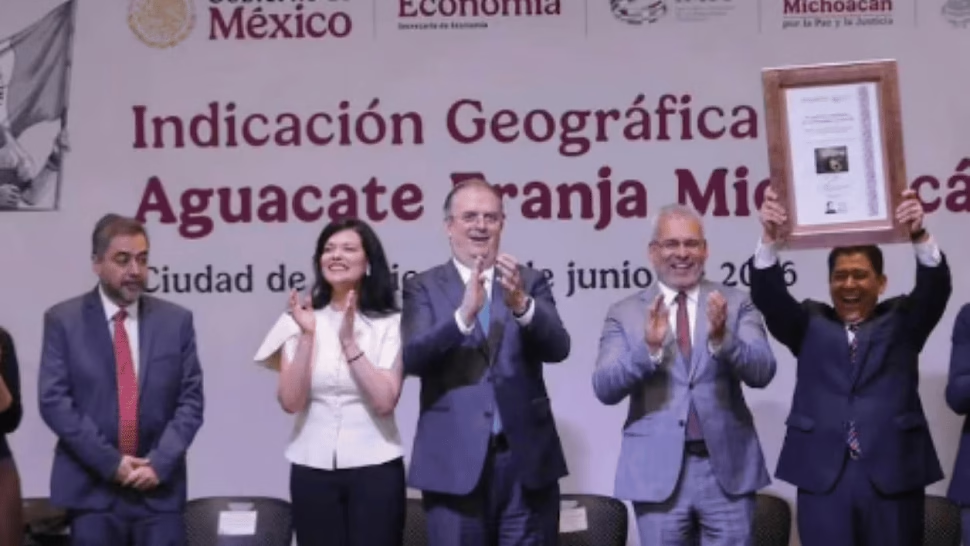
The Mexican Institute of Industrial Property (IMPI) granted the declaration of Geographical Indication (GI) to the avocado produced in the Michoacan strip. Governor Alfredo Ramírez Bedolla described the event as a step that strengthens consumer confidence and competition in the market.

A quality seal for avocado

In a press conference with the federal Secretary of Economy, Marcelo Ebrard, the state president explained that this designation recognizes the work of 48 thousand producers, 94 packing plants and an agribusiness that generates more than 150 thousand direct and indirect jobs. The GI allows the Michoacan product to be differentiated in national and international markets.

Ebrard confirmed that, on instructions from President Claudia Sheinbaum, projects are being developed to enhance the growth of Michoacán. He assured that support for the state and the productive sector will continue.

The general director of IMPI, Vidal Llerenas Morales, highlighted the joint effort of the state government and producers to obtain this certification, which adds value to avocado abroad.

The Secretary of Economic Development of Michoacán, Claudio Méndez, also participated in the event; and the presidents of APEAM, Raúl Martínez Pulido; from UDECAM, Miguel Melgoza Radillo; and of the Board of Directors of Avocado Producers and Packers A.C., Rafael Paz Vega.

Continue reading