Military escalation in Gaza after breaking of the ceasefire
The Israel Ministry of Defense confirmed this Monday the expansion of its military operations in the Gaza Strip, marking a new chapter in the conflict that began after the attacks of October 7, 2023. According to reports from local authorities, controlled by Hamas, the accumulated death toll exceeds 54,500, although these figures have not been independently verified.
Coordinated operations: ground and air
In an official statement, the Israeli Defense Forces (IDF) detailed that in the last 24 hours the following were executed:
- Land advances on multiple fronts to neutralize enemy combatants.
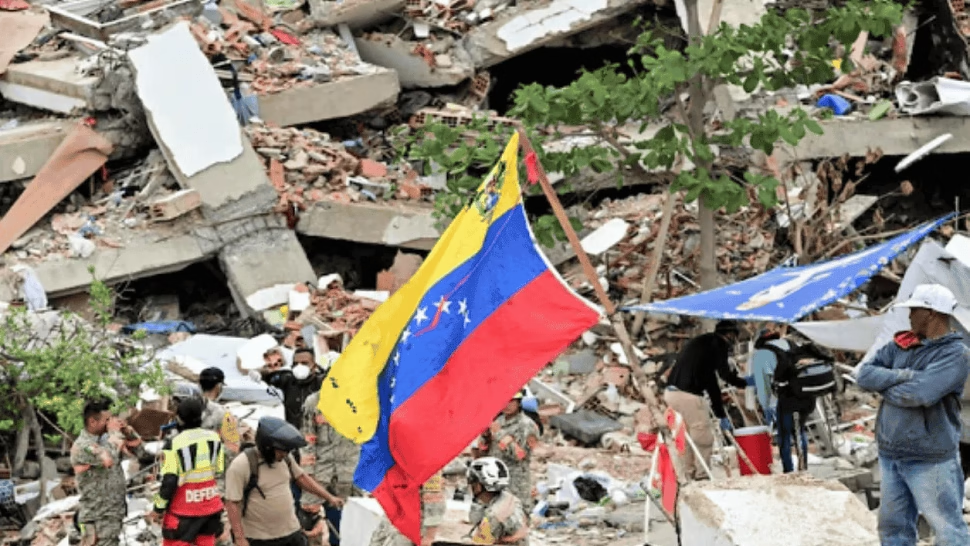
- Systematic destruction of war infrastructure, including networks of tunnels and weapons depots.
- Air raids against strategic targets such as command centers and rocket launch sites.
The military spokesperson emphasized that these actions respond to “real-time intelligence” on the movements of armed groups, although he omitted to specify exact locations for operational security reasons.
Strategic context and key statements
General Eyal Zamir, Israeli Chief of Staff, called the campaign “a proportional and necessary response” after the failure of peace negotiations in March. Analysts point out that this phase seeks:
- Degrade Hamas’ logistical capabilities.
- Minimize short-term threats against Israeli civilians.
- Consolidate positions before possible international dialogues.
It should be noted that, according to reports from the United Nations, 85% of the Gazan population faces forced displacement and critical shortages of medical supplies. Organizations such as the Red Cross have warned of violations of International Humanitarian Law by both sides.
Regional implications and reactions
The international community maintains divided positions. While countries like the United States support Israel’s right to self-defense, Arab nations and the European Union demand an immediate cessation of hostilities. Geopolitical experts anticipate that this escalation could:
- Impact diplomatic relations in the region.
- Accelerate parallel negotiations with actors such as Hezbollah.
- Increase pressure on Egypt to mediate new truces.
What’s next in the conflict? Observers agree that the lack of a sustainable political solution will prolong the violence. The destruction of essential infrastructure in Gaza and sporadic attacks against Israel suggest a war of attrition scenario in the medium term.
Share this analysis on your social networks to keep your community informed about critical developments in the Middle East. Explore more content on global geopolitics in our specialized section.