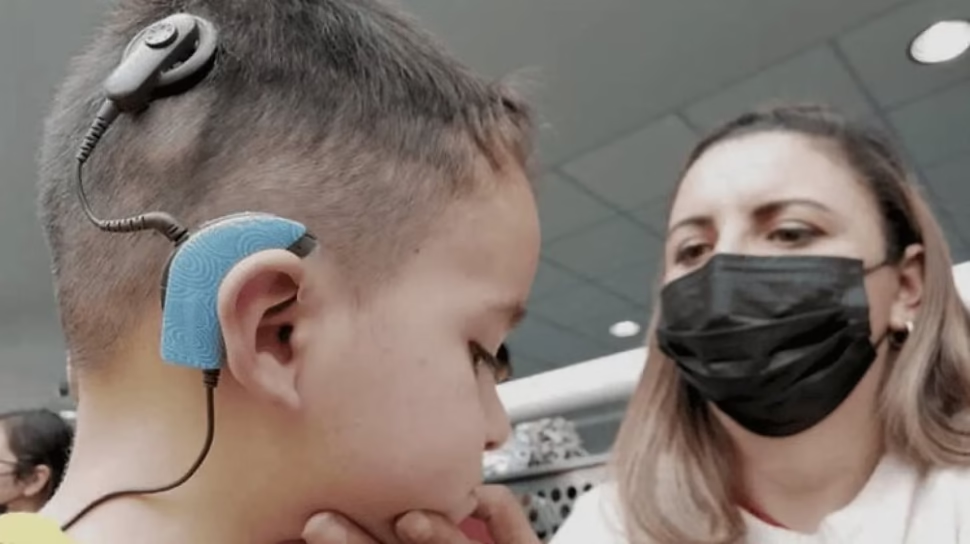
IMSS Cochlear Implant Program: A Milestone in Pediatric Hearing Health
The Mexican Social Security Institute (IMSS) in Jalisco has successfully carried out a specialized surgical day that benefited eight minors from Baja California, Tabasco and Jalisco. These patients, who presented profound hearing loss, received the placement and subsequent activation of cochlear implants at the Pediatric Hospital of the National Medical Center of the West (CMNO), a High Specialty Medical Unit (UMAE). This procedure, performed in August 2025, marks a turning point in their lives, allowing them to access the world of sounds and develop language.
The intervention is not limited to a surgical act; It represents a comprehensive rehabilitation process that directly impacts the quality of life of children and their families. Since its inception in June 2024, this program has managed to restore the ability to hear to 37 minors, whose ages range from six months to 10 years. This figure demonstrates the institutional commitment to children’s hearing health and the application of cutting-edge technology to overcome sensory barriers.
Multidisciplinary Impact and Action Protocol
The clinical protocol applied is rigorous and exhaustive. Two weeks after the surgical intervention to place the device in the inner ear, it is activated. This phase is crucial and includes training for parents and guardians, who learn the operation, maintenance and basic calibration of the cochlear implant. This educational component is critical to the long-term success of hearing therapy.
The patients benefiting from this event were diagnosed with profound bilateral sensorineural hearing loss since their first months of life. A paradigmatic case is that of Leo, three years old, whose hearing deficiency was associated with a congenital malformation of the inner ear. As explained by Dr. Cynthia Rosalía Cárdenas Contreras, an expert in audiology, “the little boy used various conventional hearing aids, but he did not obtain a significant functional gain that would allow him to develop oral language or fully integrate into an environment of normal hearing.”
The solution came through a multidisciplinary approach. As the specialist detailed, each case was evaluated by a consolidated team that included the specialties of Otorhinolaryngology, Radiology, Radiodiagnosis, Infectology, Genetics, Neurology and Paidopsychiatry. This comprehensive evaluation is essential to rule out contraindications, determine the suitability of the candidate for the implant and plan the surgery with maximum precision.
Transcendental Benefits and Medical Perspective
The director of the UMAE, Doctor Carlos Francisco Moreno Valencia, emphasized the transformative value of the program: “The greatest benefit is undoubtedly to provide girls and boys with a better quality of life. In addition, we give them the possibility of joining a sound environment where language allows them to improve their cognitive skills, essential to develop personally, professionally and academically in the future.”
The cochlear implant is a highly complex electronic device that bypasses the damaged structures of the inner ear to directly stimulate the auditory nerve. Its successful implementation, followed by constant audiological rehabilitation therapy, allows children not only to perceive sounds, but also to learn to interpret them and speak, facilitating their full educational and social inclusion.
The testimony of family members corroborates the human impact of this technology. Mariana, mother of one of the patients, shared her experience: “Once the studies by various specialists were completed, the process was very fast. I think it is the best day of my life. I wanted to leave it prepared for what is coming, because life is not prepared for a deaf person.” This statement highlights the relief and hope that access to these types of highly specialized procedures within the public health system represents for families.
The IMSS program in Jalisco thus consolidates itself as a national benchmark in the treatment of childhood profound deafness, demonstrating that the combination of technological innovation, multidisciplinary medical expertise and standardized protocols can drastically change the life prognosis of children with hearing disabilities, opening the doors to a life with full communication.
Do you know someone who could benefit from this information?Share this article on your social networks to help spread the word about available hearing health programs. Explore more content related to medical innovations and public health on our site.