Gustavo Petro proposes the Vatican as the headquarters for peace talks with the ELN

A bold proposal seeks to transform the scenario of peace talks in Colombia with an unexpected ally.

A historic opportunity for peace in Colombia

The time is now! The president of Colombia, Gustavo Petro, has taken a bold and hopeful step by proposing that the Vatican be the setting for new peace talks with the National Liberation Army (ELN). After meeting with Pope Leo XIV, Petro shared his vision of a dialogue infused with the spirit of effective love, a force capable of overcoming even the greatest obstacles.

A call for reconciliation and transformation

In a message full of passion, Petro reflected on the need to change course: “How could the Vatican be the headquarters of these conversations? It may be naive on my part, but I believe in the power of effective love to overcome greed and guide us towards peace.” These words are not only a call to action, but an invitation to believe in the impossible. Because peace is not a dream, it is a decision!

RelatedThe United States will revoke Gustavo Petro’s visa for inciting violence

The president also addressed the ELN directly, reminding them of their original mission: “There was an effective theory of love, a commitment to the most vulnerable. Today, that flag has been lost, but there is still time to rectify it.” Petro offers them a second chance, an open door to return to their revolutionary roots and leave behind the violence that has affected communities like those of Catatumbo.

A difficult path, but not impossible

The decision to suspend negotiations in January was tough, but necessary. The wave of violence in Catatumbo demanded a firm response. However, Petro has not closed the doors to dialogue. On the contrary, it is seeking a neutral and symbolic space where forgiveness and reconciliation can flourish. The Vatican, with its moral and spiritual weight, could be the perfect place to write a new chapter in the history of Colombia.

Imagine a future where conflicts are resolved with words, not weapons. Where differences become opportunities to grow. That future is possible, and each of us can be part of this change. Share this news, spread hope and join the conversation for peace!

Do you think the Vatican can be the ideal setting for these dialogues? Explore more content on peace processes and social transformation on our networks!
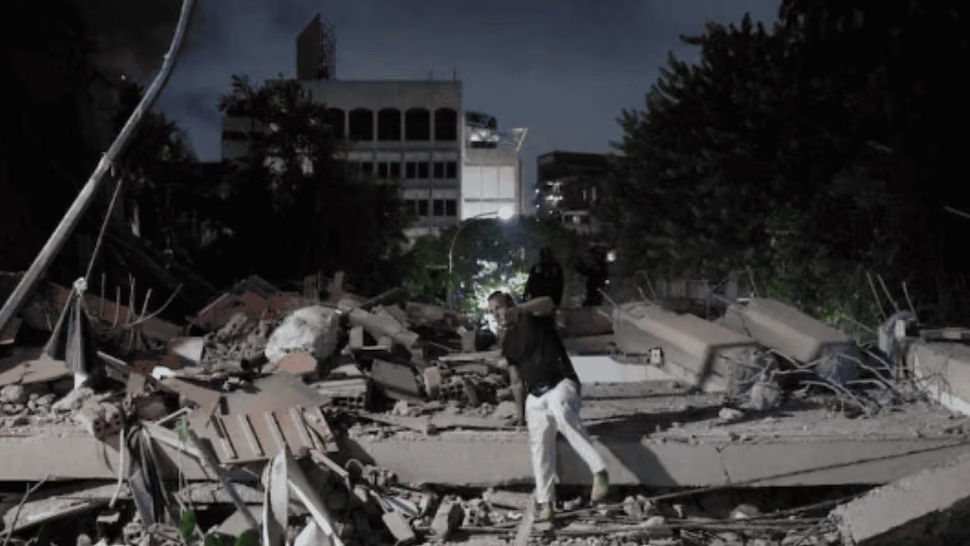
SRE rules out Mexicans affected after earthquakes in Venezuela

SRE reports that there are no Mexicans affected by earthquakes in Venezuela.

The Ministry of Foreign Affairs (SRE) reported that, as of this Wednesday afternoon, there were no reports of Mexican people affected by the earthquakes registered in Venezuela.

No effects reported

Through a statement, the Foreign Ministry expressed its solidarity with the Venezuelan people and regretted the damage that had occurred.

“The Ministry of Foreign Affairs expresses all its solidarity with the Venezuelan people and deeply regrets the damage and harm caused,” said the agency headed by Roberto Velasco.

The Mexican embassy in Venezuela remains attentive to the development of the situation. So far, there are no compatriots who have required assistance.

Support channels

For those who need consular protection, the Mexican representation has enabled the emergency number: +58 412 2524675. The authorities recommend staying calm and following local instructions.

The international organization continues to monitor possible aftershocks. For now, no changes are expected in travel recommendations for Mexicans in the region.

Continue reading

Colombia and the Amazon: a turn towards extractive development

De la Espriella's triumph in Colombia raises questions about the future of the Amazon rainforest in the region.

Abelardo de la Espriella’s victory in Colombia’s presidential elections marks a possible change in environmental policy in the region. The businessman, backed by Donald Trump, defeated Iván Cepeda by just 251,000 votes, according to official results.

What will happen to the Amazon?

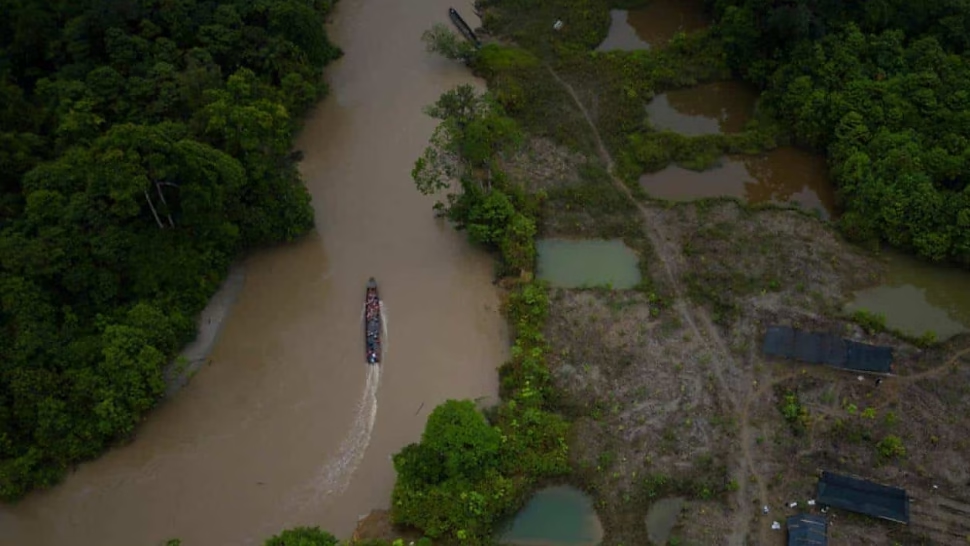
The Amazon rainforest, which absorbs carbon dioxide and slows climate change, faces a new scenario. Around 40% of Colombian territory is in the Amazon basin. During the government of Gustavo Petro, the country positioned itself as a defender of the jungle. De la Espriella promises to reactivate the oil sector, support fracking and further exploit natural resources.

Elizabeth Dickinson of the International Crisis Group noted that many governments now believe that economic development and conservation can move forward together. However, environmentalists warn that expanding fossil fuel production could increase pressure on sensitive ecosystems.

Peru and Brazil also join this trend. Keiko Fujimori, close to winning in Peru, supports mining. In Brazil, the election between Flávio Bolsonaro and Lula will define the direction of deforestation. Cristiane Mazzetti of Greenpeace Brazil said: “The elected administration sets budget priorities and regulates exploitation. The result is measurable, as shown by the rate of deforestation.”

Illegal gold mining is one of the biggest drivers of destruction in the Amazon. Dickinson added: “It’s very hard to disagree with going after illegal mining, one of the most damaging industries.” But he warned that governments often focus on seizing equipment, without dismantling criminal networks.

Julio Cusurichi, indigenous leader in Peru, stated: “Biodiversity and our territories can help climate change. In our territories we do governance for the planet.” Indigenous organizations denounce that governments do not adequately consult them before approving extractive projects.

Analysts such as Sergio Guzmán indicate that environmental concerns will compete with economic ones. “Many emissions concerns will take a backseat to energy self-sufficiency,” he said. He also mentioned that aerial fumigation of coca crops could resume, affecting Amazonian communities.

In Leticia, the Ticuna indigenous Arnaldo Rufino expressed his fear: “That means cutting down the trees that allow humanity to breathe.” The future of the Amazon will depend on the decisions made by the new governments in the region.

Continue reading

7.1 magnitude earthquake shakes Venezuela and raises alerts

7.1 tremor shakes Venezuela; tsunami warning in Puerto Rico.

7.1 tremor in Venezuela activates tsunami alert

A 7.1 magnitude earthquake was recorded this Wednesday in Venezuela, according to the United States National Oceanic and Atmospheric Administration (NOAA). The earthquake occurred at 22:04 GMT with the epicenter located 21 kilometers east of Morón, in the state of Carabobo.

The depth of the earthquake was 9.6 kilometers, which increased its perception on the surface. NOAA issued a tsunami warning for Puerto Rico and the Virgin Islands, although so far no major damage has been reported in those areas.

Aftershocks and affected areas

The tremor unleashed scenes of alarm in Caracas, where residents took to the streets after feeling the movement. It was also noticed in several cities in Colombia, such as Bogotá, Barranquilla and Bucaramanga, although without serious consequences.

Local authorities evaluate possible effects. Venezuela is located in an area of ​​moderate seismic activity, and events of this magnitude are rare. No casualties or significant structural damage have been reported as of press time.

Continue reading