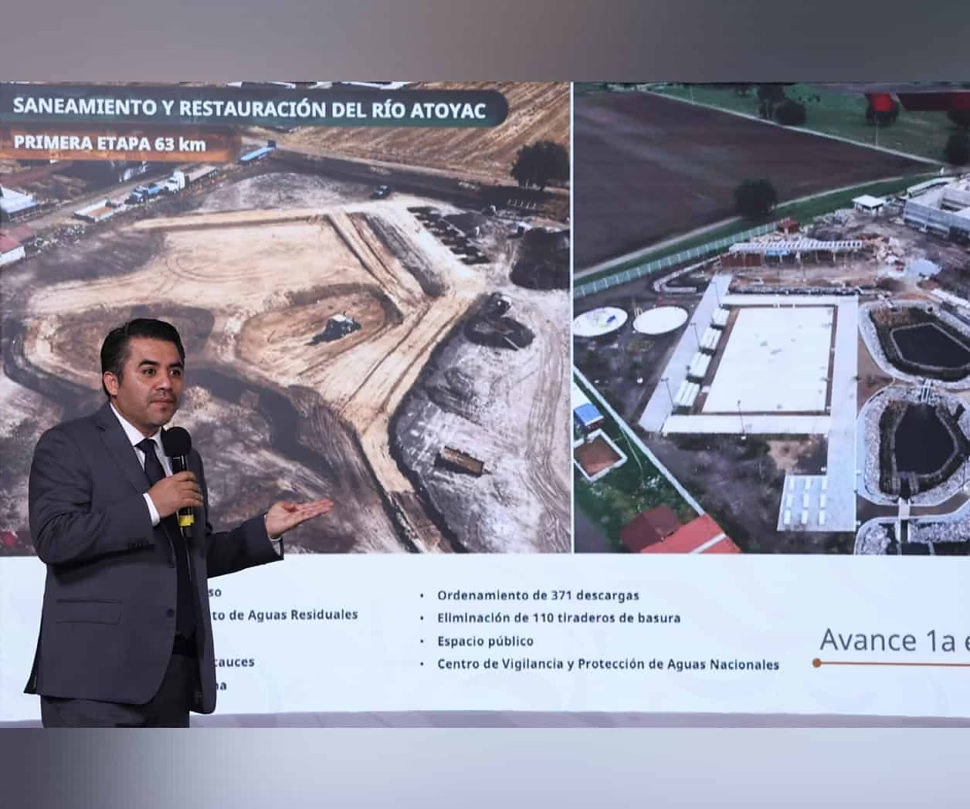
The federal government will allocate 20 billion pesos during the six-year term to the comprehensive sanitation of the Atoyac, Lerma-Santiago and Tula rivers. The National Water Commission (Conagua) identifies them as the most contaminated water bodies in the country.
President Claudia Sheinbaum explained that between 2025 and 2026, close to 2.5 billion pesos have already been assigned to these tasks. The objective: protect public health and improve the ecological environment of more than 25 million inhabitants in 10 states.
Actions for recovery
The pollution comes from municipal and industrial discharges that violate regulations, as well as silting in riverbeds. The program includes permanent infrastructure: treatment plants with wetlands, marginal drainage, desilting, reforestation of slopes and eradication of clandestine dumping sites, in collaboration with local communities.
The Secretary of the Environment, Alicia Bárcena, specified that 93 sanitation projects are coordinated, from the main channels to the integral systems of each basin. The Lerma-Santiago River covers 1,360 kilometers and benefits 21.4 million people in six states. El Tula, 191 kilometers for 800 thousand residents in Hidalgo and the State of Mexico. The Atoyac runs 162 kilometers in Puebla and Tlaxcala, with 3.7 million beneficiaries.
Progress by basin
The head of Conagua, Efraín Morales, reported progress in the first phases. The Lerma-Santiago leads with 90% progress in 65 kilometers; the Atoyac, 85% in 63 kilometers; and Tula, 62% in 74 kilometers. The actions include surveillance centers, reforestation of thousands of hectares, closure of illegal garbage dumps, construction of collectors and new public parks to reconcile the population with their environments.