A real threat or a routine warning?
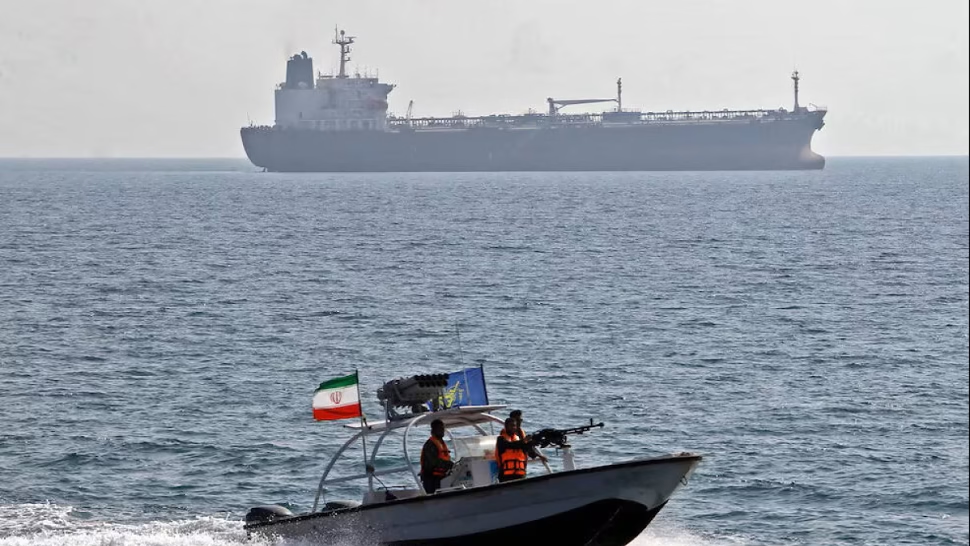
The Federal Bureau of Investigation (FBI) has put law enforcement in California on alert. The warning is clear: Iran could launch an attack with unmanned aerial vehicles against the West Coast in retaliation for US actions.
The alert, reviewed by ABC News, is specific. It notes that, “in early February 2026, Iran reportedly intended to carry out a surprise attack… against unspecified targets in California.” The scenario proposed is conditional: it would occur if the United States attacks Iran first.
“We have no additional information regarding the timing, method, objective, or perpetrators of this alleged attack,” admitted the internal FBI statement distributed at the end of February.
But this is where journalistic skepticism comes into play. When asked by ABC News and other outlets, silence was the official response. Neither the FBI in Los Angeles nor the White House would comment.
The counterweight: voices within the system
Law enforcement sources with experience in counterterrorism told the Los Angeles Times something crucial. Yes, the alert exists and was based on Coast Guard data. However, it lacks credible information about an imminent attack.
For these experts, this is more like a routine preventive warning than a signal of a concrete and short-term threat. It is the type of communication that circulates when intelligence captures rumors or hypothetical plans, but without the operational details that would indicate immediate danger.
As a journalist who has seen these stories pass by, I tell you: context is everything. In the tense relationship between Washington and Tehran, these exchanges of warnings are part of the geopolitical game. The alert serves to prepare local agencies, but can also be a deterrent message directed at Iran itself.
The question for Californians is not whether they should panic—the answer is no—but to understand how these intelligence mechanisms work. Sometimes the news is not the threat itself, but the fact that it is being talked about.