Analysis of the vehicular incident on the Angostura-La Reforma highway
A SUV type car, with a license plate from the state of Sonora, suffered an accident with serious consequences when it plunged into the waters of an irrigation canal adjacent to the Angostura-La Reforma highway, in the state of Sinaloa. Inside the unit were three occupants: a 32-year-old driver, identified as María Guadalupe “N”, and two underage passengers: a one-year-old infant and an 11-year-old girl. The journey, heading to the community of Campo Plata, was abruptly interrupted when the vehicle, for reasons still under investigation, deviated from the asphalt road and fell onto the body of water.
Emergency response and investigation procedure
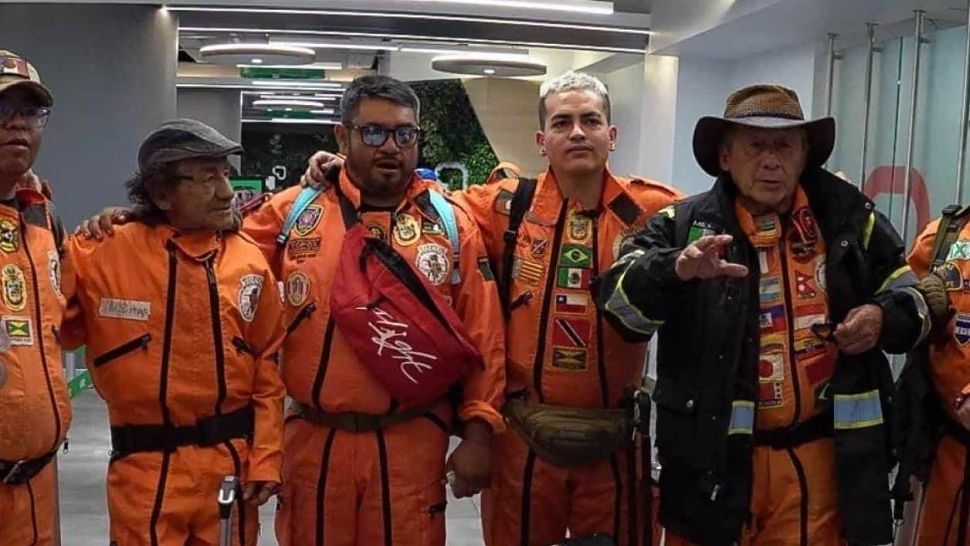
The effectiveness and speed of the reaction of the rescue services was decisive in the outcome of this event. The rescue teams managed to extract alive the three individuals trapped in the accident car, who, despite the shock and impact of the accident, did not have immediately apparent serious injuries. As a safety protocol, they were transferred to a nearby hospital for a thorough medical evaluation and corresponding observation. At the same time, with the support of specialized heavy machinery, the vehicle was recovered from the riverbed, using a crane, for subsequent deposit in a municipal pension. This step is crucial for the forensic and road investigation, since it will allow the authorities to examine the unit and contrast the physical evidence with the testimonies.
The investigation, led by the police and civil protection corporations, is now focused on elucidating the causal factors. The main hypothesis considers a combination of elements that could include conditions of the road infrastructure (such as the lack of containment barriers), possible distractions behind the wheel, mechanical failures in the car or climatic factors that affect adherence. The driver, affected by the psychological trauma of the event, has not been able to provide a detailed narrative, which underlines the importance of objective technical analysis. This case exemplifies the risks inherent to communication routes that coexist with water channels without proper hazard mitigation, a pattern observed in various agricultural regions of Mexico where the drainage network and roads often converge.
This incident, fortunately without fatalities, serves as an analytical reminder about vulnerability in transportation and the critical importance of emergency response systems. The prompt coordination between firefighters, paramedics and security elements not only safeguarded human lives, but also immediately began the process to prevent future similar events by identifying systemic failures. The provisional conclusion points to a avoidable accident, whose full understanding will depend on expert findings that determine the precise causal chain, from human error to possible negligence in the maintenance of public infrastructure.
Was this analysis on road safety and rescue protocols relevant to you?Share this report on your social networks to raise awareness and explore more content related to accident investigation and prevention in our special reports section.