Analysis of the Tragedy at the Waldo’s Establishment in Hermosillo
An explosion followed by a rapidly spreading fire in a Waldo’s store in downtown Hermosillo, which occurred on November 1, resulted in the loss of 23 lives and left 12 people with injuries of various degrees. The event, which has plunged the community into a state of collective mourning, has exposed serious questions regarding security protocols and regulatory oversight in commercial spaces. The analysis of the facts indicates that the majority of the victims died due to inhalation of smoke and toxic gases, as they were trapped inside the premises without viable escape routes at critical moments.
Eyewitnesses, such as Hugo Candiani, owner of an adjacent business, recounted the sequence of events: an initial blackout, followed by a partial restoration of power, and then a voltage fluctuation that preceded the catastrophic deployment. The explosion, according to his testimony, was projected vertically, triggering a structural fire that quickly engulfed the building and the vehicles parked in its vicinity. Despite the prompt mobilization of the emergency forces, which arrived at the site in a period of approximately 15 minutes, the conflagration demonstrated a virulence that made rescue efforts impossible for a significant segment of the occupants.
Investigation of the Causes and Responsibilities
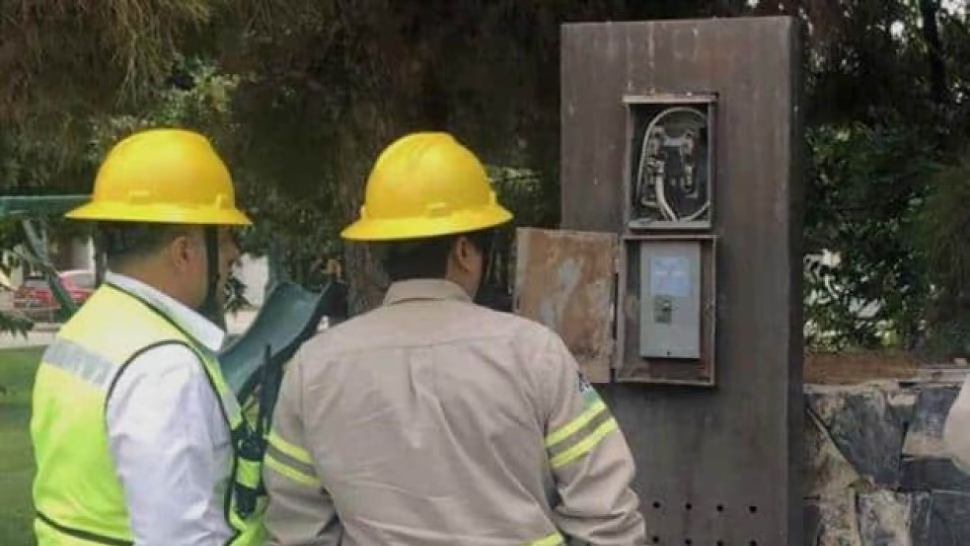
The official investigation, led by the State Attorney General’s Office, has ruled out an intentional origin of the incident, focusing on probable technical failures associated with the electrical system, such as a transformer or the internal infrastructure of the establishment. A crucial piece of information, provided by the Secretary of the Government of Sonora, Adolfo Salazar Razo, reveals that the premises did not have a internal Civil Protection program duly authorized since 2021. This regulatory omission has generated a broad public debate about the effectiveness of the supervision mechanisms and the culture of prevention in the commercial sector, demanding clear accountability.
Governor Alfonso Durazo has committed to taking the investigation to its ultimate consequences, promising comprehensive care for the bereaved and affected people, while emphasizing the imperative need to implement measures to avoid the repetition of a catastrophe of this magnitude. The community, meanwhile, expresses its pain through spontaneous memorials with candles, flowers and messages, a reflection of the profound psychosocial impact that transcends the realm of the material and revives previous collective traumas, such as the ABC daycare tragedy in 2009.
The case of Joel, who lost his pregnant wife, has become a symbol of the human drama behind the statistics. His public testimony, full of pain and heartbreak, encapsulates the feeling of helplessness and the abrupt fracture of shared life projects. This tragedy not only leaves a toll of victims and structural damage, but also imposes a forced reflection on the chain of responsibilities, the prioritization of security over bureaucracy and the resilience of a community that must be rebuilt from the ashes. The evidence suggests that it was a preventable event, which heightens the sense of loss and demands a strong institutional response.
Share this analysis to keep the conversation alive about safety in public spaces and explore more content related to the investigation of events of great social impact.