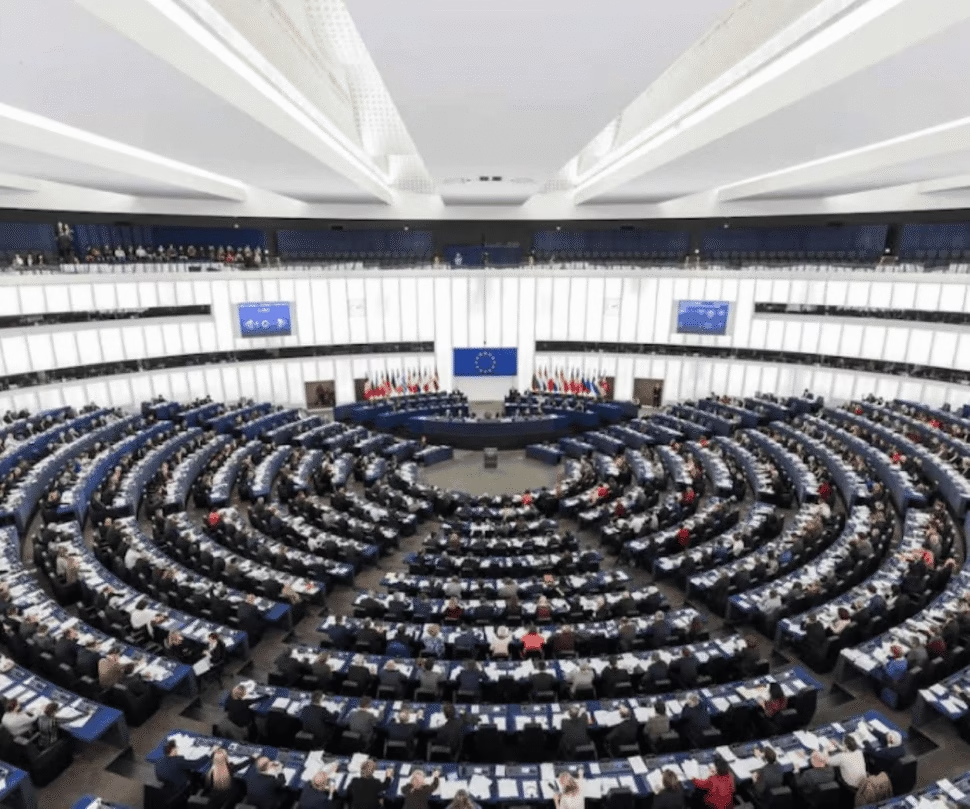
European Parliament ratifies agreements with Mexico

The European Parliament ratified the modernized agreements with Mexico. A key step in the bilateral relationship.

Historical ratification in Strasbourg

The European Parliament gave the green light this Wednesday to the Modernized Global Agreement between Mexico and the European Union, as well as the Interim Trade Agreement. The vote was overwhelming: 479 votes in favor for the first, 474 for the second.

“It is a historic day for Mexico,” declared Esteban Moctezuma Barragán, Mexico’s ambassador to the EU. He highlighted that the number of votes far exceeds the 370 that other similar agreements usually receive.

The diplomat stressed that the massive approval reflects political support for the bi-regional bond. “We must be very happy, but aware that a closer political, commercial and cultural relationship is just beginning,” he added.

RelatedMexico and the European Union strengthen their historic trade alliance

What’s next

Now the agreements must be approved by the Mexican Senate. President Claudia Sheinbaum already signed both documents in May during the visit of Ursula von der Leyen and António Costa, presidents of the Commission and the European Council, respectively.

The legislative process in Mexico will be the last step for the treaty to enter into force. Ratification in the Senate is expected to occur in the coming months, without major setbacks.

The modernization of the original agreement, in force since 2000, expands cooperation on issues such as climate change, digital rights and supply chains. It also simplifies customs procedures and opens new investment sectors.

Oaxacan transporters maintain road blockade for the second day

They demand regularization of units and a dialogue table with SICT.

Mobilization of transporters in Oaxaca

Federal passenger transportation service providers keep federal highway 190 blocked for the second consecutive day, near the SICT delegation in Oaxaca. They demand the regularization of their units and attention to their demands from the federal authorities.

The mobilization is led by the General Coordinator of Oaxacan Transporters. With Urvan-type vehicles and buses, they prevent circulation in both directions. According to leader Francisco Santos, nearly 500 units are participating in the protest, which will be indefinite until a favorable response is obtained.

Historical demands

The transporters point out that the conflict has continued for more than three decades. The lack of regularization prevents them from having legal certainty to operate on federal highways. For this reason, they ask for a dialogue table with SICT officials to advance a reorganization of federal motor transportation.

In addition, they denounce the alleged invasion of routes by the Binni Bus system, which they accuse of operating without authorization on federal highways and generating unfair competition for concessionaires.

Road effects

The blockade occurs in one of the main accesses to the Oaxacan capital. The protesters reiterate that they will not withdraw their protest until they receive a concrete response from the federal authorities regarding their demands.

The situation reflects a historical problem in the transportation sector in Oaxaca. Transporters insist on the need for effective dialogue to resolve the conflict that affects mobility in the region.

Continue reading

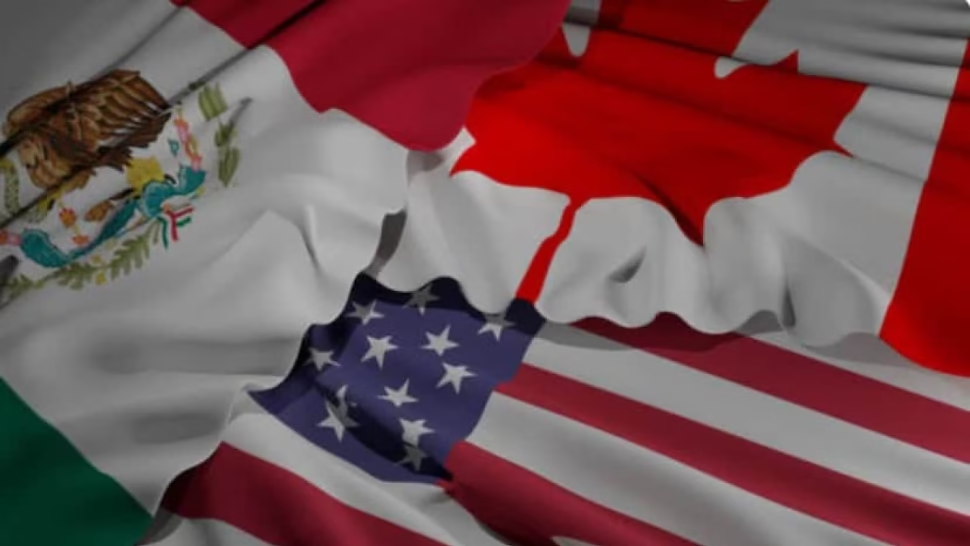
T-MEC: Mexico reduces pending issues to 14 and gets ready for a new round

Progress in the negotiation of the trilateral agreement with the United States and Canada.

The review of the Treaty between Mexico, the United States and Canada (T-MEC) entered a decisive stage. The Federal Government informed Congress that the negotiations with the United States reduced the pending issues from 54 to 14, according to a report from the Ministry of Economy published in the Parliamentary Gazette.

The issues that are still on the table

Both nations will hold a new round of negotiations on July 20. The objective: define the next steps, address the priority issues and make the results known. Among the concerns of the United States are the loss of manufacturing jobs, dependence on supply chains from third countries, the trade deficit, rules of origin and economic security.

Mexico maintains that these challenges can be resolved with a regional strategy that strengthens production in North America and reduces dependence on Asian imports.

Mexico’s proposals

As part of its negotiating position, Mexico presented 13 proposals. Among them, the elimination of tariffs applied by the United States under Section 232 to strategic sectors such as steel, aluminum and the automotive industry. The federal administration believes that withdrawing these measures would strengthen regional competitiveness and give greater certainty to investments.

In addition, the Mexican government seeks to promote investments in strategic industries: semiconductors, medicines, electronics and computing technologies. The purpose is to expand the productive capacity of North America, reduce dependence on critical inputs from abroad and strengthen competitiveness against other economic blocks.

Continue reading

Leopoldo Maldonado, new UN rapporteur on freedom of expression

Mexican lawyer takes over as UN special rapporteur for freedom of expression.

The UN Human Rights Council approved this Wednesday the appointment of Mexican lawyer Leopoldo Maldonado Gutiérrez as special rapporteur for the promotion and protection of freedom of opinion and expression. He will serve for three years during the 62nd session.

Reactions to the appointment

The Miguel Agustín Pro Juárez Human Rights Center (Prodh Center) highlighted Maldonado’s career in defense of human rights and his experience accompanying victims. They believe that this will strengthen the global protection of freedom of expression.

The UN Office in Mexico recognized that its experience will contribute to the strengthening of one of the most important rapporteurships in the international system. The Mexican Association of Judges and the MX Media Alliance indicated that the appointment recognizes their work in defense of journalists and fundamental freedoms.

Lawyer’s career

Maldonado is a lawyer from the Universidad Iberoamericana and a master’s degree in Human Rights from the same institution. Her work has focused on the defense of fundamental rights, with emphasis on freedom of expression and accompaniment to victims of violations.

Continue reading