Conclusion of the Public Consultation Process in North America
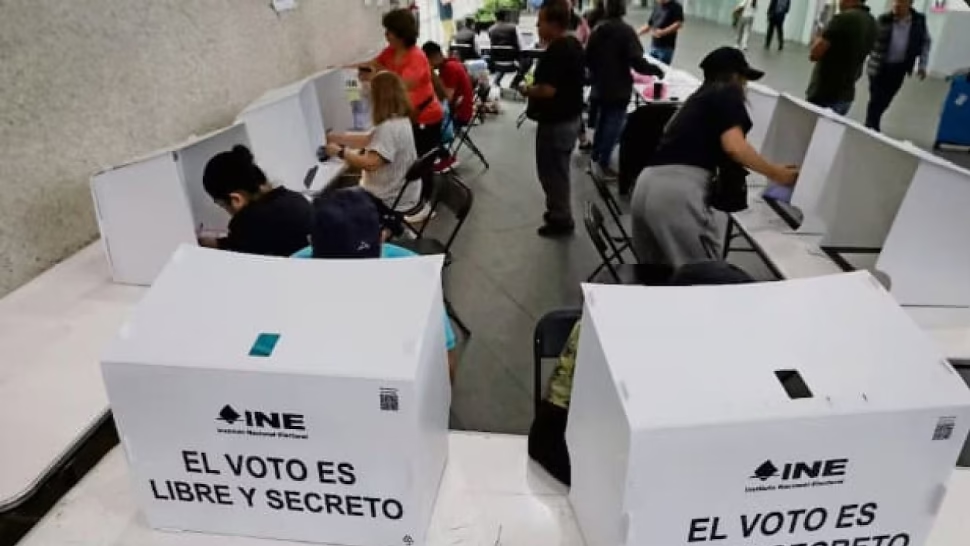
The governments of the United States and Canada have made official the completion of their respective public consultation process regarding the implementation of the Treaty between Mexico, the United States and Canada (T-MEC). This procedure, initiated simultaneously by the three partner nations on September 17, constitutes a critical phase to evaluate the effective application of the trade agreement and gather perceptions from the various economic actors. While the administrations in Washington and Ottawa advance in the analysis of the contributions received, the Mexican government continues to develop its own survey at the national level, having already carried out 28 regional consultations and with only four federal entities left to conclude.
The citizen participation mechanism implemented by the Office of the United States Trade Representative (USTR) demonstrated a high level of involvement. The digital platform enabled for this purpose registered approximately 1,514 substantive comments coming from a wide spectrum of participants, including private sector organizations, academic institutions, unions, industrial conglomerates, business representatives and agricultural producers, both American and Mexican. Additionally, 172 formal requests were received to intervene in the public hearing scheduled for November 17, which shows the significant interest generated by the operation of the treaty among the affected communities.
The Methodological Progress of Consultation in Mexico
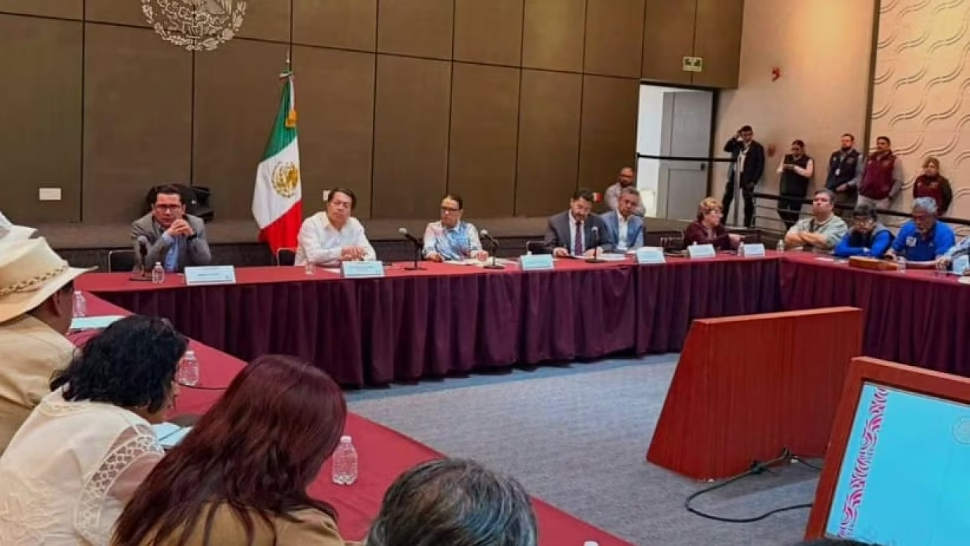
In the Mexican context, the Secretary of Economy, Marcelo Ebrard, provided a detailed report on the progress of the participatory process. During the celebration of the Mexico City Chapter, the official specified that this constituted regional consultation number 28 in the national territory, with only four federal entities pending to be surveyed. Ebrard stressed the complexity of the subsequent stage, which involves the systematization and synthesis of all the information collected, both through in-person forums and electronically, which has generated a “very numerous” volume of contributions of a diverse nature.
The head of Economy explained that the range of opinions collected is extremely wide and reflects the asymmetries and challenges perceived in the implementation of the T-MEC. Among the most recurring concerns are those related to the alleged incompatibility of the tariffs imposed by the United States under the protection of Section 232 with the fundamental principles of a free trade agreement. Likewise, the competitive disadvantages that the Mexican agricultural sector faces due to the subsidies granted to its American counterparts have been pointed out, and the specific application of the rapid dispute resolution mechanism in labor matters has been questioned, which, according to the perceptions collected, is applied in a differentiated manner, operationally benefiting Mexico but not reciprocally for the United States.
The Case of the Second Round of Consultations in Canada
For its part, Canada is currently developing its second round of public consultations, after having carried out a first phase during the months of October and November of the previous year. Unlike the highly digitalized process of the USTR, Global Affairs Canada has allowed the submission of documents and contributions through traditional postal mail, which makes it difficult to immediately and accurately quantify the number of contributions received in this second call.
According to the analysis of foreign trade expert Jorge Molina, the Canadian parliamentary process is already in an advanced stage of hearings. The International Trade Committee of the House of Commons has started listening sessions with various key actors. Participants who have already appeared include the Calgary and Edmonton Chambers of Commerce, the Forest Products Association of Canada and Electric Mobility Canada. The legislative agenda includes an upcoming hearing scheduled for Thursday, November 6, where the participation of several individuals is expected, among which the influential Canada Chamber of Commerce stands out. This dual process, executive and legislative, reflects the rigor with which the Canadian government approaches the evaluation of the trade agreement, seeking to integrate the perspectives of its productive sector into the future USMCA roadmap.
Was this analysis of the state of the T-MEC consultations enlightening to you? Share this article on your social networks to keep your professional network informed and explore more content related to international trade policy on our portal.