The United States requires public profiles on networks for visa applicants

A new requirement shakes applicants to study in the US: their networks under the magnifying glass.

A dramatic twist in the American dream

The United States Embassy in Mexico has released a decree that will resound like thunder in the hearts of thousands: from now on, the social media profiles of student visa applicants must be naked in the eyes of scrutiny. There will be no hidden corners, there will be no digital secrets. Every publication, every like, every interaction will become part of an exam that could define the future of your dreams.

The shadow of national security

With a tone that mixes the solemnity of an oath and the severity of a warning, the diplomatic representation has declared that the allocation of visas is a matter of national security. The F, M and J visas—those golden keys that open the doors to universities and cultural programs—now carry a condition as implacable as a Faustian contract: “Set your privacy to ‘public’ or risk your destiny.”

RelatedThe United States requires public access to social networks for student visas

DS-160 forms will become digital confessionals. Applicants must reveal all their aliases, accounts and footprints on social networks from the last five years. An omission, an oversight, a lie, no matter how innocent it may seem, could seal their fate with a “denied” stamp and condemn them to years of ineligibility. What will happen to those who once used a pseudonym? Or with those who deleted accounts in a fit of adolescent regret? The suspense is palpable.

Race against the clock

While the consulates in Mexico open their agendas with the solemnity of a ritual, students face a race against time. For programs that start in June or July, the embassy offers a lifeline: urgent applications. But for those who start in August, all that remains is the agony of waiting and the uncertainty of not knowing if they will arrive on time.

What secrets will these social networks reveal under the microscope? Will an innocent selfie be the evidence that convicts them? Or a forgotten comment on a distant forum? The drama unfolds like a bureaucratic thriller where each click can be a step towards success… or towards the abyss.

Share this shocking news! What do you think of this new requirement? Explore more about immigration challenges in our current affairs section.

The clock keeps ticking. The fate of thousands hangs in the balance.
Sheinbaum: every weapon delivered is a life saved

Sheinbaum defends the voluntary disarmament program as a pacifying tool.

Results of the Yes to Disarmament program

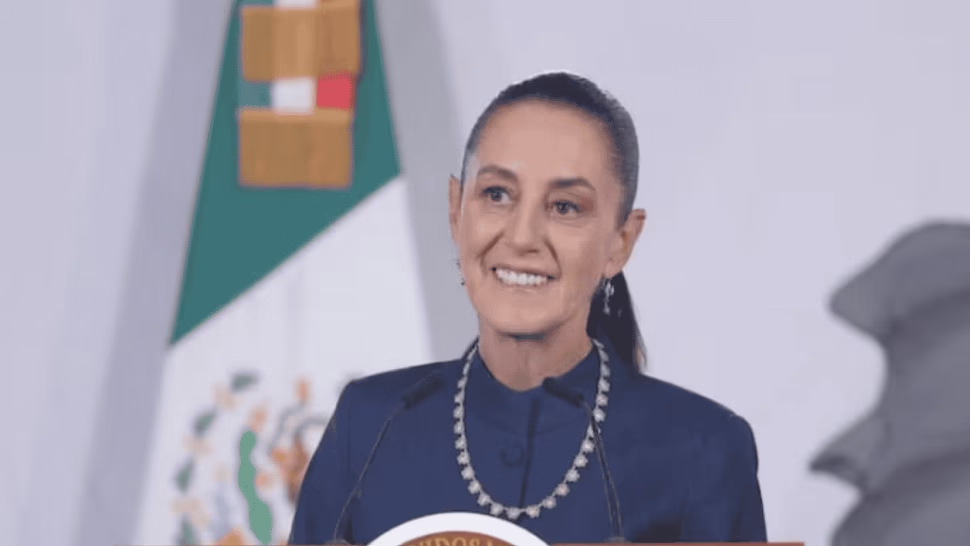
President Claudia Sheinbaum described as “successful” the “Yes to Disarmament, Yes to Peace” program, which promotes the voluntary surrender of firearms in exchange for financial support. In his morning conference, he assured that each weapon removed from circulation represents a life that can be saved.

“It has been very successful and also everything we do to disarm peacefully is saving a life. It is removing an instrument that can cause death. It is pacifying,” he said.

Sheinbaum reported that this Thursday he will lead a day of the program in the atrium of the Basilica of Guadalupe, where it began last year. He highlighted the collaboration of the Catholic Church, which provides spaces of trust for the population to hand over their weapons.

On the occasion of the International Day for the Destruction of Firearms, the Secretariat of National Defense will present a balance of the program, as well as a report on the weapons seized and their subsequent destruction. The president stressed that voluntary disarmament contributes to the pacification of the country, since families can hand over weapons anonymously, without investigation, and receive financial support in exchange.

Continue reading

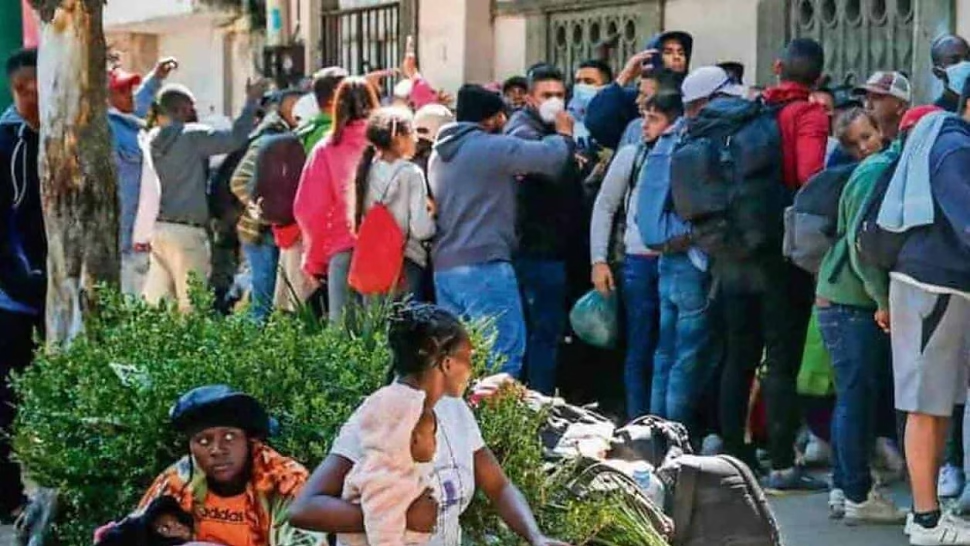
More than 12 thousand refugees access bank accounts in Mexico

Banorte and UNHCR facilitate the financial inclusion of refugees in Mexico.

More than 12 thousand refugees with a legal residence permit in Mexico have managed to open a bank account, a fundamental step for their integration into formal employment. The initiative, promoted by Banorte in alliance with the UN Refugee Agency (UNHCR), began in 2022.

Felipe Medina, executive director of Funding at Banorte, pointed out that the main obstacle was the lack of access to an account to deposit payroll. Although the regulations allow opening accounts with CURP and immigration documents, in practice many branches did not recognize this documentation.

“There were people who already wanted to work, join formal employment and could not find an account that would allow them to receive their resources,” Medina explained.

The bank designed a digital opening process in about five minutes, with a simplified file. Refugees can receive salary deposits, make transfers and use a digital debit card. The physical card is then obtained in commercial establishments, without having to go to a branch.

Banorte also collaborated with companies that hire refugees—such as FEMSA, Mabe, LEGO and Alpura—to speed up account opening during job incorporation. Human resources teams received specialized training.

Banking has allowed full integration into the formal economy. The accounts in this segment record monthly deposits between 2,000 and 14,000 pesos, an average balance of 1,900 pesos and about six digital transactions per month. Companies report lower staff turnover and higher productivity among refugee workers, many with professional experience or specialized studies.

Continue reading

Sheinbaum’s government launches telephone alert against El Niño

Telephone warning system against El Niño will be ready in two months.

Warning system for climate phenomena

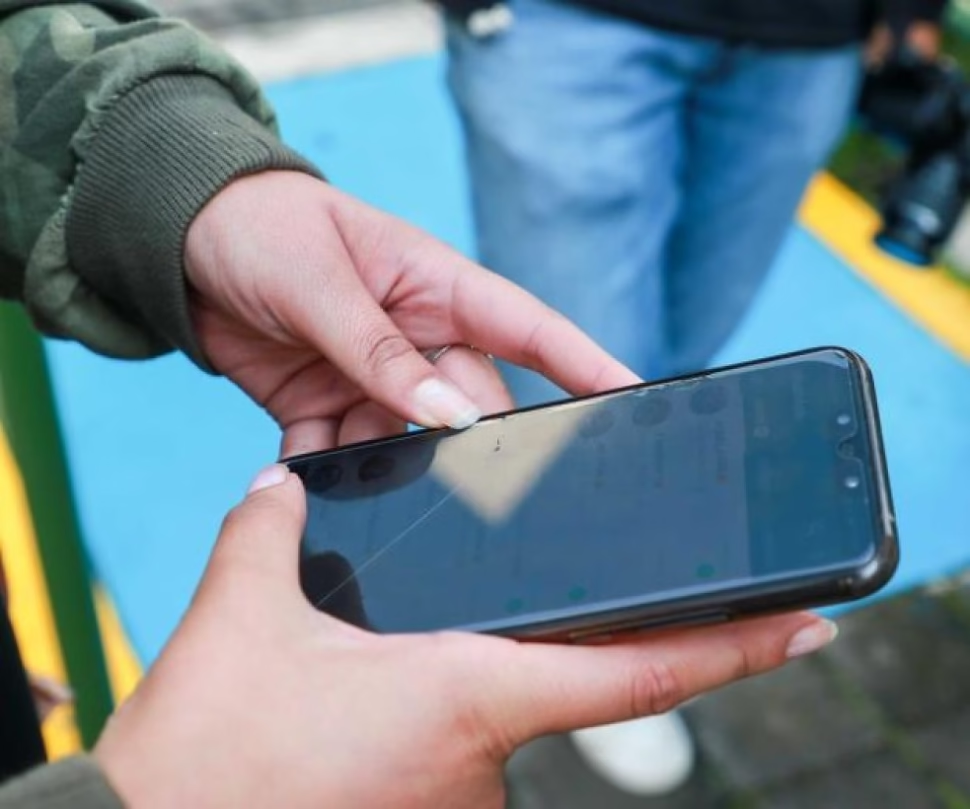
President Claudia Sheinbaum announced that the Federal Government is developing a telephone alert system for meteorological phenomena. It is expected to be ready in approximately two months. The initiative is carried out by the Digital Transformation and Telecommunications Agency, the National Civil Protection Coordination and the National Meteorological Service (SMN).

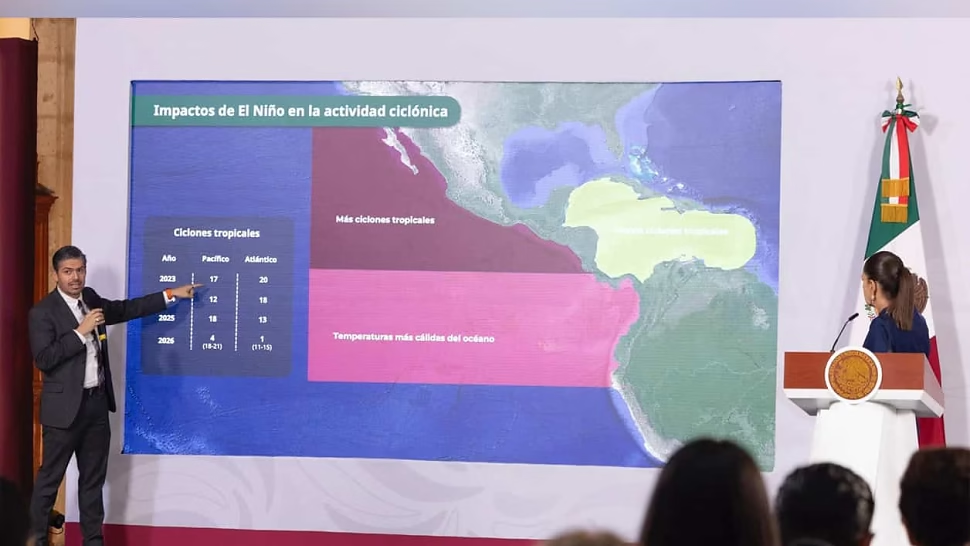
The project is part of preventive actions against the El Niño phenomenon, which according to authorities will manifest itself with great intensity this year and next.

Expected impact of El Niño

According to official forecasts, El Niño will leave more intense rainfall towards the end of the year, especially in the north of the country. A high probability of larger cyclones and drought conditions is also forecast for central Mexico in 2027.

The coordinator of the SMN, Fabián Vázquez Romaña, pointed out that there is a 63% probability that the event will be “very strong.” He added that it will reach its highest point in December and warned of a rebound in high temperatures during the spring of 2027.

Civil protection measures

The national coordinator of Civil Protection, Laura Velázquez, explained that communication is maintained with the 32 states to deploy relief teams, supervise shelters and update risk maps in collaboration with the National Water Commission.

As a key strategy, Command Posts are installed in the 17 coastal entities. Eleven are already formalized; the remainder will be completed the following week. The Pacific coast is prioritized before expanding coverage to the center of the country.

In addition, preventive infrastructure work is being accelerated throughout the territory: clearing dams, cleaning and opening the diameter of rivers, and placing containment barriers to mitigate possible floods.

Continue reading