Analysis of the Ambush in the Triqui Region
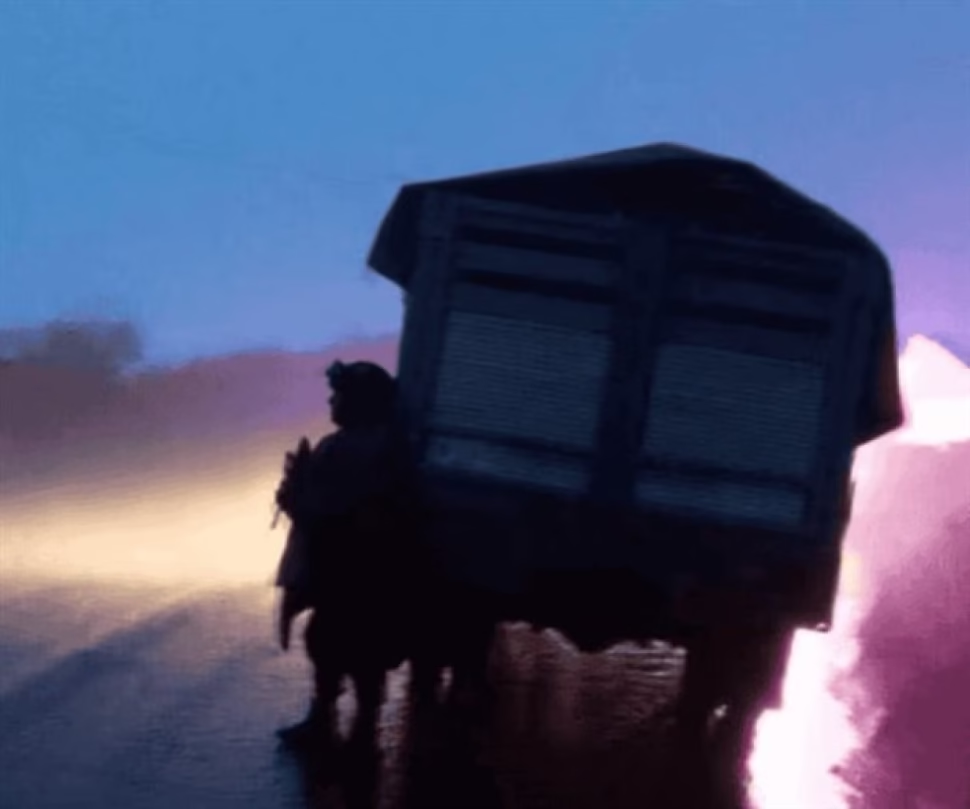
On Saturday, at approximately 5:53 p.m., a highly lethal ambush was perpetrated on Local Highway 15, near the Cerro de Águila area, in the vicinity of the cemetery of the community of Concepción Carrizal Copala, municipality of Santiago Juxtlahuaca, Oaxaca. This violent incident, far from being an isolated event, is framed within a historical context of social and political conflict in the Oaxacan Mixteca, an area characterized by long-standing community tensions.
The modus operandi consisted of a surprise attack against a stake-type vehicle in which members of the Triqui Unification and Struggle Movement (MULTI) were traveling. The immediate result was the loss of two human lives and three people injured as a result of the impact of firearm projectiles. The fatal victims have been identified as Alfredo Martínez González and Francisca García Martínez. Among the injured people are Rafaela Flores Guzmán, Marcelina Martínez Bautista and Paulina Celestino. Eyewitnesses to the event have corroborated the presence of minors in the car at the time of the attack, a fact that substantially aggravates the nature of the event.
The Context of the Conflict and Accusations of Impunity
MULTI’s reaction was immediate. The organization has demanded immediate and effective justice, demanding that the ministerial investigation be both public and truthful, with the fundamental objective of delimiting the material and intellectual responsibilities behind the aggression. In an official statement, the group argues that this episode is the direct consequence of a “impunity pact” that, according to their perspective, exists between state authorities and what they call “paramilitary bosses“.
This accusation is based on the apparent lack of progress in the investigations related to more than twenty homicides that occurred in the last five years, a period marked by a worsening of the conflict in the towns of the Triqui Baja region. MULTI has been explicit in its statements, identifying the alleged perpetrators by name and surname: Emelia Ortiz, Eleazar Ortiz, Antonio Ramírez Martínez, Florentino Ortiz and Epifanio Ortiz. According to the organization’s narrative, these individuals, “protected by the pact of impunity that the government maintains with the powerful“, are the architects of the forced displacement, fear and death that have devastated the Triqui nation for years.
The MULTI has categorized the attack as a “planned operation“, carried out by the same power groups that have established a regime of terror in the territory. This interpretation suggests a deliberate strategy of selective political violence aimed at weakening the organization and silencing dissent. The specific mention of “intellectual perpetrators” indicates the belief that the material authors acted under orders from a higher command structure, which greatly complicates the panorama of the investigation and the administration of justice.
Collective Response and Future Perspectives
As an immediate response to the double homicide, the Triqui Unification and Struggle Movement has announced a series of mobilizations and peaceful actions. Their resistance strategy will be articulated around marches, sit-ins, a symbolic boycott of impunity, the exercise of collective memory and systematic public denunciation. In his own words: “Our response will be organized resistance… We will honor those who took from us with dignity, with struggle, with memory and with the firm demand that justice be done.”
This posture reflects not only a collective mourning, but also a will to persevere in the face of adversity. The statement conveys deep sorrow for the absence of his fallen comrades and concern for the survivors’ injuries, but simultaneously projects unwavering determination. The language used—”wounded and rebels, with their hearts in their hands and anger burning”—evidence a collective emotional state that combines regret with a firm resolution to continue the fight for their rights and their territory.
The ambush in Santiago Juxtlahuaca represents, therefore, a critical episode within a broader sequence of structural violence. The analysis of the facts cannot be limited to the description of the violent event itself; It must necessarily incorporate the examination of the socioeconomic and political framework that makes it possible. The persistence of these acts of aggression, together with recurring complaints of impunity, points to a deep fracture in the governance and justice mechanisms in the region. The capacity of the State to investigate with transparency, capture those responsible and, ultimately, dismantle the power networks that promote violence, will be the fundamental indicator to determine if this cycle of conflict can be overcome or if, on the contrary, it will be perpetuated over time.
Share this analysis to make visible the complex situation in the Triqui region and help break the siege of impunity. Explore more content related to the rights of indigenous peoples and socio-territorial conflicts in Mexico to stay informed.