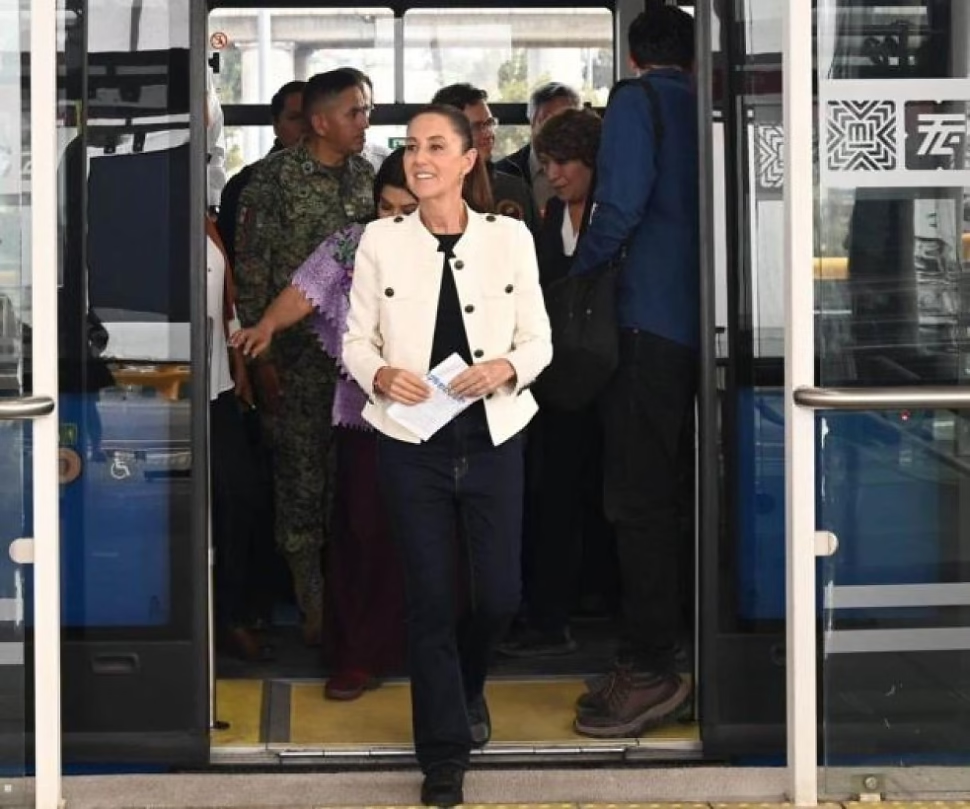
The trolleybus that promises to end road chaos in CDMX

The public transportation revolution comes with a project that promises to change the lives of millions in just 40 minutes.

Sheinbaum and his “masterpiece” against traffic: the trolleybus that no one asked for but everyone needs

There goes Claudia Sheinbaum, our eco-friendly president, supervising the tests of the Chalco-Santa Marta trolleybus as if she were the Elon Musk of public mobility. Yes, the same project that promises to reduce an hour and a half trip to 40 minutes (that is, the time it takes to decide what to watch on Netflix). Miracle or mirage? Only on May 18 will we know.

“For the good of all, first the poor”… and then those who hate traffic

With phrases worthy of a viral speech, Sheinbaum dropped pearls such as that this trolleybus is “social justice on wheels”. Of course, because nothing screams “equity” like electric transportation that, according to her, is unique in the world. Oh really? Has no other country thought of putting trolleybuses on a second floor? It sounds like someone went too far with the architectural renderings.

RelatedClaudia Sheinbaum begins testing the innovative Chalco-Santa Marta Trolleybus

Among the promised benefits: less pollution (goodbye, photogenic smog), less time wasted in traffic (bye, driving rage) and 2.9 million happy people in the Metropolitan Area. Although, honestly, as long as it doesn’t fall like the Metro, it is already a gain.

The ghost stations and the “little detail” of the floods

Here comes the good thing: six stations are still under construction. Three because in Chalco they are building a drainage (basic so that the trolleybus does not end up sailing), and another three because… well, who meets deadlines in this country? Sheinbaum said it with the calm of someone who knows that May 18 is his D-Day: “Today the tests begin”. I mean, cross your fingers.

The ironic thing is that this project sounds good on paper: electric trolleybuses, emissions reduction, speed worthy of the 21st century. But, among us, does anyone believe that times will not lengthen? Because in Mexico, “soon” can mean from tomorrow until the next six-year term.

Of course, if it works, it will be a great goal. Imagine: 40 minutes instead of losing faith in humanity stuck in Periférico. But if it fails, prepare for memes. #TrolleybusChallenge, anyone?

Can you imagine traveling without suffering? Share this note and let’s make #TransportThatYesWorks a trend. Or, if you prefer drama, wait until May 18 with popcorn.


Colombians arrested for training in the manufacture of explosives in Michoacán

Colombian detainees linked to the manufacture of explosives in Michoacán.

The Security Cabinet has arrested Colombian citizens linked to the training and manufacturing of improvised explosive devices in Michoacán. This was reported by the Secretary of Security and Citizen Protection, Omar García Harfuch, during the morning conference on Friday, July 3 in Morelia.

These arrests are part of investigations that identified the entry of several people involved into the country, mainly through the Mexico City International Airport and other air entry points. The National Intelligence Center monitored these movements.

The entry of foreign people by land was also detected, who allegedly collaborate in the training of members of criminal groups to install these devices. García Harfuch pointed out that there is an ongoing investigation to locate the leaders of these networks in Michoacán, including alleged high-level members of the Jalisco Nueva Generación Cartel.

The head of the SSPC confirmed the participation of citizens from different countries, mainly from Colombia. We are working in coordination with Colombian authorities to strengthen the investigations. In the coming days, the exact number of people arrested related to the manufacture and use of these explosives will be specified.

Continue reading

PRI warns about digital fraud and asks to reinforce prevention

The PRI warns about the advance of digital fraud and demands greater protection for families.

PRI warns about digital fraud and demands greater action

The Institutional Revolutionary Party (PRI) in the Senate warned about the increase in telephone fraud and extortion in Mexico. He pointed out that these digital crimes affect the assets and security of millions of families.

PRI legislators detailed that criminal organizations have perfected their methods. They use techniques such as phishing, smishing, vishing, cloning of messaging accounts, kidnapping simulations, fake job offers and artificial intelligence to create manipulated audio and videos that facilitate deception.

Given this panorama, the PRI called on federal and state authorities to strengthen prevention, investigation and combat strategies against these behaviors. He emphasized the need to implement more effective measures to protect citizens.

The growing concern for security has led the party to demand a more rigorous approach in the fight against these crimes that affect the tranquility of the population.

Continue reading

The United States does not extend the T-MEC, markets without problems

Markets calm due to the non-extension of the T-MEC until 2042, according to analysis.

T-MEC: No extension until 2042, stable markets

The United States decided not to extend the validity of the USMCA until 2042. The treaty will remain in force until 2036 with annual reviews. The decision did not generate turbulence in the financial markets. Analysts were already anticipating this scenario, according to the Mexico organization How are we doing?

In its report ‘The T-MEC is still in force’, the organization detailed that annual reviews were a possibility contemplated. Therefore, variables such as the exchange rate did not show negative reactions. On July 1, the peso stood at 17.54 units per dollar, with no relevant movements after the announcement.

Productive integration in North America is key. Mexico maintains its role as the main supplier of fresh fruits and vegetables to the United States. This strengthens regional food security, especially in the agri-food sector.

Looking ahead to the next negotiations, the central issues will be the reduction of tariffs, the defense of the rules of origin and access to agricultural markets. The United States will seek to reduce its trade deficit, while Canada will try to protect its key sectors.

Continue reading