The TEPJF promotes the modernization of the Mexican electoral system

Electoral magistrates propose key changes to shield the elections from new technological and security challenges.

A Call for Democratic Transformation

In the vibrant setting of the Guadalajara International Book Fair, a space for ideas and the future, magistrates of the Electoral Tribunal of the Judicial Power of the Federation (TEPJF) launched a clear and powerful message: it is time to reinvent our democracy. Given the possibility of an electoral reform, they highlighted the urgency of analyzing and modernizing fundamental pillars that guarantee free, authentic elections and in tune with our times. The focuses of this evolution are clear: revolutionize the political communication model, counteract the shadow of organized crime and take the brave leap towards electronic voting. This is not a simple technical adjustment; It is a historic opportunity to strengthen citizen confidence in each vote.

Reinventing Political Dialogue

Magistrate Felipe Fuentes shared a crucial reflection on how candidates connect with citizens. He explained that the current system, designed to prevent the purchase of media time and punish slander, has paradoxically created a rigid scheme. “A rigid system of spots was created that fragments the message,” he warned. This leaves voters with minimal and superficial information about the true government proposals. The mission now is to transform that dynamic, looking for formulas that allow for a deep, substantial debate that truly empowers the voter to make informed decisions. It is moving from advertising saturation to value conversation.

RelatedGilberto Bátiz begins his presidency in the Electoral Court

The Future is Digital: Towards a Reliable Electronic Vote

On the path of electoral modernization, Judge Fuentes emphasized the need to move towards electronic modalities, recognizing that there is still social distrust towards these technologies. The key to overcoming it lies in absolute transparency. Their proposal is forceful: allow continuous audits and independent external actors to supervise the correct functioning of the systems. Only in this way can computer security and the integrity of the vote be guaranteed. For his part, Judge Felipe de la Mata expanded the vision, inviting us to look at successful experiences at a global level. He mentioned the example of India, where the use of electronic ballot boxes coexists with the physical support of paper, a hybrid model that could be adapted to strengthen the reliability of the process in Mexico.

This innovative drive is also presented as a shield against very specific threats. De la Mata pointed out the intervention of organized crime in local elections, such as those experienced in Michoacán. Faced with this challenge, exploring options such as early voting or online voting emerges not only as a modernization, but as a protection tool. Diversifying the methods and days to vote can disperse the risks and make coercion more difficult, returning sovereign control over their decision to citizens. Each technological advance, audited and secure, is a firm step to protect our democracy.

The message from Guadalajara is an invitation to collective action. Modernizing the Mexican electoral system is a task that requires courage, vision and consensus. It is overcoming the fear of the new with robust verification mechanisms, it is designing political communication that unites instead of fragmenting, and it is building security dams against those who want to stain the ballot boxes. This is the path so that every vote, whether on a traditional ballot or through a digital channel, remains the cornerstone of our freedom and our shared future.

Do you think it is time to make the leap to a digital and more secure electoral system?Share this vision of the future on your social networks and join the conversation about the democracy that is coming. Explore more content on civic innovation and citizen participation on our site.
Sheinbaum: every weapon delivered is a life saved

Sheinbaum defends the voluntary disarmament program as a pacifying tool.

Results of the Yes to Disarmament program

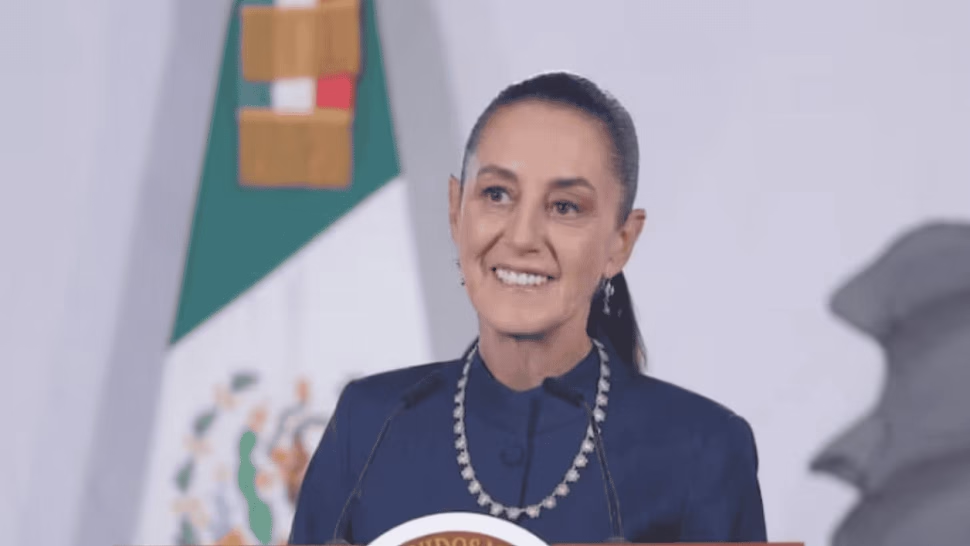
President Claudia Sheinbaum described as “successful” the “Yes to Disarmament, Yes to Peace” program, which promotes the voluntary surrender of firearms in exchange for financial support. In his morning conference, he assured that each weapon removed from circulation represents a life that can be saved.

“It has been very successful and also everything we do to disarm peacefully is saving a life. It is removing an instrument that can cause death. It is pacifying,” he said.

Sheinbaum reported that this Thursday he will lead a day of the program in the atrium of the Basilica of Guadalupe, where it began last year. He highlighted the collaboration of the Catholic Church, which provides spaces of trust for the population to hand over their weapons.

On the occasion of the International Day for the Destruction of Firearms, the Secretariat of National Defense will present a balance of the program, as well as a report on the weapons seized and their subsequent destruction. The president stressed that voluntary disarmament contributes to the pacification of the country, since families can hand over weapons anonymously, without investigation, and receive financial support in exchange.

Continue reading

More than 12 thousand refugees access bank accounts in Mexico

Banorte and UNHCR facilitate the financial inclusion of refugees in Mexico.

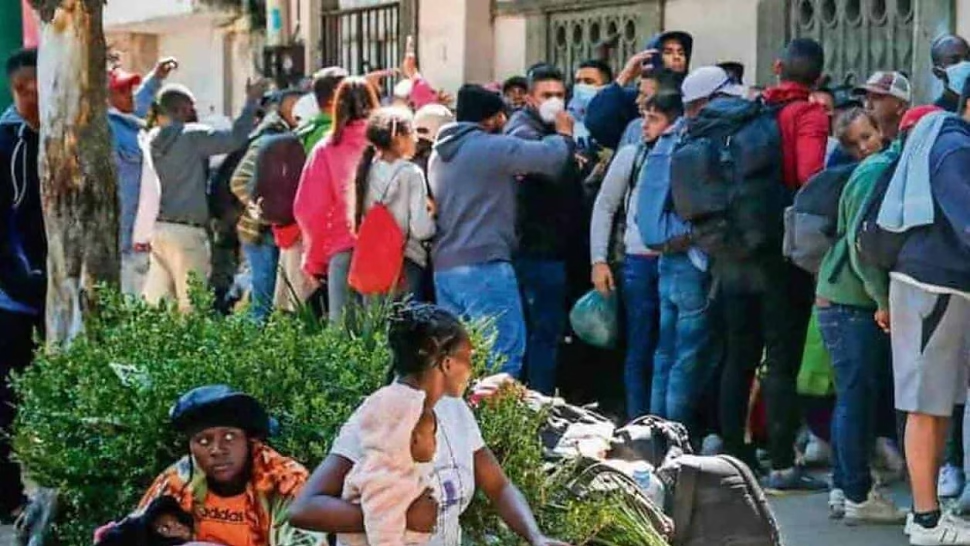
More than 12 thousand refugees with a legal residence permit in Mexico have managed to open a bank account, a fundamental step for their integration into formal employment. The initiative, promoted by Banorte in alliance with the UN Refugee Agency (UNHCR), began in 2022.

Felipe Medina, executive director of Funding at Banorte, pointed out that the main obstacle was the lack of access to an account to deposit payroll. Although the regulations allow opening accounts with CURP and immigration documents, in practice many branches did not recognize this documentation.

“There were people who already wanted to work, join formal employment and could not find an account that would allow them to receive their resources,” Medina explained.

The bank designed a digital opening process in about five minutes, with a simplified file. Refugees can receive salary deposits, make transfers and use a digital debit card. The physical card is then obtained in commercial establishments, without having to go to a branch.

Banorte also collaborated with companies that hire refugees—such as FEMSA, Mabe, LEGO and Alpura—to speed up account opening during job incorporation. Human resources teams received specialized training.

Banking has allowed full integration into the formal economy. The accounts in this segment record monthly deposits between 2,000 and 14,000 pesos, an average balance of 1,900 pesos and about six digital transactions per month. Companies report lower staff turnover and higher productivity among refugee workers, many with professional experience or specialized studies.

Continue reading

Sheinbaum’s government launches telephone alert against El Niño

Telephone warning system against El Niño will be ready in two months.

Warning system for climate phenomena

President Claudia Sheinbaum announced that the Federal Government is developing a telephone alert system for meteorological phenomena. It is expected to be ready in approximately two months. The initiative is carried out by the Digital Transformation and Telecommunications Agency, the National Civil Protection Coordination and the National Meteorological Service (SMN).

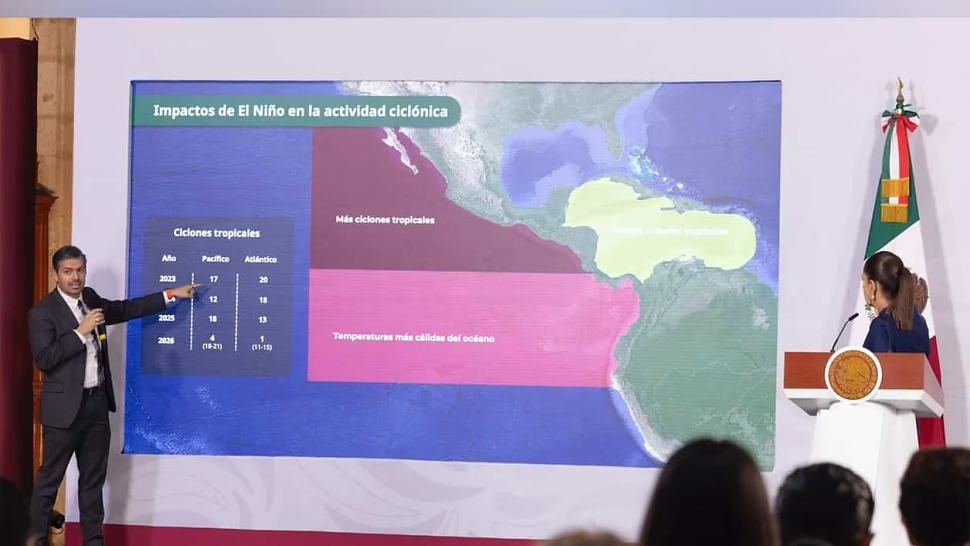
The project is part of preventive actions against the El Niño phenomenon, which according to authorities will manifest itself with great intensity this year and next.

Expected impact of El Niño

According to official forecasts, El Niño will leave more intense rainfall towards the end of the year, especially in the north of the country. A high probability of larger cyclones and drought conditions is also forecast for central Mexico in 2027.

The coordinator of the SMN, Fabián Vázquez Romaña, pointed out that there is a 63% probability that the event will be “very strong.” He added that it will reach its highest point in December and warned of a rebound in high temperatures during the spring of 2027.

Civil protection measures

The national coordinator of Civil Protection, Laura Velázquez, explained that communication is maintained with the 32 states to deploy relief teams, supervise shelters and update risk maps in collaboration with the National Water Commission.

As a key strategy, Command Posts are installed in the 17 coastal entities. Eleven are already formalized; the remainder will be completed the following week. The Pacific coast is prioritized before expanding coverage to the center of the country.

In addition, preventive infrastructure work is being accelerated throughout the territory: clearing dams, cleaning and opening the diameter of rivers, and placing containment barriers to mitigate possible floods.

Continue reading