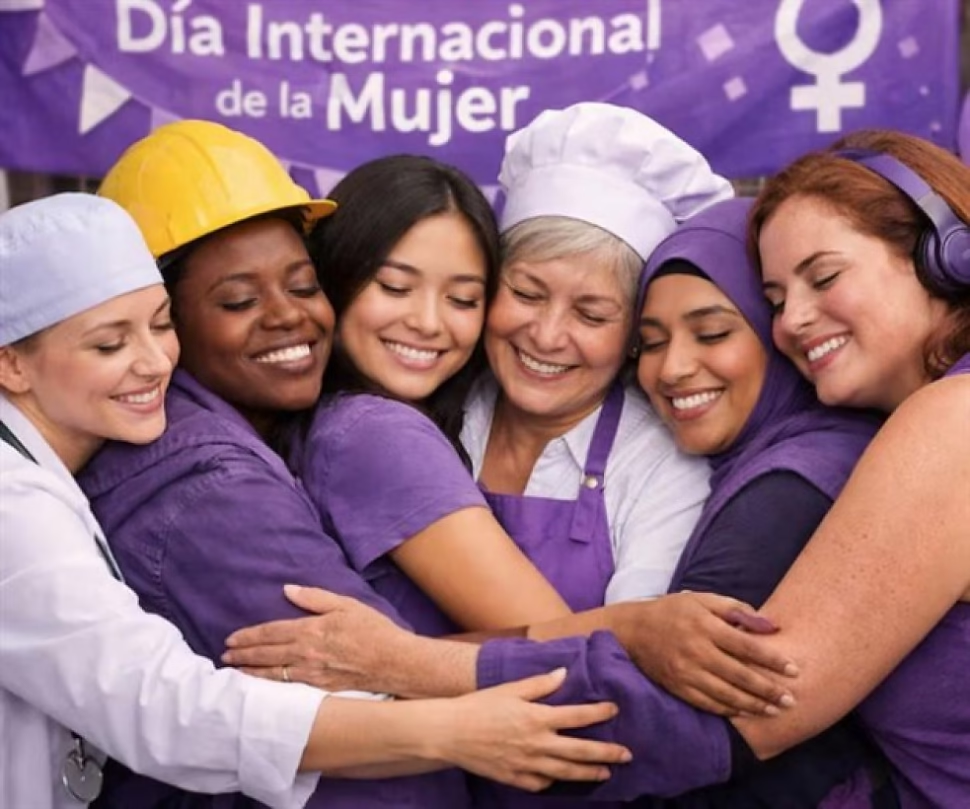
It is not a day of flowers, it is a day of memory
Every March 8 the streets are filled. But this is not a celebration. It is the annual reminder of a battle that has been going on for more than a century and that, look around you, is far from over.
The official version says that it all started in 1910, in Copenhagen. There, representatives from 17 countries came together to talk about equality. It was the German politician Clara Zetkin who launched the idea: we needed an international day for women’s struggle.
“…Clara Zetkin proposed establishing an international date dedicated to the struggle of women…”
His proposal caught on. The following year, in 1911, Germany, Austria, Denmark and Switzerland saw more than a million people mobilize. The demands were clear and, listen to them carefully because they sound terribly current: the right to vote, access to public office, work without discrimination and vocational training.
A date with deep roots and late recognition
The curious thing—or the predictable thing—is the institutional timing. Although women had been taking to the streets every March for decades, the UN did not hold an official commemoration until 1975. Yes, sixty-five years later.
The oldest precedent is even more revealing: in 1909, the Socialist Party of America already remembered February 28 for a women’s textile strike in New York. History repeats itself: first there is the action in the factories and the streets; Decades later, recognition comes from international organizations.
The UN ended up putting its seal with CEDAW in 1979. A crucial role, without a doubt. But the true strength has never been in the treaties. He has been—and is—in those thousands who go out every year to remind the world that what is conquered is not given away, it is taken away.