iPhone 17 eliminates the physical SIM and forces the adoption of eSIM

Goodbye to the physical chip: this is the digital future of your mobile line and the options you have in the country.

The Future is Digital, Whether You Like It or Not

It seems that Apple, in its infinite wisdom, has decided that we have played enough with those little pieces of plastic that we like to lose under the couch. Given the imminent arrival of the iPhone 17, the apple firm has put the ax where it hurts most: in the SIM card slot. Because what better way to innovate than by eliminating something that has been working perfectly well for decades?

That’s right, dear user. Your days of desperately searching for a paper clip to open that magic little tray are over. Now, your shiny new iPhone 17, in all its variants including the Pro and the Pro Max, will come with one mission: to force you into the world of the eSIM, whether you like it or not. The official excuse, of course, is the most noble. The Pro Max model, with that more powerful battery that promises to outlast your willingness to not check social media, needed living space. And guess what was the first thing to be sacrificed on the altar of minimalist design. Exactly, the humble SIM slot.

RelatedApple presents the iPhone 17 Pro and the revolutionary iPhone Air

But let’s not think badly. It is not just a forced strategy to sell us a new technology; It is a bold vision. A firm commitment to a tomorrow where changing operators is as simple as clicking a button… as long as that operator has the infrastructure, the will and the knowledge to do so, of course. A minor detail, without a doubt.

The eSIM: Your New Best Friend (Or Not)

The Embedded SIM, or eSIM for friends, is basically a chip integrated into the phone. A digital SIM that does everything that physics did, but without the romance of being able to hold it in your hand. Its advantages, they tell us, are overwhelming. You can switch between carriers seamlessly (in theory), use two numbers at the same time (great for your personal life and that other life no one needs to know about), and manage eight or more eSIMs (just in case you have eight different identities, who are we to judge).

And we cannot forget the argument of security. In the event of theft, the thief will not be able to simply remove the chip and disconnect you from the world. Because, as we all know, today’s criminals are tech-savvy and would never think of formatting the device or turning it off. A triumph for justice!

Of course, it also has its “small” disadvantages. Do you want to change devices and keep your phone number? What was once a procedure of minutes can now become a digital odyssey, since the eSIM is linked to the serial number of your iPhone. Nothing that a couple of calls to customer service, an hour on hold, and a little luck can’t solve.

The Panorama in Mexico: Are We Ready?

Since this technology arrived in Mexico in 2019, operators have been “striving” to adopt it. They have made such an effort that, by the end of 2024, they would already cover the astronomical figure of 9.5 million lines, according to the firm ‘The Competitive Intelligence Unit’ (CIU). A drop in the ocean of the more than 130 million mobile lines in the country. A resounding success!

But fear not, citizen of the future. If you venture to buy one of these new devices at the Apple Event, there are different options to obtain your eSIM. Here we present them to you, with all the sarcasm they deserve:

By operator activation: Available with AT&T. Basically, it depends on the goodwill and efficiency of the representative who assists you. What could go wrong?

By quick transfer: An option available with AT&T and the always reliable Telcel. It’s supposed to be ideal for switching iPhones painlessly, promising that you’ll be able to keep your number without having to talk to a human. It sounds like science fiction.

By QR code or operator app: You can try this method with AT&T, Movistar and Telcel. Scan a code that is hopefully not corrupted or pixelated. Or download an app that is hopefully up to date and working. The emotion of chance!

The pre-sale of the new iPhone 17 begins on Friday, September 12 at 6 am (Central Mexico time). The general sale, a week later. You have all that time to psych yourself up and say a fond farewell to your old physical SIM. She understood you. She never complicated your life.

Ready to take the digital leap you didn’t ask for? Share this gem of sarcastic information with those brave people who are considering buying the new iPhone 17. And if you want to continue laughing at the absurd technological decisions of the future, explore more of our related content. Laughter is the best way to deal with mandatory change.
Agrega el calendario del Mundial 2026 a tu móvil

Sincroniza los 104 partidos del Mundial 2026 con tu celular en segundos.

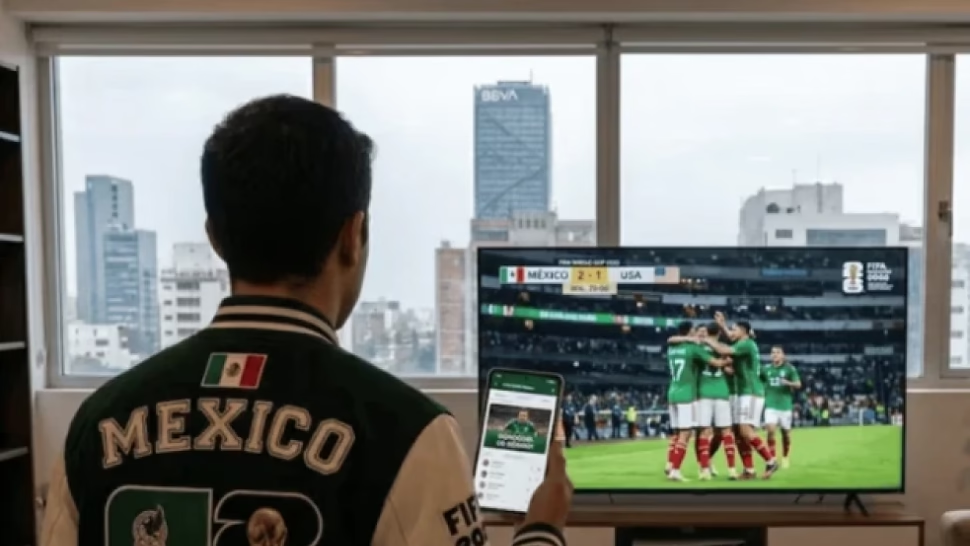
El Mundial 2026 arranca con el duelo entre México y Sudáfrica en el Estadio Ciudad de México. Con 48 selecciones, 104 partidos y sedes en tres países, seguir cada encuentro puede ser caótico. Una herramienta gratuita lo simplifica: integra el calendario completo en tu celular con alertas automáticas.

Cómo sincronizar el calendario del Mundial

El sitio calendariomundial2026.com ofrece un calendario inteligente que se actualiza solo. Funciona con Apple Calendar, Google Calendar, Outlook y otros servicios. Solo eliges tus equipos o todos los partidos, configuras tu zona horaria, y el sistema genera un archivo para añadir en segundos.

RelatedGoogle celebrates 27 years analyzing its origin and evolution

En iOS, ingresas al portal, seleccionas la opción para iPhone o iPad, autorizas la suscripción y listo. Los horarios se ajustan automáticamente a tu ubicación. Cuando avancen las rondas, los nuevos partidos aparecen sin que hagas nada.

En Android, usas Google Calendar. Copias el enlace de suscripción, entras a Google Calendar desde un navegador, vas a “Otros calendarios” > “Desde URL”, pegas el enlace y confirmas. Después activas la sincronización en el teléfono. Así se reflejan todos los encuentros: octavos, cuartos, semifinales y la final.

Ventajas para seguir cada partido

El sistema evita consultas constantes. Recibes recordatorios antes de cada duelo, sin importar el dispositivo. Además, puedes limitar el seguimiento a tu selección favorita o combinarlo con todas las fases eliminatorias. Es una solución práctica para no perderse la Copa del Mundo más grande de la historia.

Continue reading

INE lanza campaña para uso ético de la Inteligencia Artificial

El INE busca que la inteligencia artificial no reemplace decisiones humanas y prevenga desinformación.

INE fija reglas para uso de IA en procesos electorales

El Instituto Nacional Electoral presentó una campaña nacional que promueve el uso ético, responsable y seguro de la inteligencia artificial. El organismo subraya que la IA debe estar al servicio de la democracia, bajo control humano y con apego a valores institucionales.

La iniciativa incluye los “Lineamientos para el desarrollo estratégico y uso regulado de la IA en el INE”, acompañados de cinco infografías. Su propósito es que el personal del instituto aplique normativas claras de transparencia, ética y supervisión al emplear estas tecnologías.

RelatedConstitutional reform proposes regulating the ethical use of artificial intelligence

El esquema contempla un apartado de “Prevención de riesgos digitales”. Advierte sobre la generación de contenidos falsos, la desinformación automatizada y la manipulación digital. Todo ello para proteger la integridad informativa.

El INE determinó que la IA funcionará solo como apoyo técnico, sin sustituir decisiones humanas. Los principios rectores son legalidad, imparcialidad y rendición de cuentas. Las resoluciones seguirán en manos de la autoridad electoral.

La campaña también explica el fenómeno de las “alucinaciones” en la IA: la generación de información incorrecta o inexistente presentada de manera coherente. Ante este riesgo, el instituto recomienda supervisión conjunta y validación obligatoria por parte del personal antes de utilizar cualquier resultado. Así se asegura rigor técnico y seguridad en los procesos.

Continue reading

Visa permite a ChatGPT realizar compras de forma autónoma

Visa integra su red en ChatGPT para que el chatbot compre por cuenta del usuario.

Visa y ChatGPT: las compras autónomas ya son posibles

Visa anunció el miércoles la integración de su red de pagos dentro de ChatGPT. Esto permite que el chatbot actúe como un agente de inteligencia artificial capaz de completar transacciones en nombre del usuario, sin intervención directa.

¿Cómo funciona? El usuario vincula su tarjeta Visa a ChatGPT. Luego, el chatbot puede buscar, seleccionar y comprar productos en comercios que acepten Visa. La red de pagos proporciona la autorización y la supervisión antifraude.

RelatedMusk sues Apple and OpenAI for alleged collusion in artificial intelligence

Jack Forestell, director de producto y estrategia de Visa, explicó en un evento en San Francisco: “A medida que los agentes de IA se convierten en participantes activos de la economía, el enfoque de Visa es garantizar que las transacciones sean confiables, seguras y fluidas”.

Forestell puso un ejemplo concreto: un cliente pide unos auriculares inalámbricos por menos de 150 dólares. ChatGPT encuentra el producto bajo esos parámetros y lo compra automáticamente.

Antecedentes Este no es el primer intento de OpenAI en el comercio electrónico. En 2024 lanzó Instant Checkout, que permitía al chatbot buscar artículos específicos. Sin embargo, el proceso generaba errores y los comercios rechazaban la comisión del 4% que OpenAI cobraba. La empresa retiró la función en marzo pasado.

La colaboración con Visa es distinta porque no se limita a un minorista específico. Ahora cualquier comercio que acepte Visa puede recibir pedidos iniciados por el agente de IA.

Riesgos y medidas de protección Bancos y minoristas han expresado preocupaciones: un cliente podría gastar más de lo previsto, el agente podría comprar el artículo equivocado, o el usuario podría alegar que no autorizó la transacción. Para mitigar estos riesgos, Visa implementó límites de gasto, pasos de aprobación obligatorios y una lista de comercios aprobados.

La competencia también avanza. Mastercard ha comenzado a desarrollar funciones similares, aunque a menor escala. Por ejemplo, una cafetería podría autorizar a un agente de IA para adquirir servicios publicitarios o de proveedores web.

Visa y OpenAI no revelaron los términos financieros del acuerdo ni las comisiones que podrían aplicar a comercios o clientes.

Continue reading