


The US Army modernizes its equestrian traditions
The cavalry has been a historical symbol in the United States Army, representing value and tradition since its origins. However, in a turn towards modernization, the military service announced this Tuesday the reduction of its ceremonial equestrian units, putting the majority of its equines up for adoption. This decision marks the end of an era, although some key exceptions will remain.
Which equestrian units will remain active?
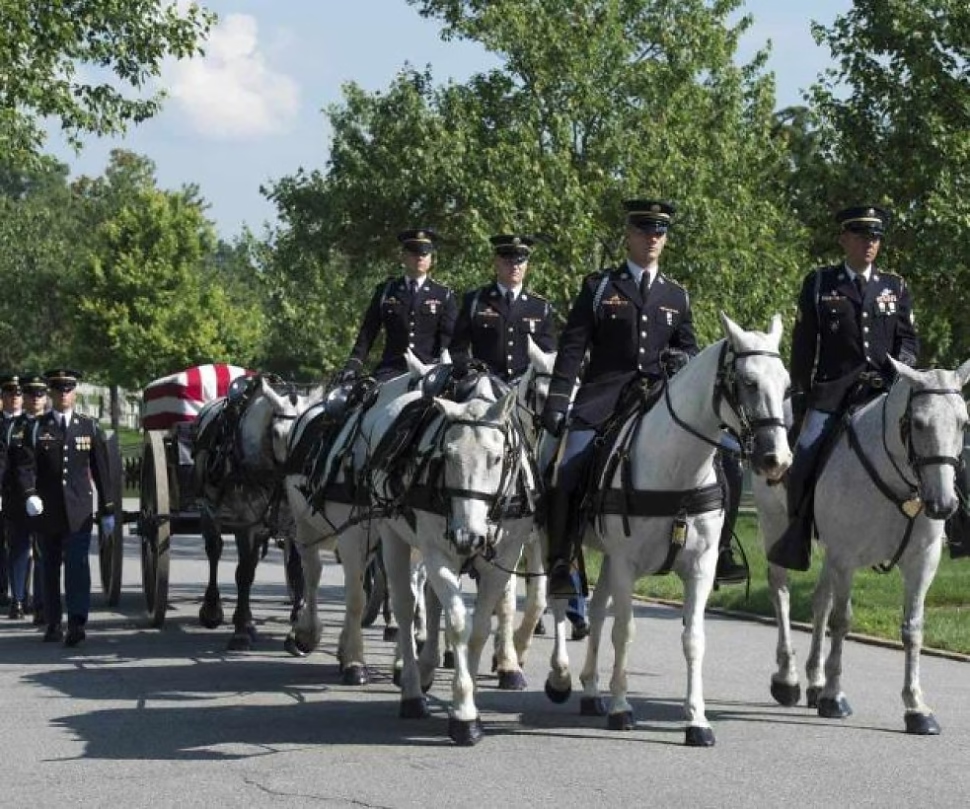
The Army confirmed that it will only retain two cavalry units for protocol purposes: the Old Guard at Joint Base San Antonio (Texas) and funeral honors at Arlington National Cemetery (Virginia). These divisions have a deep symbolic meaning, especially in farewell ceremonies for fallen soldiers, such as the emotional equestrian transfer of Captain Stephanie Rader’s coffin, captured in recent images.
On the contrary, bases such as Fort Cavazos (formerly Fort Hood) will stop operating their cavalry detachments. These equines participated in historic events, including the Army’s 250th Anniversary Parade in Washington D.C., coinciding with former President Donald Trump’s birthday on June 14, 2025.
Implications and strategic context
This transition reflects a pragmatic approach to resource optimization. Maintaining horses involves high logistical costs—from feeding to specialized training—which will now be reallocated to operational priorities. Although the measure generates nostalgia, experts highlight its coherence with the military evolution of the 21st century, where technology displaced the tactical use of cavalry after the Second World War.
However, the decision has sparked debates about the preservation of military identity. “Horses are a tangible link to our history,” said a retired colonel on condition of anonymity. The Army assures that it will compensate for this change by reinforcing educational programs about its equestrian legacy in museums and academies.
For lovers of traditions, the image of horse soldiers in Arlington — where they perform some 8,000 ceremonies annually — will remain a lasting tribute. Meanwhile, the retired horses will be relocated to certified homes, prioritizing their well-being.
Are you interested in learning more about the transformation of the Armed Forces? Share this article and explore our defense and security section to delve deeper into current topics.
Share this news and continue discovering how historical institutions evolve! Find more analysis on our portal.


