


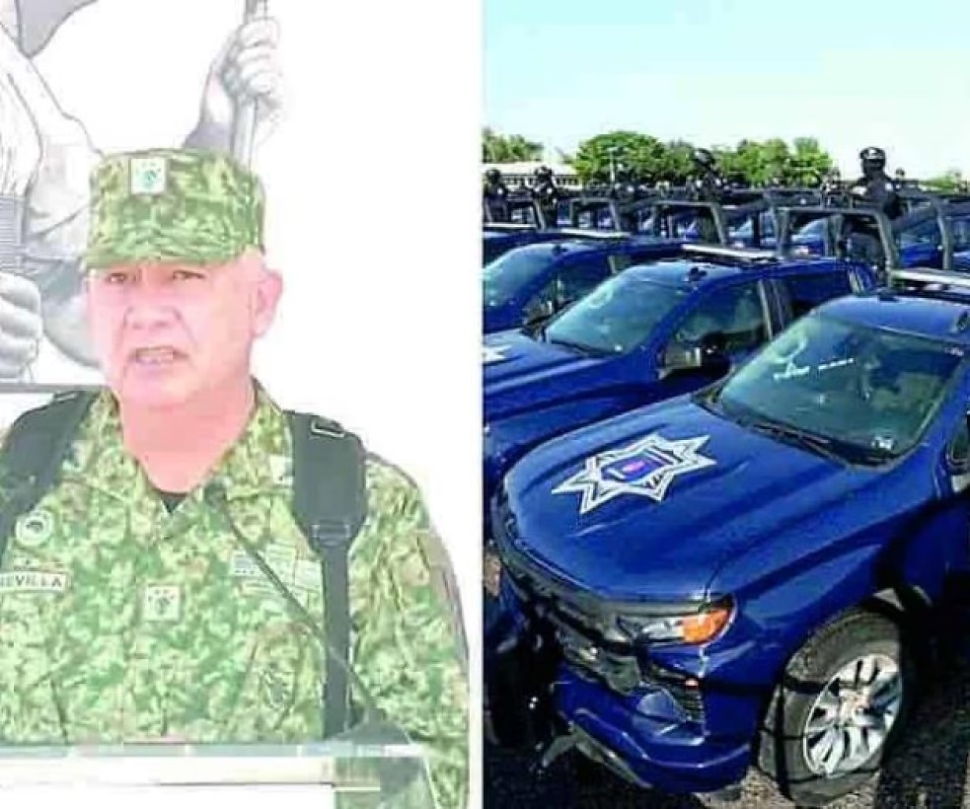
Military reinforcement for security in Sinaloa
The Secretariat of National Defense (Sedena) has granted a special license to the Sinaloa State Police to carry weapons for the exclusive use of the Armed Forces, in addition to delivering six Ocelotl type armored vehicles, traditionally used by the Army. This announcement was made by Division General Ricardo Trevilla during the delivery ceremony of 100 patrols in Culiacán, in a context marked by the conflict between factions of the Sinaloa Cartel.
Technical details of the equipment
The armored vehicles provided are multipurpose models designed to withstand high caliber impacts and explosives. Its functionality covers personnel transportation, tactical reconnaissance and escort operations. Regarding weapons, although the models were not specified, the Federal Firearms Law reserves for military forces the use of assault rifles (such as the FX-05 Xiuhcóatl) and machine guns, which suggests that the state police could operate with this type of device.
In addition, a recruitment program supervised by the National Guard will be implemented to incorporate 150 new elements. Candidates must pass physical, psychological and toxicological evaluations, followed by specialized training. “The goal is to ensure that staff meet the highest standards of integrity,” Trevilla emphasized.
Strategic context
This measure responds to the escalation of violence in the entity, where groups such as Los Chapitos and Los Mayitos are waging a territorial dispute. As part of the comprehensive plan, video surveillance cameras and monitoring centers operated by the military will also be installed in Culiacán. Omar García Harfuch, federal secretary of Security, highlighted that the 100 patrols delivered will reinforce the presence in critical areas: “Strengthening local institutions is key to long-term security.”
General Trevilla stressed that these actions include:
- Placement of military commanders in key state security positions.
- Logistics support with tactical and armored equipment.
- Periodic confidence evaluations for police personnel.
Impact analysis: The decision reflects unprecedented coordination between federal and state bodies, but generates debate about the militarization of civil forces. Experts point out that, although necessary in the face of the emergency, it must be accompanied by intelligence and social development strategies to avoid chronic dependence on the Armed Forces.
Are you interested in learning more about security policies in Mexico? Share this article and explore our exclusive analysis of the evolution of organized crime in the region.


