‘Plan B’ passes the first barrier
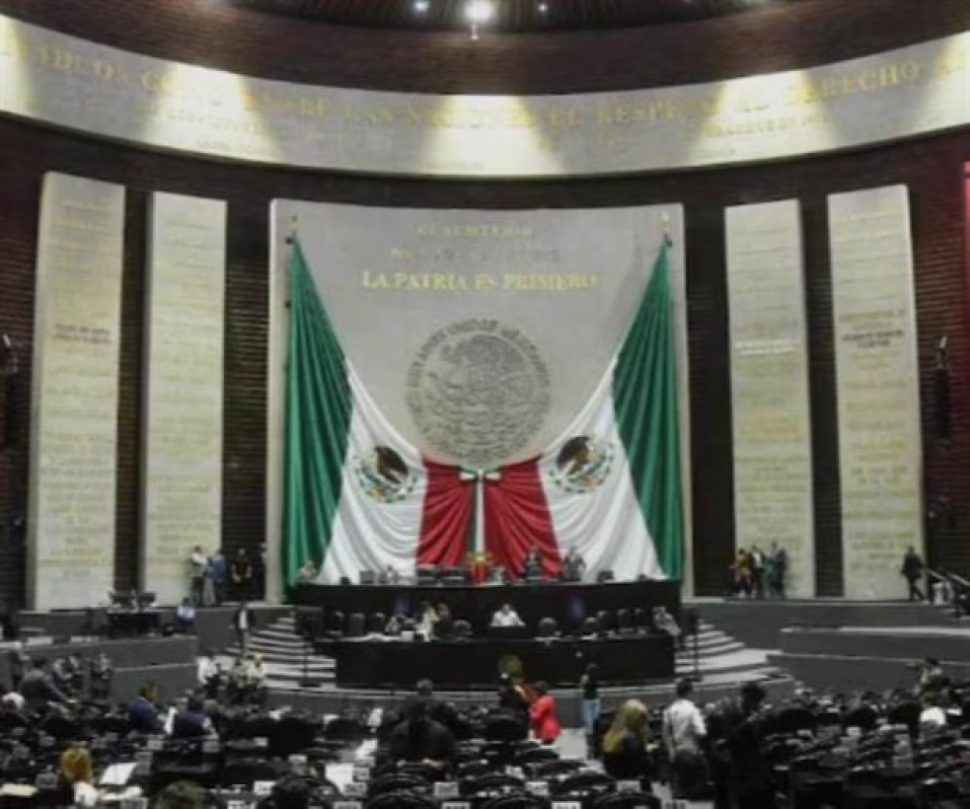
The plenary session of the Chamber of Deputies gave its approval to the electoral reform known as plan B. President Claudia Sheinbaum’s proposal was approved without changes and now travels to state congresses for ratification.
The vote was clear: 377 votes in favor of Morena, MC, PT and PVEM. PAN and PRI added 102 votes against. The suspensive motions presented by the opposition were rejected one by one.
Austerity versus ‘narcosilence’
From Morena, deputy Víctor Hugo Lobo Román defended the project. He said he seeks to promote austerity and guarantee “the progressiveness of political-electoral rights.” He recalled that a more aggressive reform had already been rejected before.
But the opposition has another reading. A much cruder reading.
PAN deputy Laura Cristina Márquez criticized that the reform does not address real problems such as justice, health or education. He accused the pro-government legislators of maintaining a “narcosilence” in the face of the needs of the population.
The PRI did not bite its tongue either. Abigail Arredondo described the project as incongruent. He argued that the supposed savings will be minimal compared to spending on works such as the Mayan Train or Dos Bocas.
“The reduction in spending will affect only a small percentage of municipalities and councilors,” said Arredondo, calling the project misleading.
Meanwhile, the advance is defended from the official ranks. Jorge Luis Sánchez Reyes (Morena) said that this is part of reducing “privileges inherited from the neoliberal period.” Plan B, they insist, strengthens austerity and efficiency.
This is how the board looks: a reform that is advancing rapidly through the federal legislature, loaded with the official seal and the furious criticism of those who see it as pure political theater. Now it’s up to the states.