A judicial verdict after a long process
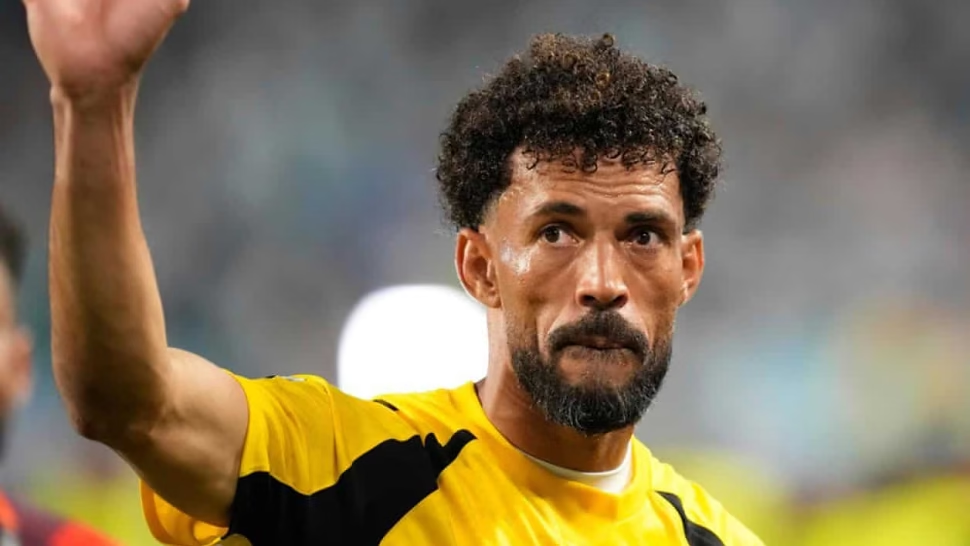
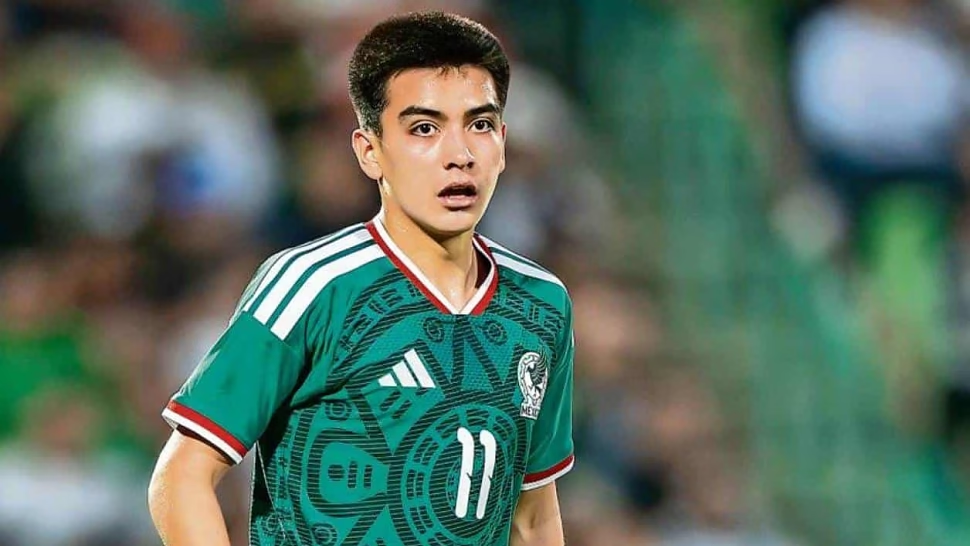
After an extensive legal process that lasted five years, former soccer player Dieter Villalpando was declared innocent this Wednesday of the charges of alleged sexual abuse that were against him. The final resolution was issued during a hearing held in the courts of the Justice Center for Women in the state of Jalisco, ending a period of legal uncertainty for the athlete.
The background of this case dates back to October 2020, when the midfielder, then a player for Club Deportivo Guadalajara, was publicly accused of having sexually assaulted a woman during a social gathering. This episode generated a significant impact on the red-and-white institution, given that other members of the staff were present at the same event, which amplified the media and social impact of the event.
Institutional reactions and the path of appeal
Although Villalpando was linked to the process at the time, he did not face preventive detention as alternative precautionary measures were imposed on him. Regarding the acquittal ruling, the Prosecutor’s Office of the State of Jalisco issued an official statement expressing its dissenting position: “The person was acquitted by a judicial resolution. However, the Prosecutor’s Office, in the exercise of its powers, will present the corresponding appeal, considering that there are elements that must be evaluated by a higher instance.” This statement underlines that the legal path may not be over, depending on the outcome of the next appeal.
The journalistic investigation and follow-up of the case reveal that the professional consequences for those involved were immediate and divergent. The also footballers José Juan ‘Gallito’ Vázquez, Javier Eduardo ‘Chofis’ López and Alexis Peña, who were at the same party, were separated from the Chivas discipline and later transferred to other clubs by decision of the board, then headed by Ricardo Peláez and Amaury Vergara.
For Dieter Villalpando, the situation was different. Since there was a formal complaint against him, the Guadalajara institution opted for contractual termination. However, this measure did not cut short his sporting career. The player continued his professional career, joining the ranks of Club Necaxa and later FC Juárez, a team from which he was recently released, before this judicial verdict was known.
This case exemplifies the complex intersection between high performance sports, criminal justice and public opinion. Analyzing the facts meticulously, we observe a process where institutional decisions (both of the club and the prosecutor’s office) were made under the pressure of media scrutiny and social demands for transparency. The current judicial ruling, although final in the first instance, opens an analysis of the investigation mechanisms in crimes of this nature and the weight of the presumption of innocence in the face of public condemnation. The Prosecutor’s Office’s decision to appeal indicates a persistent divergence in the interpretation of the evidence, an aspect that the higher court must resolve based on a rigorous examination of the file.
Did this analysis give you a more complete perspective of the case? Share this content on your social networks to expand the conversation and explore more news and specialized reports on our platform to stay informed.