They arrest a man with half a million grams of cocaine in Sonora

A "sweet" shipment with a bitter surprise: this is how the trip of a tractor-trailer in Sonora ended.

When the “sweet business” was too literal

Imagine this: you are driving your tractor-trailer, listening to your corridos playlist lying down, thinking that your biggest concern is the traffic on the highway… until the Army stops you and discovers that your merchandise is not Skittles, but 500 kilos of cocaine. This is what happened to Israel “N” (because, of course, in Mexico even drug traffickers have the right to anonymity), who now must explain how a company “candy marketer” ended up exporting something more stimulating than sugar.

The operation: more surprising than a soap opera ending

Everything happened at the Cucapah military post, in San Luis Río Colorado, Sonora (yes, the same state where the heat and narcodeals compete for which one burns the most). The soldiers, with that sense of smell that only years of seeing give them.”

RelatedThe Navy seizes 4.2 tons of cocaine in Guerrero

suspicious packages”

, they decided to check the tractor-trailer. And voilà: 503 packets of “special sweetener”, each weighing one kilo, which had nothing to do with gummy bears. Of course, the logistics were impeccable: the vehicle left the State of Mexico (classic) heading to Tijuana (even more classic), disguised as a candy deliveryman. The ghost company? Based in Jalisco, because even organized crime knows that tequila is not the only thing that is exported well from there.

The authorities, with that seriousness that they have when they are not making TikToks, confirmed that the drugs belonged to a criminal group (surprise: no one thought of an independent entrepreneur). Now, Israel “N” faces the least glamorous journey: from the highway to the MP, where awkward questions await him like “At what point did you think this was a good idea?” and “Did you really think ‘candy’ was a good euphemism?”.

Moral: in life, as in drug trafficking, shortcuts have GPS

This episode leaves us with several lessons: 1) The Mexican Army has a better eye than airport scanners, 2) If your “candy” business moves half a million grams of something, it may not be candy, and 3) In Mexico, even delivery drivers have more adrenaline than an Uber Eats delivery driver during rush hour. Of course, no one will beat the detail that the cocaine traveled in a tractor-trailer with legitimate identification. Because, what is more Mexican than bureaucracy, even in crime?

Are you surprised by the creativity of these illegal entrepreneurs? Share this note and discover more stories where reality surpasses the narcoserial. #NotaConSaborAPolemica

Explore more content about anti-drug operations and other “business adventures” that you won’t see on Shark Tank. Share and follow the thread of absurdity!
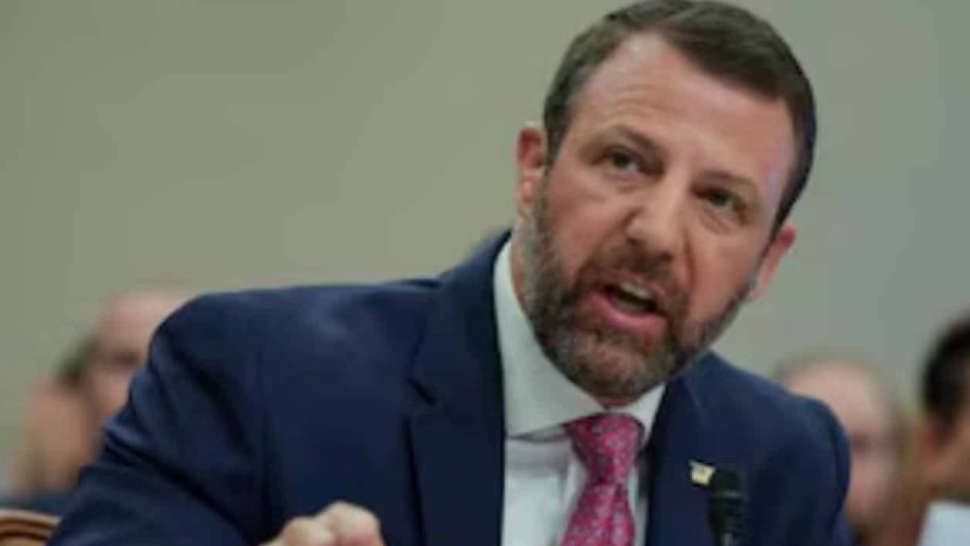

Mullin defends border wall before US committee

Secretary Markwayne Mullin assured that physical barriers stop organized crime.

Defense of the border wall

The Secretary of Homeland Security of the United States, Markwayne Mullin, defended this Thursday the construction of the wall on the border with Mexico. During a hearing before the House Appropriations Subcommittee, he stated that physical barriers have a positive impact on containing illicit activities linked to organized crime.

Mullin noted that nine criminal groups maintain a presence on the border. They operate through “plaza bosses” who identify vulnerabilities at crossing points to facilitate drug and human trafficking. This represents a constant threat to the security of the United States, he indicated.

The official maintained that physical barriers have forced these groups to modify their routes and methods. Now they use drones and tunnels to evade surveillance. For this reason, it was considered necessary to strengthen the border control strategy.

Finally, he pointed out that the security policy of the Department of Homeland Security contemplates the use of infrastructure, advanced technology and specialized monitoring. The aim is to concentrate efforts in high-risk areas and improve the detection of illicit activities on the border.

Continue reading

Lazzeri: cooperation with the US reduces fentanyl by 66%

Lazzeri attends Trump event and highlights cooperation

Roberto Lazzeri, Mexican ambassador to the United States, had his first public event after presenting his credentials in Washington. He participated in an event chaired by Donald Trump for the 250th anniversary of American independence, held on the National Mall.

During the event, Trump highlighted a 66% reduction in the flow of fentanyl into the United States. Lazzeri pointed out that these results are the product of bilateral cooperation promoted by President Claudia Sheinbaum, based on respect for sovereignty, coordination and results.

The ambassador also highlighted a 35% decrease in overdose deaths in the United States and the seizure of nearly 30,000 firearms, attributing them to joint efforts.

Trump mentioned the 2026 FIFA World Cup in North America. Lazzeri stated that Mexico contributed with security, connectivity and tourism, with an economic impact of more than 18 billion pesos.

“Security and shared prosperity are the best example of what Mexico and the United States can achieve when they work together with respect,” concluded the diplomat.

Continue reading

By Mexico party: teleworking and no classes in CDMX

Government decrees teleworking and suspension of schools for national team matches.

Measurements by the national team’s match

The federal government issued a decree for Tuesday, June 30, the day of the Mexico match at the Mexico City Stadium. Orders to implement teleworking, remote work or flexible modalities for public servants in the capital.

Exceptions and suspensions

The official objective is to contribute to urban mobility, road safety and administrative continuity. School activities are also suspended at all levels, from preschool to higher education, in public and private schools in Mexico City.

Work related to health, medical care, health emergencies, civil protection and disasters are exempt from teleworking.

“The agencies and entities of the Federal Public Administration must prioritize the use of information and communication technologies that guarantee the adequate performance of substantive and administrative functions, ensuring at all times the continuity of their services, the fulfillment of their powers and the attention to citizens.”

Continue reading