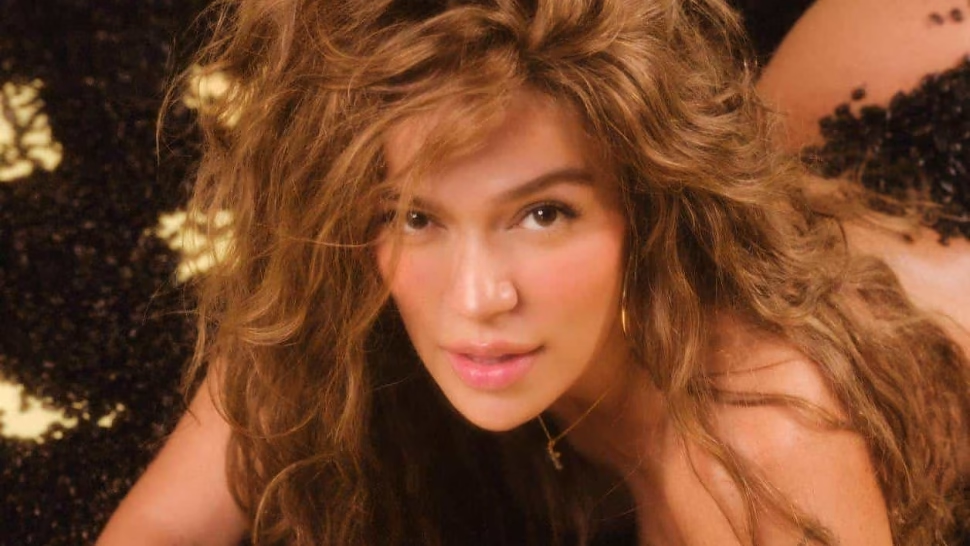
The controversy between Daniela Castro and Ana María Alvarado
The conflict between the actress Daniela Castro and the host Ana María Alvarado has escalated after crossed statements about alleged school bullying in her youth. The origin of the debate dates back to the revelations of Danka, Castro’s daughter, who confessed to having suffered harassment during her childhood. This testimony, broadcast on the program El Burro Van Rankin, triggered a series of public accusations that have divided opinions.
The details of the dispute
Ana María Alvarado, when referring to the case, suggested a historical irony: according to her version, Castro would have been an aggressor during her educational period. “She was rude and critical of her colleagues,” he stated. However, the actress responded during an interview with Yordi Rosado, calling Alvarado a “pseudojournalist” and reversing the accusations: “She was the one who carried out the harassment,” she declared, adding that they were never part of the same social circle.
The discussion took a legal turn when Castro alluded to a previous litigation between Alvarado and Maxine Woodside, questioning her professional ethics. “You bit the radio queen’s hand,” he rebuked. For her part, the host denied having celebrated Danka’s suffering and clarified that her comment was misinterpreted: “I would never say that bullying is okay,” she insisted during her most recent broadcast.
Analysis of the context and repercussions
This confrontation shows two recurring phenomena in the public sphere: revictimization and the use of the past as a rhetorical weapon. Communication experts point out that cases like this reflect how the media amplifies personal conflicts, often without verifying background information. In addition, they highlight the risk of normalizing narratives of justice by own hands on social networks.
A relevant fact is the temporal discrepancy: Alvarado mentioned that Castro only attended “one year” at her school, while the actress insists that the roles of harasser and victim were reversed. This divergence underscores the difficulty of reconstructing events decades later, especially when they involve figures with media exposure.
Conclusions and final reflections
Beyond the contradictory versions, the debate reopens questions about how school bullying is addressed in Mexico. Organizations such as Bullying Without Borders report that 7 out of 10 children suffer violence in educational environments, a systemic problem that transcends isolated episodes. The controversy also invites us to reflect on the role of the media in managing conflicts between celebrities and the limits of freedom of expression.
What’s next? Both sides have expressed a desire to close the chapter, but the impact on their public images persists. For Castro, this represents a defense of his family; for Alvarado, a challenge to his journalistic credibility.
Share this analysis on your social networks and join the dialogue on how to build spaces free of harassment. Explore more content on media ethics and mental health in our specialized section.