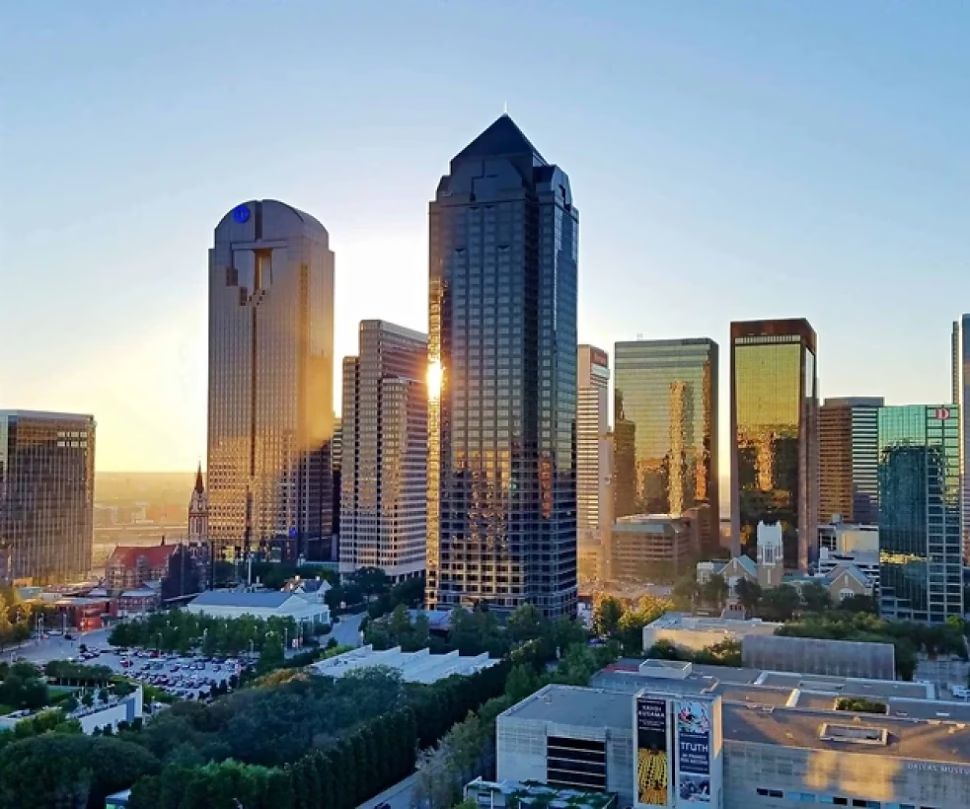
Dallas: connectivity and mobility for global events
Dallas’ urban structure positions it as a viable destination for large-scale international meetings. Its air connectivity, its highway network and its public spaces make up a logistical expert that can absorb large volumes of visitors.
Two airports, two gateways
The metropolitan area has two commercial terminals. Dallas-Fort Worth International Airport (DFW), located between both cities, is a central node for domestic and international flights. For its part, Dallas Love Field, about 10 km from downtown, offers a closer alternative. Originally a World War I military camp, it was acquired by the city in 1927 and expanded.
This airport duality makes it possible to distribute the arrival of attendees and shorten travel times to the urban heart.
A city of highways
Dallas relies predominantly on the private automobile. Its extensive motorway network, with plans for a new 70 km radius ring road, organizes traffic into staggered accesses. However, on days of high concentration, dependence on the private vehicle can generate saturation.
Public spaces for the meeting
Two parks stand out in the center. Klyde Warren, opened in October 2012, is an urban park with tables, free Wi-Fi, fountains, a children’s area, a stage and activities such as yoga and Zumba. It is located in the Cultural District and is accessible on foot, by bicycle or tram. Also the Main Street Garden, opened in November 2009, offers street lamps, Wi-Fi, fountains and artistic works. Both points serve as pedestrian gathering places during events.
Sports ecosystem and complementary attractions
Dallas is home to high-level professional franchises, giving it experience in massive events. In addition, the Dallas World Aquarium, in the center, adds a recreational option close to the busiest areas.
As a whole, the city meets operational and urban conditions to serve as an international headquarters, although its mobility remains tied to the automobile.