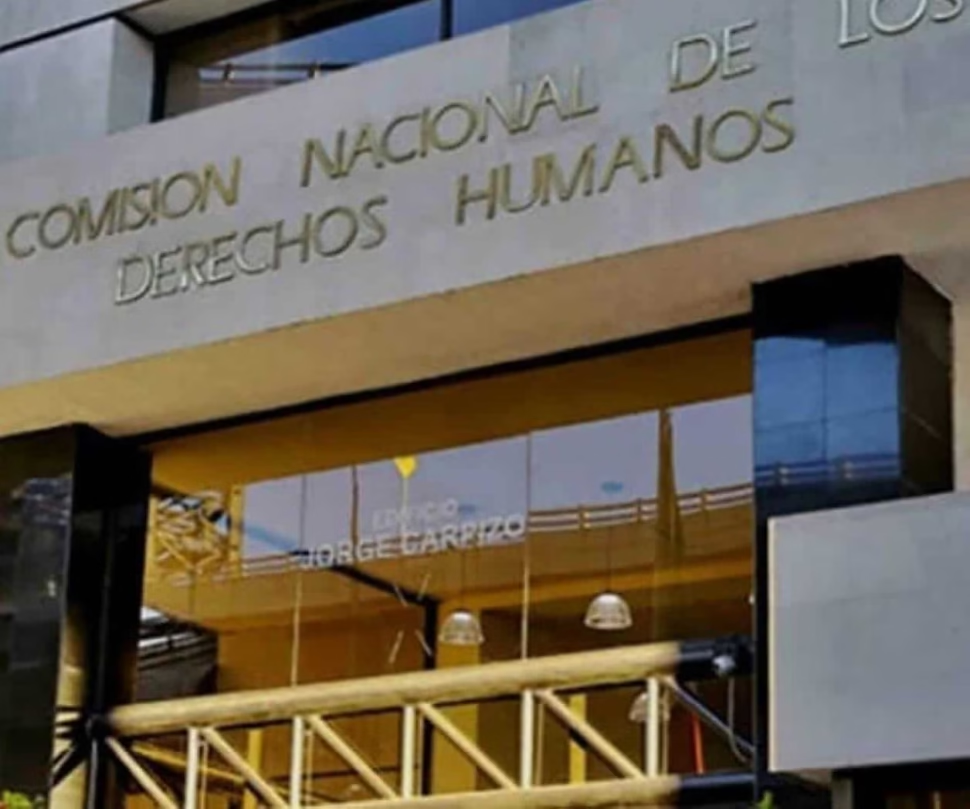
The National Human Rights Commission (CNDH) will send personnel to Mexico City, Guadalajara and Monterrey during the 2026 Soccer World Cup. The objective is to observe, attend to and protect human rights in airports, bus stations, immigration points, stadiums and alternative spaces.
Surveillance and prevention actions
The CNDH urged the three levels of government to guarantee free movement, security in public spaces and protection of journalists, communicators and content creators. He also asked to reinforce prevention and attention to possible cases of human trafficking and exploitation, risks that international organizations associate with major sporting events.
The agency implemented a national campaign to prevent trafficking and promote a culture of respect. It includes messages in the media, distribution of the “World with Peace and Rights” booklet and information materials.
Effects on vulnerable communities
The CNDH documented complaints from neighbors near the stadiums about accelerated increases in housing costs and restrictions on the use of public spaces. Informal traders, domestic workers and homeless people in tourist areas have faced urban planning operations that affect their livelihoods.
The agency warns that rising housing prices disproportionately impact older adults, people with disabilities, women heads of households, and urban indigenous communities.
The CNDH called on FIFA and the organizing bodies to enable accessible reporting and protection mechanisms for people in vulnerable situations. He also asked to incorporate civil organizations and neighborhood groups in decisions about the event.
Any person, Mexican or foreign, may request guidance, advice or file complaints about alleged human rights violations during the World Cup through offices, telephone lines and digital platforms of the CNDH.