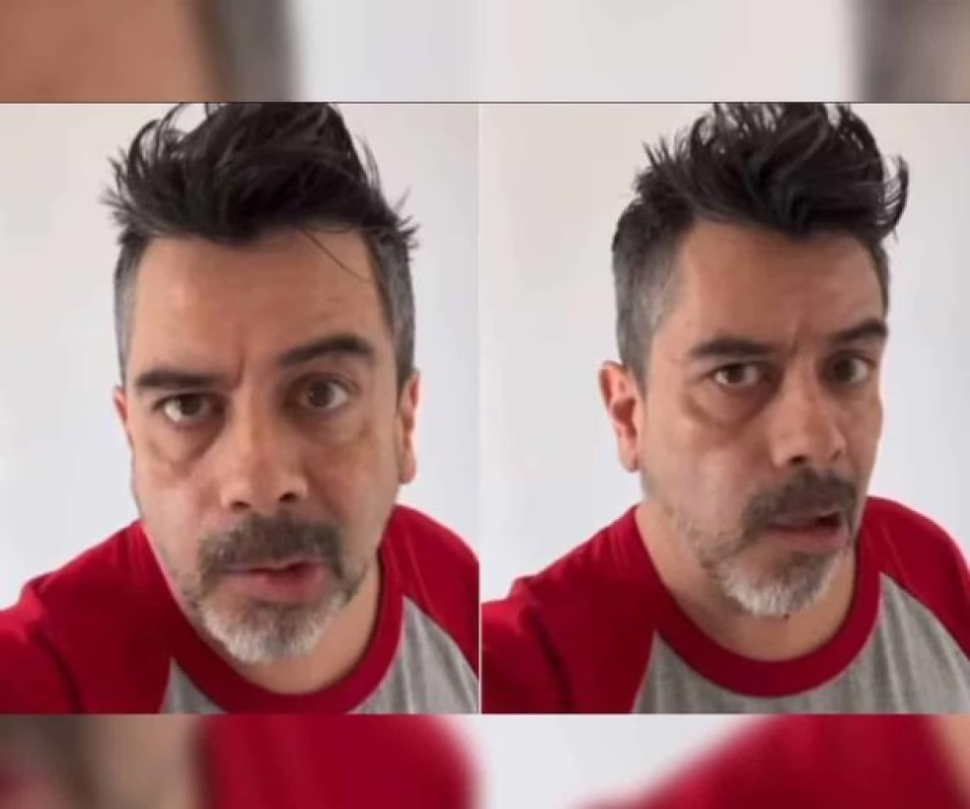
Carlos Espejel faces facial paralysis and attributes his condition to stress
The renowned actor and comedian Carlos Espejel surprised his followers by reappearing on social networks with a visible change in his face. Through an emotional video, the artist confirmed that he suffers from facial paralysis, a condition that has temporarily interrupted his career. As he explained, the origin of this condition could be linked to high levels of stress, a common factor in neurological disorders of this type.
Medical details and public reaction
Peripheral facial paralysis, like the one Espejel experiences, occurs when the facial nerve (seventh cranial nerve) suffers inflammation or compression, limiting muscle mobility on one side of the face. Although the comedian did not specify the exact type of diagnosis, he mentioned being under medical treatment and receiving support from the National Association of Actors (ANDA), which covers his medical expenses.
With his characteristic casual style, Espejel joked about his situation: “Indeed, today I woke up flirty,”, demonstrating resilience in the face of adversity. However, he stressed the importance of taking a professional break to prioritize his recovery, which included postponing classes at his acting school.
Impact and reflections on work stress
This case reopens the debate about the effects of chronic stress on health, especially in demanding industries such as entertainment. Experts point out that prolonged situations of tension can trigger everything from immunological alterations to neurological complications, like the one the actor faces.
Espejel thanked the massive support of colleagues, students and fans, underlining the importance of emotional support networks during health processes. “To my friends and my family, thank you very much,” he expressed, recognizing the value of support in his recovery.
As the artist focuses on rehabilitation, his experience serves as a reminder to monitor stress levels and seek professional help for unusual symptoms. Facial paralysis is usually reversible with early intervention, but requires rest and close medical monitoring.
Were you interested in this note? Share it on your social networks and discover more stories about health and well-being in the world of entertainment.
Source: El Universal.