CAPUFE promotes the modernization of the highway network in Tamaulipas

Concrete actions and a million-dollar investment transform the road network of the northern border, boosting the economy and security.

Strategic Investment in Border Connectivity

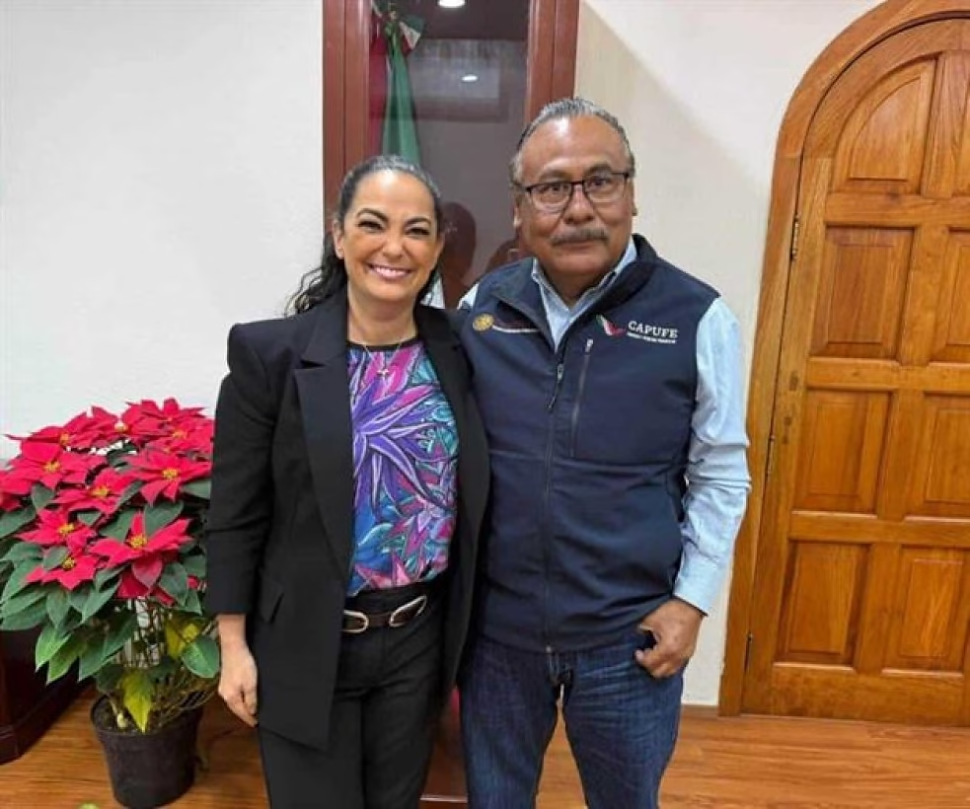
The senator for Tamaulipas, Olga Sosa Ruiz, held a working meeting with engineer Rubén Hernández Bermúdez, general director of Federal Roads and Bridges of Income and Related Services (CAPUFE). The meeting focused on reviewing the strategic projects and the investment plan of this organization, which exceeded 100 million pesos in 2025 destined for the restoration and modernization of the national highway network, with a direct impact on the state.

During this year, actions in Tamaulipas have been aimed at strengthening regional connectivity, increasing road safety and promoting economic development, with special emphasis on border areas and logistics corridors. The legislator recognized the maintenance and conservation work carried out on the Tampico Bridge, a critical infrastructure for the transportation of goods, the mobility of people and the link between Tamaulipas and Veracruz. These interventions are vital to ensure its optimal and reliable operation.

RelatedCapufe will implement exclusive payment with TAG on federal highways

Key Works and Future Vision

CAPUFE’s Annual Public Works Program 2025 has outlined a clear roadmap for the state. One of the notable interventions is the modernization of access to Reynosa via San Fernando, a road work designed to substantially improve vehicle flow and decongest a nerve center for commercial activity. At the same time, in the municipality of Matamoros, tenders and modernization works financed with federal resources were carried out, which include the rehabilitation of road sections, improvements in the pavement and the updating of signage, positively impacting several kilometers of both urban and regional infrastructure.

A large-scale project that is being followed up is the Expansion of Bridge III in Nuevo Laredo. This initiative is essential to improve the efficiency of foreign trade and logistics at one of the most important border crossings between Mexico and the United States. The expansion seeks to streamline binational commercial exchange, reducing waiting times and operating costs for cargo transportation.

Management in all the border municipalities of Tamaulipas is permanent and is carried out in close coordination with federal and state authorities. The objective is comprehensive: rehabilitate lanes, improve the operation of international bridges and, consequently, speed up border traffic. This joint effort seeks to strengthen regional competitiveness, directly benefiting the industrial and agricultural sectors that depend on agile and efficient exports.

In addition to large-scale works, CAPUFE runs an ongoing program to prolong the useful life of the infrastructure and ensure safe driving conditions. To do this, it deploys an operational network composed of control centers, cranes, road assistance units and technological monitoring systems in real time, ensuring a rapid response to incidents and constant preventive maintenance.

Are you interested in learning more about how infrastructure drives economic development in your region?Share this information on your social networks and explore more content about connectivity and logistics projects on our site.
Semar cancels tsunami warning after earthquake in Chiapas

Semar cancels tsunami warning after reviewing sea levels in the Pacific.

Alert cancellation

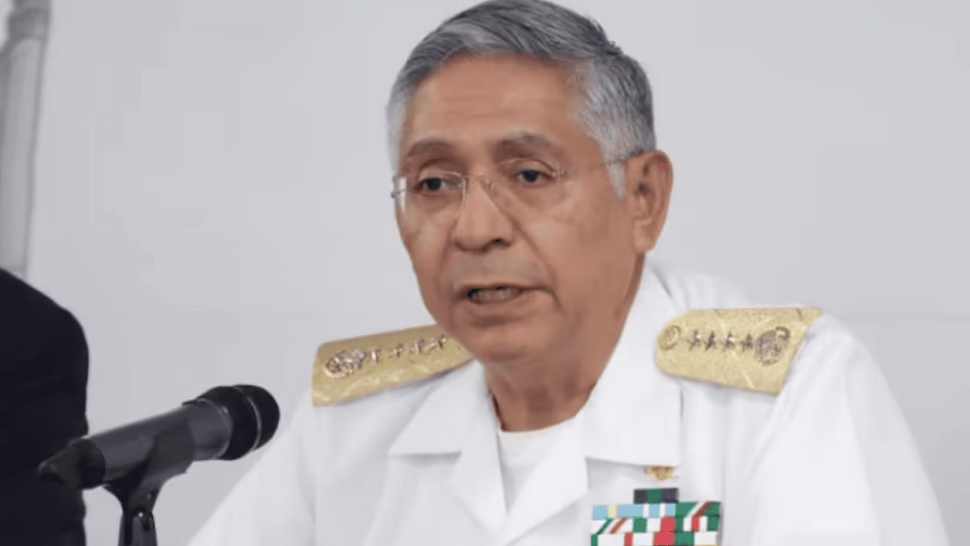
The Secretary of the Navy (Semar) reported the cancellation of the Tsunami Alert for the Mexican Pacific. The measure was taken after the 7.4 magnitude earthquake recorded 135 kilometers southwest of Ciudad Hidalgo, Chiapas.

According to the department in charge of Raymundo Pérez Morales, the decision was based on the analysis of sea level observations. On the coasts near the epicenter, no significant variations are expected.

Semar maintains permanent monitoring of sea conditions to inform the population of any changes. “Prevention, surveillance and timely information are part of our commitment #ParaServirAMéxico,” he posted on his X account.

Security recommendations

After the earthquake, President Claudia Sheinbaum Pardo activated security protocols. On his social networks he asked not to go near the beaches in the next few hours due to the risk of tsunami. “The Secretary of the Navy recommends not approaching those beaches in the next six hours due to the risk of tsunami. It is important to follow the recommendations of Civil Protection,” he wrote around 10:00 a.m.

Semar continues to monitor the sea to guarantee the safety of the population and avoid incidents.

Continue reading

Texas buoys break off and close border bridges

One hundred Texas buoys were dislodged by the rising Rio Grande and closed bridges.

Loose buoys in the Rio Grande

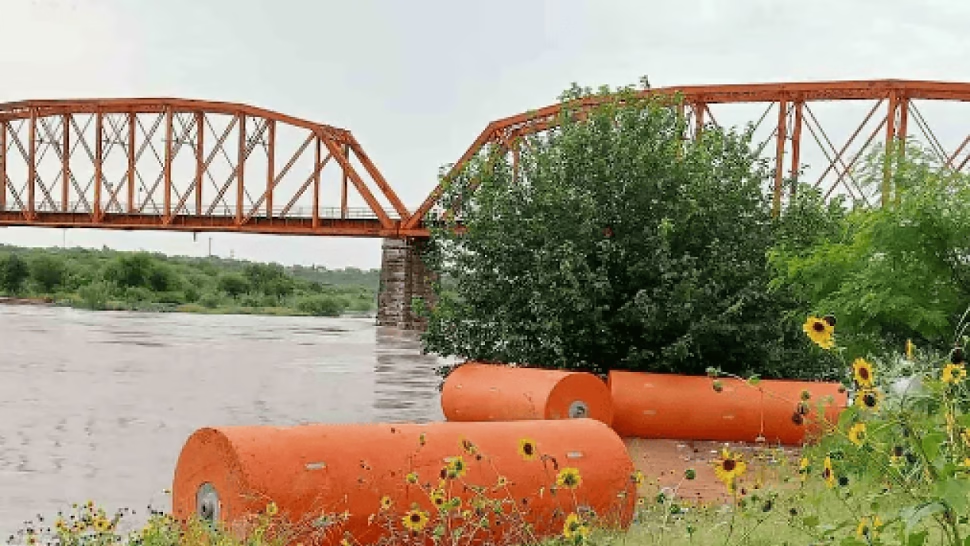
Around 100 buoys and floating walls placed by the Texas government on the border between Eagle Pass and Piedras Negras, Coahuila, dislodged due to recent rains and the increased flow of the Rio Grande. State Civil Protection images show how the structures are carried away by the current; some are already stuck in Mexican territory.

International bridges were immediately closed due to the risk of impact. Eagle Pass Mayor Aaron Valdez reported on social media that they would remain closed until the buoys passed. His counterpart from Piedras Negras, Jacobo Rodríguez, confirmed the situation in a video: “There are 100 coming that were brought by the current and they are loose; let’s hope they get stuck somewhere.”

Each floating wall weighs about a ton. Given the possibility of hitting the bridge structure, it was decided to close the border crossing.

No risk of overflow for now

The buoys, installed to deter unauthorized migrant crossings, were placed on the US shore. Francisco Contreras Obregón, regional coordinator of State Civil Protection, explained that between 5 and 6 in the afternoon the flow would reach its maximum point: 2,183 cubic meters per second, with a depth of 7.5 meters. He assured that there is no risk of overflow, but urged the population not to approach the area.

Continue reading

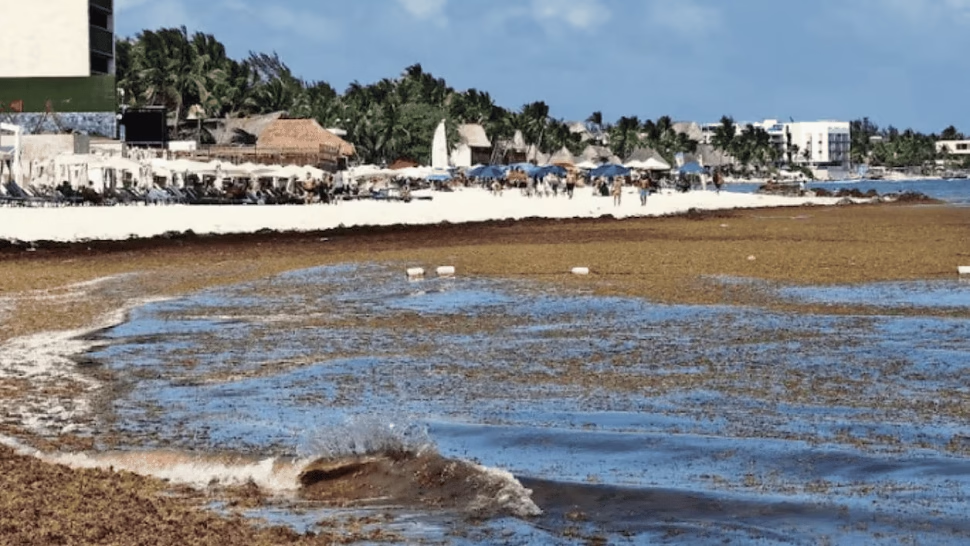
Sheinbaum announces new plan to stop sargassum on beaches

The federal government will reinforce the fleet of ships to contain the algae in the Mexican Caribbean.

Government reinforces actions against sargassum in Quintana Roo

President Claudia Sheinbaum assured that her administration will make the “maximum effort” to reduce the arrival of sargassum to the coasts of Quintana Roo. The announcement was made from Tulum, during his morning conference on Friday, July 17.

He acknowledged that this month the presence of the algae increased and that the acquisition of more specialized vessels for its collection is planned.

“It is very difficult to prevent, to address the fundamental cause, it is complex and it is an international issue, in any case. What we can do is prevent sargassum from reaching the beaches or make our maximum effort to reduce the arrival of sargassum to the beaches,” he said.

The state government of Mara Lezama, the Ministry of Environment and Natural Resources, the Ministry of the Navy and the Ministry of Science and Technology lead a comprehensive program against the problem.

Sheinbaum explained that the strategy includes the purchase of more Sargacero boats to capture the seaweed at sea, as well as the installation of additional barriers in coordination with hoteliers.

“And take that sargassum to a center so that it can be recycled and used in some economic activities, whether it is production of energy or construction materials, or other possibilities that sargassum has, but it has to be fished in the sea and for this we need more capacity,” he explained.

The plan seeks to contain the environmental and tourist impact of sargassum, a recurring phenomenon in the Mexican Caribbean.

Continue reading