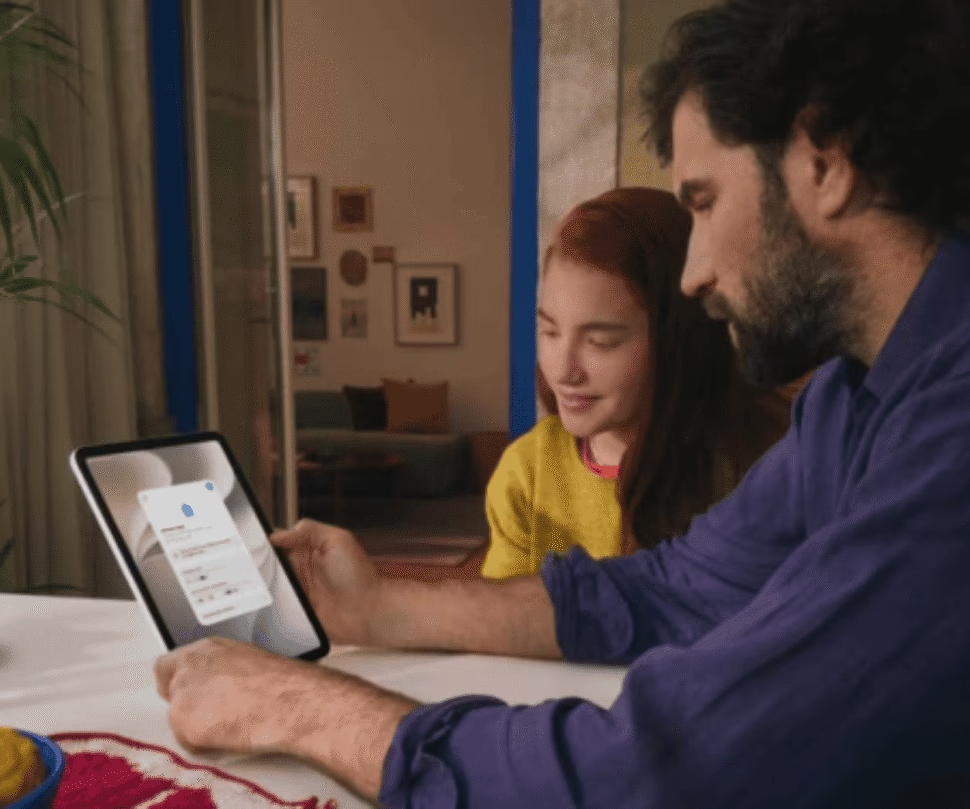
During the 2026 Worldwide Developers Conference (WWDC), Apple introduced a significant update to its child protection tools. The new features will arrive on iPhone, iPad and Mac in the fall, and seek to offer a safer digital experience for minors.
Controls from the Child Account
The basis of the strategy is the Children’s Account, which automatically activates restrictions on adult websites, the App Store and access to content by age range. “We recognize that every child is unique and that parents can best decide what works for their family,” said Anne Thai, Apple’s senior director of Marketplace Technologies and Platforms. The executive added that access to personal devices should be limited for children under 13 years of age and expanded gradually.
Parents will be able to choose their children’s starter apps: a basic set, a recommended selection or a manual choice. Ask to Browse was also presented, a tool that forces minors to ask permission to visit a new website. “Children will need to ask permission when they want to visit a new website. Parents can review it before authorizing it,” explained Sumbul Desai, Apple’s vice president of Health. The function will be activated by default for children under 13 years of age.
Communications and usage time
Apple expanded its warning system for sensitive images: it now intervenes before minors see violent or inappropriate content. Additionally, parents may require permission to add new contacts in Messages, FaceTime, or Phone.
As for screen time, Time Limits will offer daily recommendations for entertainment, video games and social media, based on the child’s age and developed with the American Academy of Pediatrics. “Experts recommend that children under 13 years of age not use social networks,” Thai recalled. Families will be able to create custom schedules to restrict certain apps at different times of the day.
Apple redesigned the Screen Time tool to more clearly show average usage and key controls. It also presented new tools for developers, which will allow offering age-adapted experiences without sharing personal data such as date of birth.