Antonio Rattín, emblematic former player of Boca Juniors and the Argentine national team, died in Buenos Aires at the age of 89. The Argentine Football Association (AFA) confirmed the news and expressed its regret for the loss of a national football legend.
Rattín, known for his physical and brave game, played in the 1962 Chile and 1966 England World Cups. With Boca he won six national titles and was runner-up in the Copa Libertadores in 1963. The club said goodbye to him with a message: “Caudillo, Argentine and eternally Bostero.”
The incident that changed football
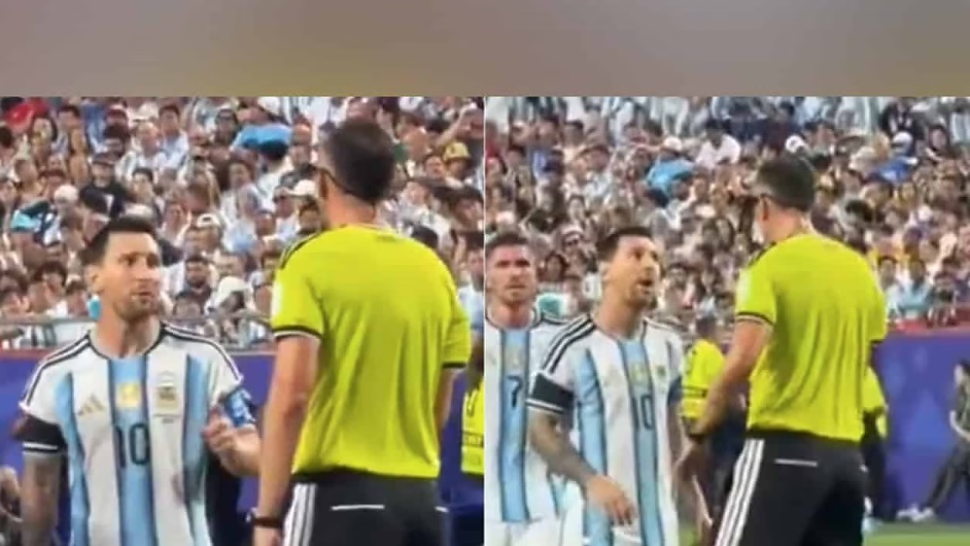
During the 1966 World Cup, in the quarterfinals against England, Rattín was expelled for “verbal excess.” With no cards yet, the referee told him that he had to leave the field. Upon leaving, the footballer crumpled a corner pennant with the English flag and sat on the red carpet reserved for Queen Elizabeth II.
“When I was expelled I went to the queen’s carpet and sat down… then I started walking. I remember grabbing the airy chocolates they threw at me,” he recalled in an interview.
The violent situation led FIFA to look for a clear way to communicate sanctions. Kenneth George Aston was inspired by street traffic lights and in 1967 created the yellow and red cards, which debuted at the 1970 World Cup in Mexico.
Rattín’s rudeness also marked the beginning of the football rivalry between Argentina and England, which reached its peak in Mexico 1986, with Diego Maradona’s goals amid the tension over the Malvinas war.