WHO approves the first global agreement to confront future pandemics

A historic milestone for global health: discover how this agreement will change the future of pandemics.

A historic step towards a safer world

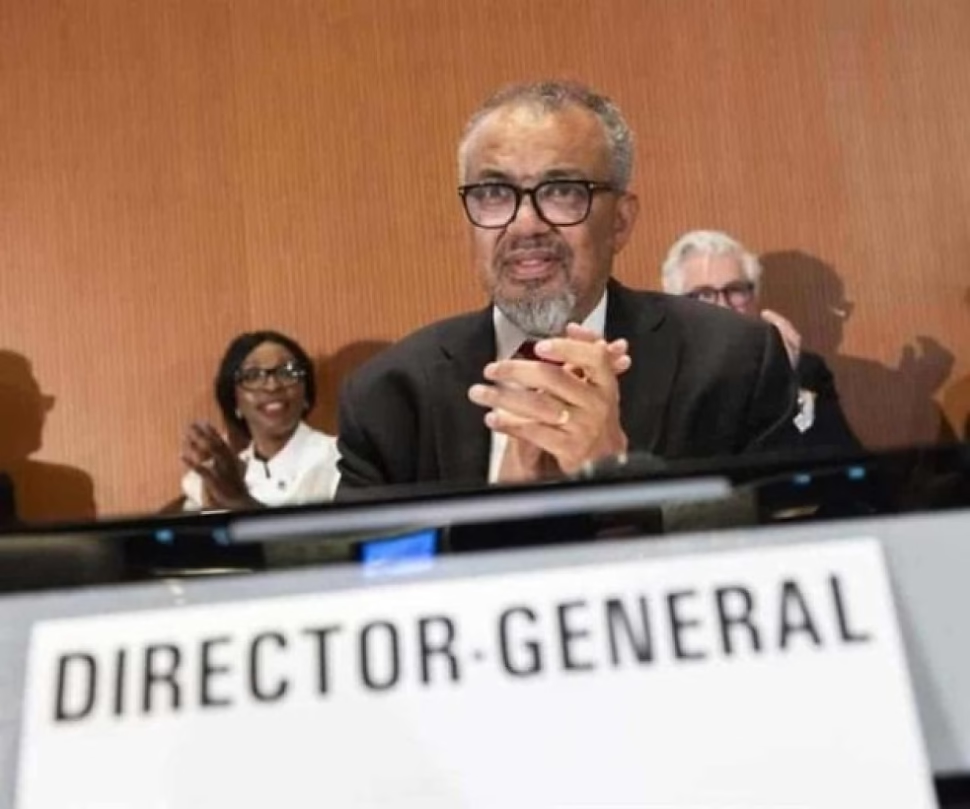
Let’s celebrate this transformative moment! After more than three years of intense negotiations, the World Health Organization (WHO) has taken a monumental step by adopting the first Global Agreement on Pandemics. Imagine a future where humanity is united, prepared and empowered to face any health threat. That future starts today!

Global coordination to protect lives

This revolutionary pact is not just a document; It is a commitment of international solidarity. It establishes clear principles and innovative tools to strengthen collaboration between nations, ensuring that no country is left behind. From prevention to response, every detail is designed to create a more resilient global health system.

RelatedArgentina leaves the WHO under the Milei government

The best? It includes mechanisms to ensure equitable and timely access to vaccines, treatments and diagnostics. Because health is a right, not a privilege. And this agreement reaffirms it!

Innovation and justice in action

The process does not stop here. The drafting of a Pathogen Access and Benefit Sharing System (PAS) will soon begin, a crucial advance to ensure transparency and fairness in the distribution of resources. In addition, a Financial Coordinating Mechanism and a Global Supply Chain Network will be created, eliminating barriers and accelerating aid where it is needed most.

Pharmaceutical manufacturers also have a leading role: they will allocate 20% of their production in real time to the WHO during emergencies, prioritizing developing countries. This is solidarity in action!

The path to a brighter future

This agreement will come into force after 60 ratifications, marking a before and after in the history of global health. Each signature brings the world closer to a future where pandemics do not take us by surprise. Because together, we are unstoppable.

Ready to be part of this change? Share this news and help spread hope. Explore more inspiring content and join the conversation for a healthier, more united world!

#TogetherForGlobalHealth #FutureWithoutPandemics

US and Iranian attacks threaten Middle East ceasefire

New US airstrikes on Iran and Iranian retaliation put the truce in the region at risk.

New attacks and reprisals

Early Thursday morning, the United States launched new airstrikes against Iran. In response, Tehran attacked Persian Gulf countries allied with Washington. The escalation puts at risk a provisional agreement that sought to end the war in the region.

Warning sirens sounded at least three times in Bahrain, headquarters of the US Fifth Fleet. Missiles also hit Kuwait and Qatar. Later, Jordan, where the US has troops and aircraft, also raised its alarms.

Iranian reaction and victims

An Iranian official accused Washington of attacking the area around the country’s only nuclear power plant. During the afternoon, more explosions were reported in other areas.

According to Iran’s Ministry of Health, the two days of bombing have left at least 14 dead and 78 injured. The majority belonged to the armed forces.

In Kuwait, one person was injured by debris when air defenses shot down three ballistic missiles, a cruise missile and 10 drones. Bahrain reported that it intercepted incoming fire, without further details. Jordan, through its spokesman Mohammad al-Momani, confirmed that all Iranian fire was intercepted.

Iranian state television reported that the Revolutionary Guard fired missiles at a US base in Jordan. So far there are no reports of damage in Qatar.

The actions come hours after President Donald Trump warned that Iranian attacks on ships in the Strait of Hormuz meant the end of the fragile ceasefire. He threatened to escalate the conflict if the attacks did not stop. The international community fears that the region will once again fall into a multiple war, which could block energy shipments through the strait, vital for the global economy.

Continue reading

Irishman sentenced to 14 years for death of tourist in Budapest

An Irish tourist faces 14 years in prison for a homicide in Budapest.

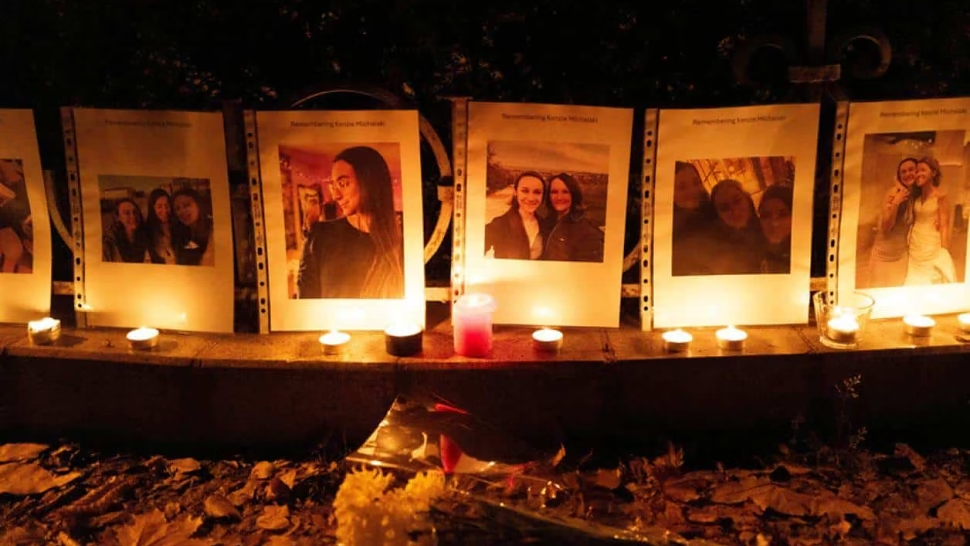
A Budapest court sentenced an Irish citizen to 14 years in prison for the death of an American tourist. The victim, Mackenzie Michalski, 31, of Portland, Oregon, disappeared on November 5 after being last seen at a nightclub.

Police reviewed security footage and observed Michalski with a man at several clubs that night. The suspect, identified as L.T.M. and 37 years old, was arrested on November 7 and confessed to the homicide.

According to the authorities, both met at a club, danced and then went to the man’s apartment. During an intimate encounter, the subject hit and suffocated the victim. Subsequently, he tried to hide the crime: he cleaned the place, hid the body in a closet, put it in a suitcase and rented a car to transport it to Lake Balaton, 150 kilometers from Budapest, where he abandoned it in a wooded area.

The Budapest Metropolitan Court found him guilty of murder and sentenced him to 14 years without parole. The time in preventive detention will be deducted from the sentence. In addition, he must pay 2.5 million forints (almost $8,000) in court costs. His lawyer appealed the verdict.

The police revealed that the man had conducted internet searches on how to dispose of a body, police procedures and whether pigs or wild boars consume human remains. A video showed the subject leading authorities to the place where he left the body.

After serving his sentence, he will be deported from Hungary.

Continue reading

Ukraine will be able to manufacture Patriot anti-aircraft systems

The United States shares key military technology with kyiv to confront Russian attacks.

Announcement at NATO summit

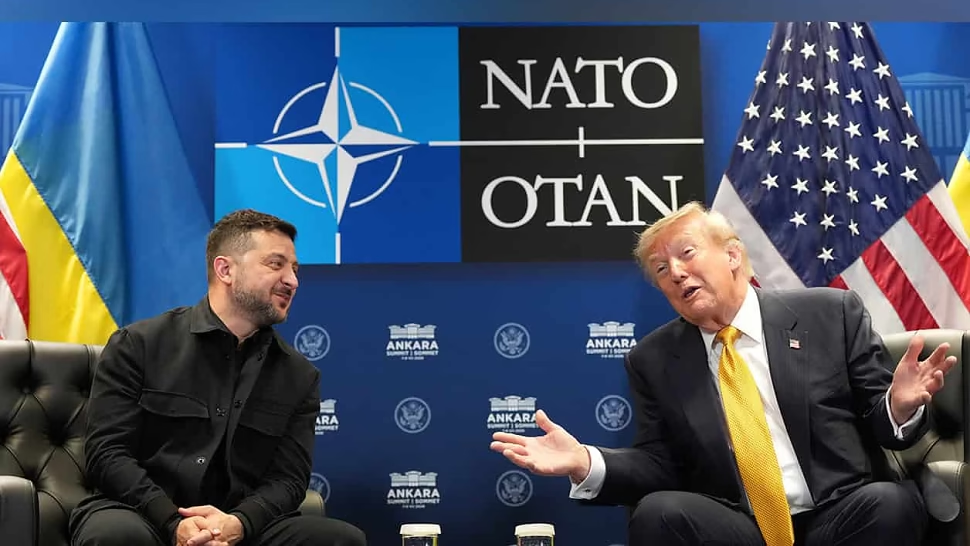
United States President Donald Trump announced that his government will grant Ukraine a license to manufacture Patriot air defense systems. The statement was made during a meeting with Volodymyr Zelenskyy at the NATO summit in Ankara, Türkiye.

Trump affirmed that Washington will share the technology necessary for the local production of these systems, key to intercepting missiles and drones. Zelenskyy had for months requested both more Patriot batteries and the possibility of assembling them on Ukrainian territory, given the increasing intensity of Russian attacks against cities and strategic infrastructure.

The tone of the meeting marked a contrast with previous meetings. Trump praised Zelenskyy’s leadership and said they have built a good relationship. He also expressed confidence that an agreement to end the war could be near. He also announced that his administration is preparing a new security package to strengthen kyiv’s defensive capabilities.

During the summit, Trump criticized some NATO allies for rejecting his intention for the United States to control Greenland and for not fully supporting the military offensive against Iran. He insisted that Europe must increase its defense spending and assume greater responsibility, as Washington reviews its military presence on the continent.

NATO Secretary General Mark Rutte backed US attacks on Iran and highlighted increased military spending among allies. Zelenskyy, for his part, reiterated his call for Ukraine to be admitted to the Atlantic alliance. He maintained that the experience of his armed forces would strengthen collective security against the Russian threat.

Continue reading