A Not-So-Fun Adventure on the Rio Grande
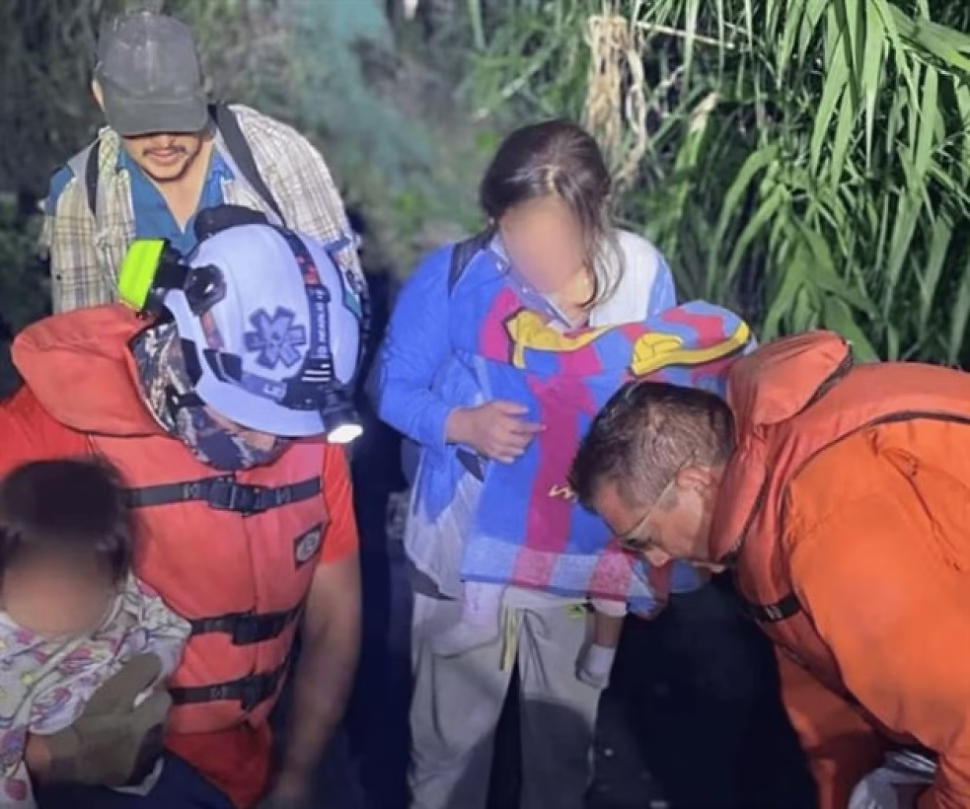
It seems that the González Pérez family, originally from Guatemala, decided that an extreme vacation on the border between Mexico and the United States was just what they needed. The brave elements of the Beta Group of Piedras Negras, belonging to the National Migration Institute (INM), had to mount a rescue operation to save this family that had been playing as explorers lost in the dangerous waters of the Río Bravo for three whole days. Because what better plan for a woman eight months pregnant than to get lost in a river notorious for its treacherous currents?
The situation was so complicated that the agents, in a display of ingenuity, had to resort to an airboat to reach them. Apparently, the dense vegetation in the area thought it was a good time to play hide-and-seek with a whole family, including three children ages 5, 2, and one year old. One wonders if the children thought it was an educational excursion about the local fauna and flora, while their parents were probably reconsidering all their life decisions.
The Heroic Rescue of Madrugada
In a twist worthy of an action movie, but at 2 in the morning – because dramatic rescues are much more cinematic with sleep –, the INM agents managed to locate and rescue the five members of the family. After a medical examination, the miracle of the century was confirmed: everyone enjoyed a satisfactory state of health. The pregnant woman, about to give birth, and the three small children, after three days outdoors, were fine. Could it be that extreme stress is the new vitamin supplement that we don’t know about?
Once safe, the kind officers not only provided them with water and assistance but, in an act of bureaucratic compassion, asked them: “Now, where do you want to go?” Following the parents’ wishes, the family was transferred to the Bus Station. Because after such a traumatic experience, there is nothing better than a bus trip to relax and continue the adventure. Maybe your next stop will be a spa, or maybe another dangerous river, who knows.
Institutional Commitment: Where Reality Overcomes Satire
After this laudable action, the INM wasted no time in sticking out its chest and reiterate its commitment to respecting the human rights of all people who transit through the country, “regardless of condition or nationality.” They even dared to recognize in their agents a vocation for humanistic and sensitive service. And one, here, is left thinking about the wonderful irony that an institution often criticized for its treatment of migrants, today presents us with a narrative of sensitive heroes. Life, without a doubt, has a peculiar sense of humor.
It is undeniable that the work of Grupo Beta was exemplary and saved lives. But the real question that hangs in the air, denser than the vegetation of the Rio Grande, is: how is it possible that a family with an eight-month pregnant woman and three small children ends up lost for three days in such a dangerous area? This episode, beyond the happy ending, is a tragicomic reminder of the desperate conditions that drive people to undertake such risky journeys. Next time, perhaps you could consider an all-inclusive on the beach, which is much less stressful and does not require airboat rescues.
This incident, wrapped in inevitable sarcasm, does not hide the harsh reality of human mobility. While institutions congratulate themselves for their actions – rightly so, in this case –, the deep causes that force families to risk their lives in rivers and deserts remain, as intact as the absurd normality with which we sometimes report these events. The real rescue, perhaps, is not to get them out of the river, but to prevent them from having to get into it.
Did this story of absurd survival move you or make you reflect?Share this article on your social networks to generate conversation about the complex reality of immigration and explore more related content on our site.