They are looking for an alleged Chinese drug trafficker who escaped from house arrest

The authorities intensify the search for the alleged international drug trafficker after evading custody.

The FGR is searching for the alleged international drug trafficker “Brother Wang” after his escape

Attention! The Attorney General’s Office (FGR) has launched a national alert to locate Zhi Dong Zhang, alias “Brother Wang”, an alleged key supplier of fentanyl and other chemical precursors for the most dangerous cartels in Mexico. This man, linked to global drug trafficking networks, mysteriously escaped from his household prison in the custody of the National Guard, and now his whereabouts are unknown. Where is one of the most wanted links in organized crime?

From extradition to escape: the story of “Brother Wang”

This alleged capo was arrested in October 2023 in Mexico City, where he was facing an extradition process to the United States. US authorities accuse him of distributing more than a ton of cocaine, fentanyl and methamphetamines in their territory. However, after months in the Reclusorio Sur, a judge granted him house arrest, a measure that has now been called into question after his disappearance.

RelatedCuba delivers Brother Wang to the United States after escape

According to investigations, “Brother Wang” not only operated in Mexico, but its network covered Central America, South America, Europe, China and Japan, with profits estimated at 150 million dollars annually. His ability to evade authorities demonstrates the challenges that anti-drug agencies face in the fight against transnational crime.

How can you help?

The FGR has published an image of the fugitive with the stamp “WANTED” in red, along with the contacts of the Secretariat of the Navy (Semar) to report clues. If you have information, don’t hesitate to act! Every piece of information counts to dismantle these networks that affect thousands of families.

Final reflection: This case reveals the importance of citizen collaboration and the need to strengthen surveillance systems. Justice may take time, but it always comes. Let’s keep our eyes open!

Did this story impact you?Share it on your networks to raise awareness and explore more content about security and justice on our portal. Together we can make a difference.
World Cup piracy grows in the heat of 2026

World Cup fever triggers the sale of pirated items in CDMX.

The piracy boom at the 2026 World Cup

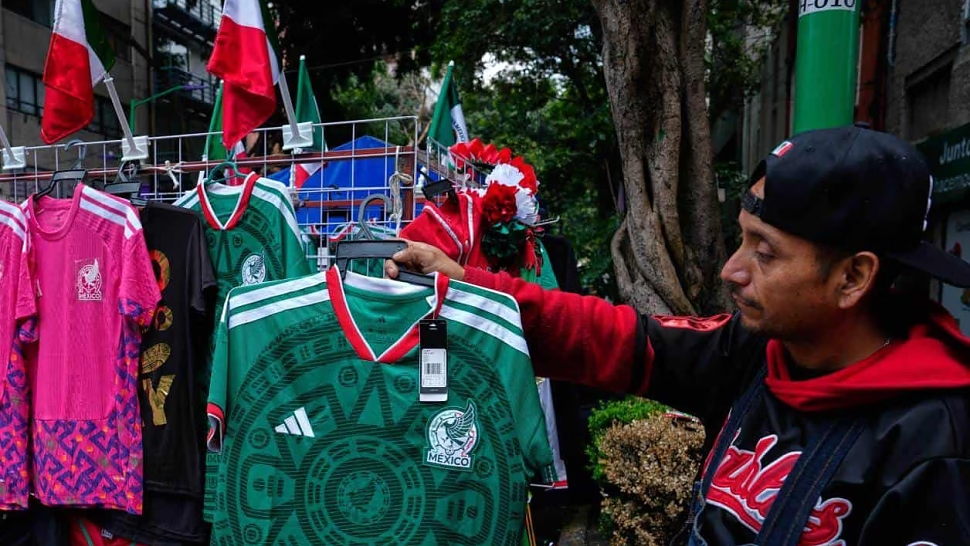
The 2026 World Cup fever has boosted the sale of pirated merchandise in Mexico City. Informal merchants offer t-shirts, trophies and mascots at prices well below the official ones. In the Historic Center and markets like La Lagunilla, a Mexican National Team shirt costs around 250 pesos, while an official jersey exceeds 2 thousand pesos.

Specialists point out that the phenomenon is intensified by impunity, corruption in customs and the growth of informal trade. The high cost of original items leads thousands of consumers to opt for unauthorized products, both in markets and on digital platforms.

Francisco Rivas, general director of the National Citizen Observatory, warns that piracy is a growing problem. He points out that, in addition to the lack of controls, organized crime has found a source of income in this market, even putting pressure on formal merchants through extortion.

“Piracy not only affects brands, but also fuels illegal networks,” said Rivas.

According to the report Mapping Global Trade in Fakes 2025 by the OECD and EUIPO, Mexico ranks seventh in the world as a buyer of counterfeit merchandise. This situation is strongly reflected during events with high commercial impact such as the World Cup.

Given this, sports product companies have reinforced their promotional strategies and digital campaigns to encourage the purchase of official merchandise. The federal government has made seizures and promoted reforms to protect intellectual property. However, specialists consider that the fight against piracy requires comprehensive actions: strengthening surveillance, combating corruption and raising consumer awareness about the economic and social impact of this illegal market.

Continue reading

SEP calendar: summer holidays start on July 16

The SEP confirms the end of classes on July 15. When does the next cycle start?

End of the 2025-2026 school year

The official calendar of the Ministry of Public Education (SEP) marks Wednesday, July 15 as the last day of classes for preschool, primary, secondary and incorporated schools.

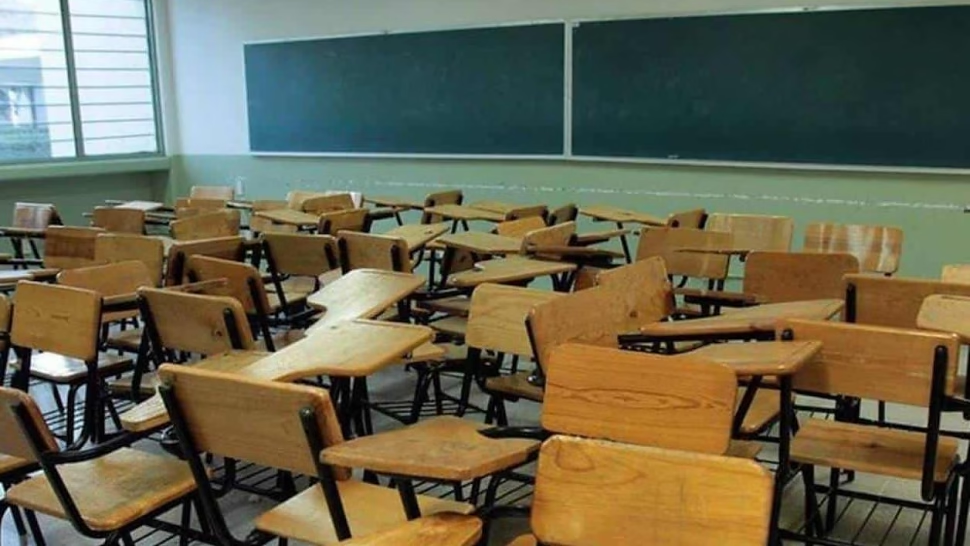
Starting Thursday, July 16, millions of students will begin summer break. There will be almost six weeks of rest before the new 2026-2027 cycle.

However, the activities do not end for the teaching staff. An intensive continuing training workshop is scheduled for Thursday, July 16 and Friday, July 17. The campuses will remain closed to students from the first day of vacation.

Key dates and recommendations

Report cards will be delivered to parents and guardians on Tuesday, July 14. The SEP has not yet published the 2026-2027 calendar, but it is estimated that the return to classes will occur on Monday, August 31 – tentative date. The agency asks to be attentive to the Official Gazette of the Federation for confirmation.

Tips for the break

Specialists suggest maintaining healthy habits during rest:

  • Regular sleep schedules.
  • Recreational, sports or cultural activities.
  • Reading and learning through games.
  • Limit electronic devices.
  • Family time outdoors with safety measures.

The school year includes 185 effective days of classes, distributed between sessions of the School Technical Council, suspension of work and vacation periods. The SEP reiterates that the official information will be published soon.

Continue reading

Sheinbaum delivers first homes from the Bienestar program in Michoacán

The president delivered 32 houses in Morelia as part of the plan for 1.8 million homes.

Delivery of homes in Morelia

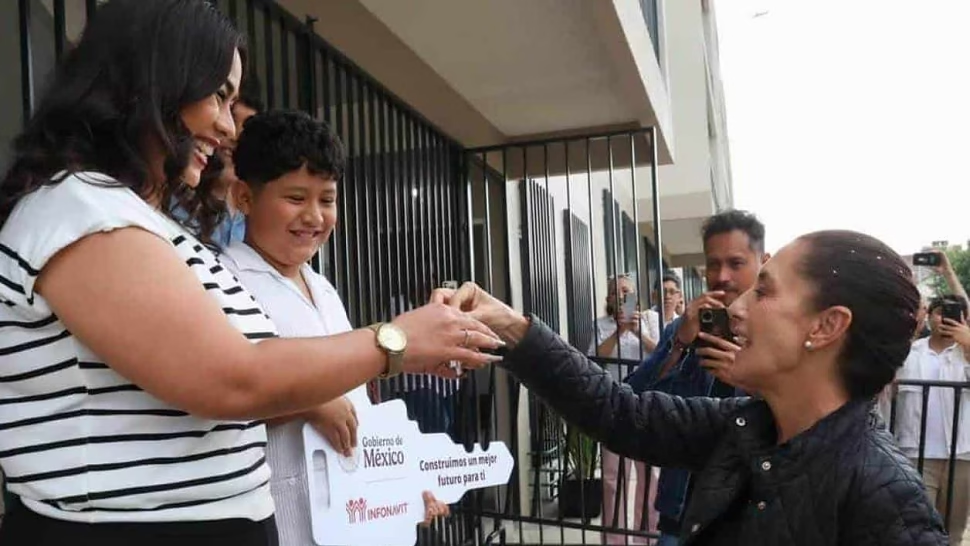
President Claudia Sheinbaum led the delivery of 32 Homes for Wellbeing in Morelia, Michoacán. These are part of the six-year goal of 1.8 million homes nationwide.

“Owning your own house is a dream. Now we offer the possibility of paying for it according to income,” declared Sheinbaum.

The president pointed out that before the requirements were excessive. Now, he said, the people’s dreams are fulfilled with the Fourth Transformation.

He highlighted three indicators that define well-being: a 154% increase in the minimum wage, 12 thousand new hospital beds and the construction of 1.8 million homes.

The Secretary of Agrarian Development, Edna Elena Vega, explained that 82 thousand actions will be carried out in Michoacán: 50 thousand from Infonavit, 20 thousand from Conavi and 12 thousand from Fovissste. In addition, 307 INSUS deeds.

The director of Infonavit, Octavio Romero, reported that the goal in the state rose from 19 thousand to 50 thousand homes, with an investment of 31 billion pesos. Today, 32 of the 1,248 houses in the “Infonavit Camponubes” development were delivered. 97,220 unpayable loans were also restructured in the entity, part of the 4,865,000 regularized at the national level.

Governor Alfredo Rodríguez Bedolla thanked the presidential tour that concluded with this event.

Bryan Alejandro Solís Mena, beneficiary of the program, thanked the president and invited others to take advantage of the opportunity to access housing.

Continue reading