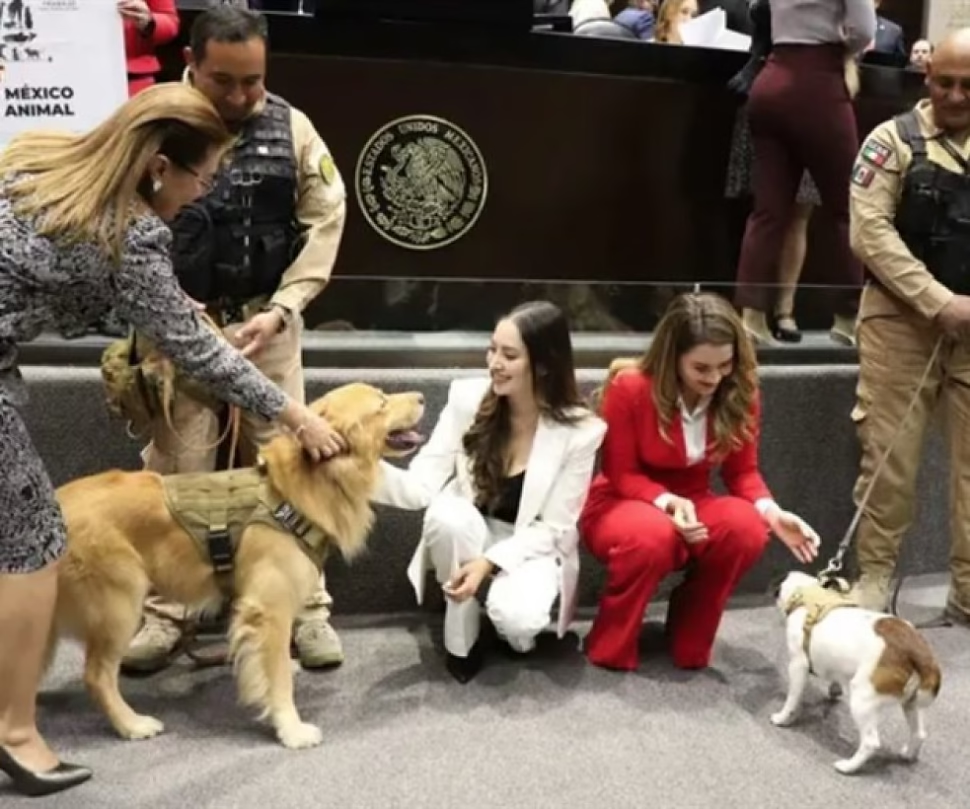
It seems that in Mexico City dogs and cats have finally achieved what many employees long for: to stop being the showcase that attracts customers and move to a sales model by appointment. Yes, you read it correctly. The local Congress, in an outburst of sensitivity that makes us wonder if someone stumbled upon a pile of videos of sad puppies on the Internet, unanimously approved to prohibit the physical display of these animals for sale. Goodbye to the loins behind the glass, as if they were designer shoes or the latest phone models. The era of impulse buying, guided by a look of sad eyes, comes to an official end.
The reform to the Animal Welfare Law establishes that, from now on, seeing a puppy in a cage or a display case in a store will be as anachronistic as finding a rotary telephone. The rule, which will come into force with the calm of a sleepy bulldog (that is, in a year), requires that marketing and adoption be done through an arranged appointment. Imagine: “Hello, I would like an appointment to see the miniature schnauzer in photo 3.” Are we booking for a pet or a haircut at a luxury salon? The process must be through a call center or a digital platform. Because, clearly, in the era of apps for everything, the “Tinder for puppies” was missing.
The New Protocol: More Exclusive than a Social Club
But the thing is not a simple reservation. Oh no. The opinion, with a thoroughness that would make the protocol of an embassy pale, details that the interaction with the animal must be in an exclusive and appropriate space, always under the supervision of a zootechnical veterinary doctor present. Nothing about the intern on duty leaving you alone with the animal. At the end of the appointment, the dog or cat must return to its usual area of stay. Overnight stays in the exhibition room are prohibited. Come on, the canine can’t stay to sleep in the showroom after an exhausting day of being looked at. Did they think he was a theater actor who sleeps in the dressing room?
And in case anyone was thinking about buying an animal to engage in clandestine breeding, the law also requires that the specimens sold be sterilized, dewormed, healthy and microchipped. Basically, they leave the store with more guarantees and documentation than a second-hand car. Anyone who fails to comply with these rules faces a fine that could reach three thousand times the value of the UMA. A sum that, without a doubt, hurts more than a Rottweiler bite in your pocket.
Legislators Hug Each Other (Metaphorically) in a Historic Moment
Faced with this monumental decision, the deputies could not contain their praise. Jesús Sesma described the approval as “historic” and urged other entities to replicate the standard. Manuel Talayero, for his part, became poetic and highlighted that a model that treated animals as “exhibition objects” is being left behind. Celebrate, he said, the progress towards responsible practices. One almost expects that in the next session they will propose a free spa for stray dogs, but let’s not get ahead of ourselves.
In summary, Mexico City has decided that the purchase of a life partner should be a thoughtful, supervised process and, above all, without showcases involved. A measure that, with its touch of bureaucracy and appointments, seeks to end the treatment of animals as decorative goods. It is a firm step towards ethical pet trade, although it sounds like now to have a dog you have to go through a more rigorous process than to adopt a child. The irony of regulating the sale of animals in such detail, while other problems rage, is simply delicious. But hey, at least the pups won’t have to take turns in the window anymore.
Does this measure seem good to you or do you think it is pure bureaucracy? Share this news on your social networks and let’s make the debate about responsible animal welfare reach more people. Explore more content related to laws and social trends in our section.