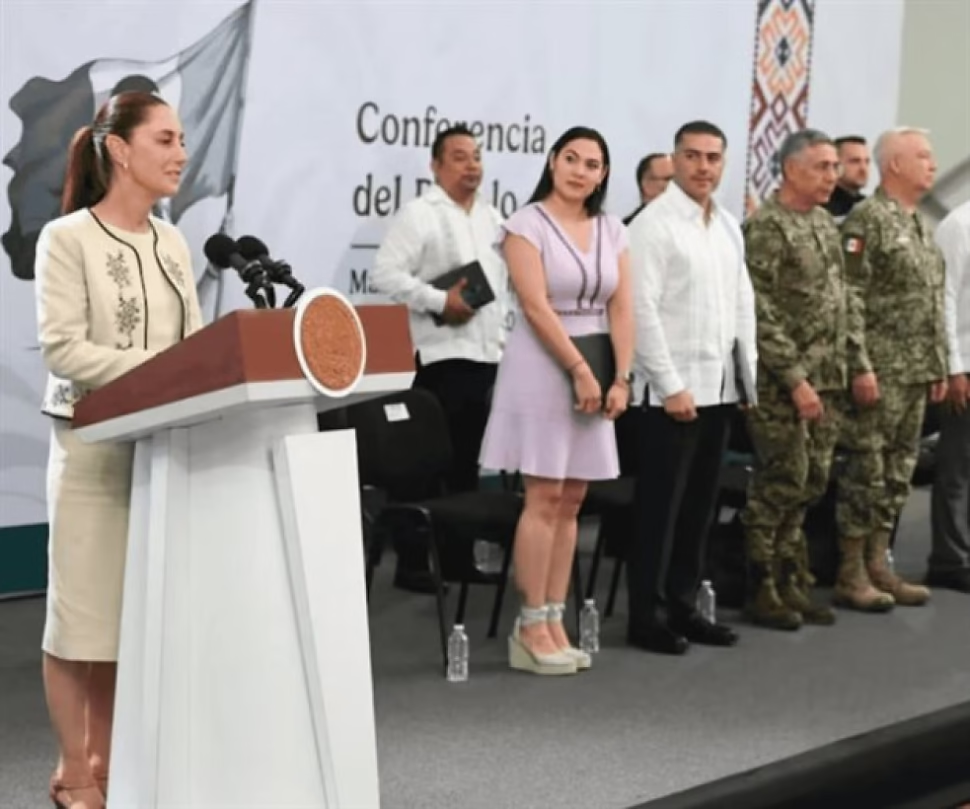
Sheinbaum evaluates moving judicial election to 2028

The government is analyzing postponing the judicial election and the revocation consultation, seeking to simplify the electoral process.

An electoral script that could be rewritten

President Claudia Sheinbaum has just dropped a bombshell in the middle of her tour of Colima. His government is seriously considering postponing one of the most anticipated acts of the national political drama: the second stage of the election of the Judiciary and the consultation to revoke the mandate.

The postponement, from 2027 to 2028, is on the table. The reason? Avoid logistical chaos and, paradoxically, save resources.

“We are analyzing, it has its pros and cons,” Sheinbaum admitted with that calm that always precedes a strategic move.

The dilemma behind the curtain

The initial logic was clear: bring all the elections together in 2027 to use the same infrastructure and personnel. Just one great show. But recent experience showed them a different reality.

RelatedElectoral Court endorses promotion of judicial election by public servants

It could require different polling stations, more hiring and, in the end, complicate the life of the voter with a pile of ballots. Imagine: in some states mayors, local and federal deputies, governors… and judges would be elected.

“So, that’s why we’re analyzing… maybe it’s worth moving it to 28,” he commented.

Now comes the crucial part. The final decision will not be made on a desk in the National Palace. The National Electoral Institute (INE) is being consulted to give its technical verdict on costs and operation.

Sheinbaum announced that the formal modification proposal could be presented next week. The clock is ticking.

This is not just a calendar issue. It is a masterstroke that redefines the pace of his electoral reform. Postponing these processes gives fresh air to your administration, avoids premature wear and tear, and concentrates citizen attention where it decides.

As my father taught me, politics is pure theater. And Sheinbaum has just proposed a change of act. Now it’s time to see if the public—and the INE—buy it.
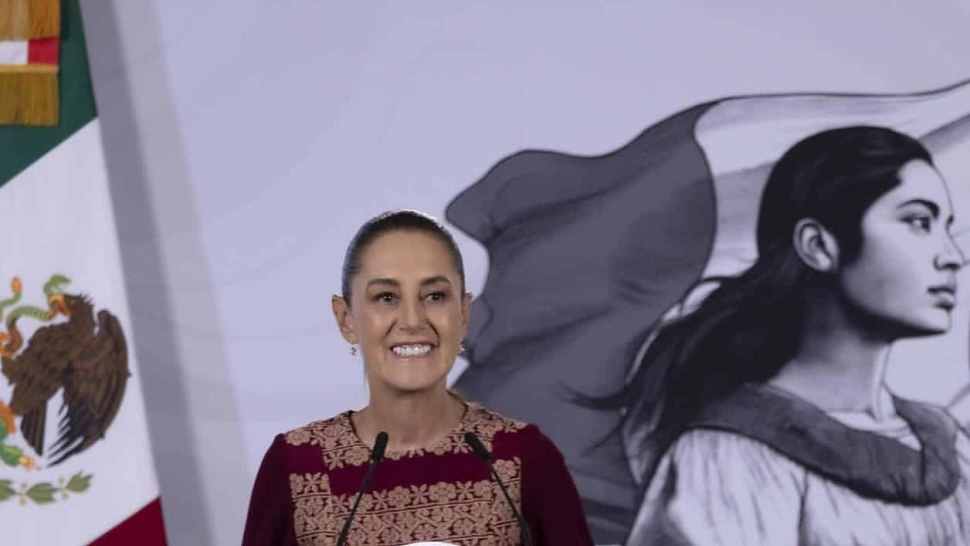
Sheinbaum asks King Felipe VI to apologize to indigenous peoples

Sheinbaum apologizes to indigenous peoples; king listens and agrees on cultural exhibitions.

Request for forgiveness and culture

President Claudia Sheinbaum expressed to King Felipe VI the importance of Spain complying with the request for an apology to the indigenous peoples of Mexico. “Fortunately, 28 million Mexican men and women recognize themselves as indigenous; 68 languages ​​are spoken in Mexico,” he noted.

The president stressed that the recognition of pre-Hispanic civilizations and the resistance of these peoples are fundamental for national identity. “We said no to racism, classism and any discrimination,” he said. The monarch listened and proposed including the topic at the indigenous peoples’ table during the Ibero-American summit in November in Madrid.

As a result, they agreed to send three exhibitions to Spain: one on Mayan culture, another on Spanish refugees, and one dedicated to Sor Juana Inés de la Cruz. Sheinbaum highlighted that the meeting was possible thanks to the king’s previous visit to an exhibition on indigenous women in Madrid, where he recognized “abuses committed during the arrival of the Spanish.”

Both leaders also discussed trade, economics and the United Nations Charter. “It was a very cordial meeting; he’s a very down-to-earth person,” Sheinbaum said. After the dialogue, they visited the mural “The Epic of the Mexican People” by Diego Rivera. The king then left for Guadalajara to attend the Spanish team’s match.

Continue reading

They capture someone involved in the kidnapping of a journalist in Veracruz

Family of the kidnapped journalist demands official information after the arrest of José N.

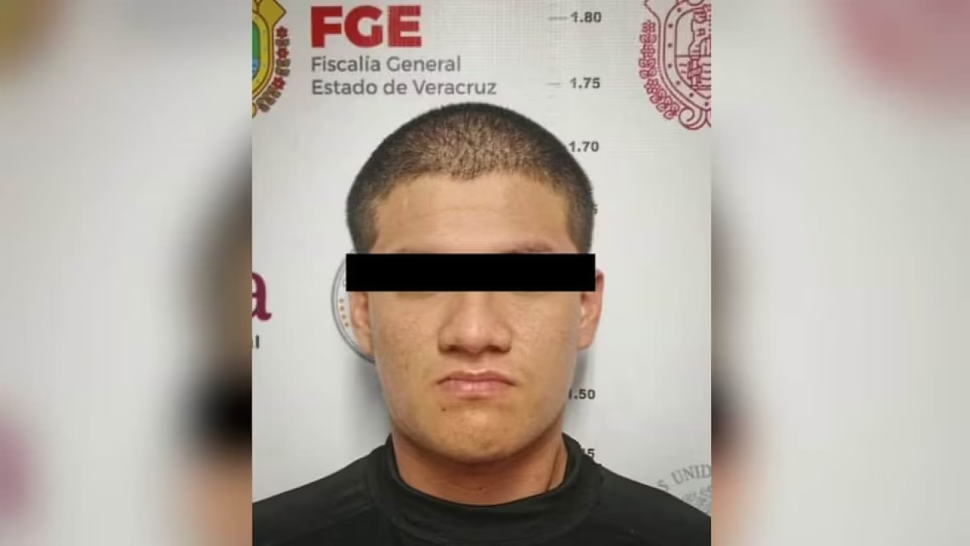
The Veracruz Prosecutor’s Office arrested José N, identified as one of the alleged perpetrators of the kidnapping of journalist Roxana Guzmán, founder of the medium Pulso Informativo del Sureste. The capture was confirmed this Tuesday, although the victim’s family assured that they have not yet received complete official information about the progress of the investigation.

The events of June 2

The attack occurred on June 2 in Nanchital, in the south of the state. An armed group broke into the Guzmán family home during the early hours of the morning. At least four men subdued the family members and also entered the journalist’s brother’s house.

Roxana’s mother, Rubicelia Ramírez, fully identified the detainee in a video released after the kidnapping. “He was at my house,” he declared.

Video that documented the attack

In a 35-second recording, the attackers are seen trying to force entry into a home while a person warns them that there are minors inside. The attackers managed to take Roxana Guzmán, as well as the family’s cell phones, and put her in a vehicle before fleeing.

Witnesses indicated that those responsible falsely stated that the victim would be transferred to a “command office.”

Reactions and expectations of justice

The arrest of José N represents progress in the investigation of the case, which has generated broad solidarity in the journalistic field and society. Roxana Guzmán’s family hopes that the necessary measures will be taken to guarantee the safety of all those involved and that justice will be done.

Continue reading

Volaris joins humanitarian airlift to Venezuela

The airline will transport personnel and 1.5 tons of supplies for earthquake victims.

Volaris activated its Avión Ayuda Volaris program to support the Venezuelan population after the earthquakes of June 24. The company coordinates two charter flights with the Salvadoran government.

The first flight, aboard an Airbus A320, departed on Thursday from the El Salvador International Airport to the El Libertador Air Base in Maracay. The second is scheduled for this Friday.

In total, about 141 people linked to support and logistics tasks will be transferred. In addition, 1.5 tons of humanitarian aid will be transported: medical supplies, rescue equipment, food and other essential goods for the affected communities.

The Ministry of the Interior and Territorial Development of El Salvador coordinates the logistics of the mission. This operation seeks to expedite assistance in the areas hardest hit by the earthquakes.

Continue reading