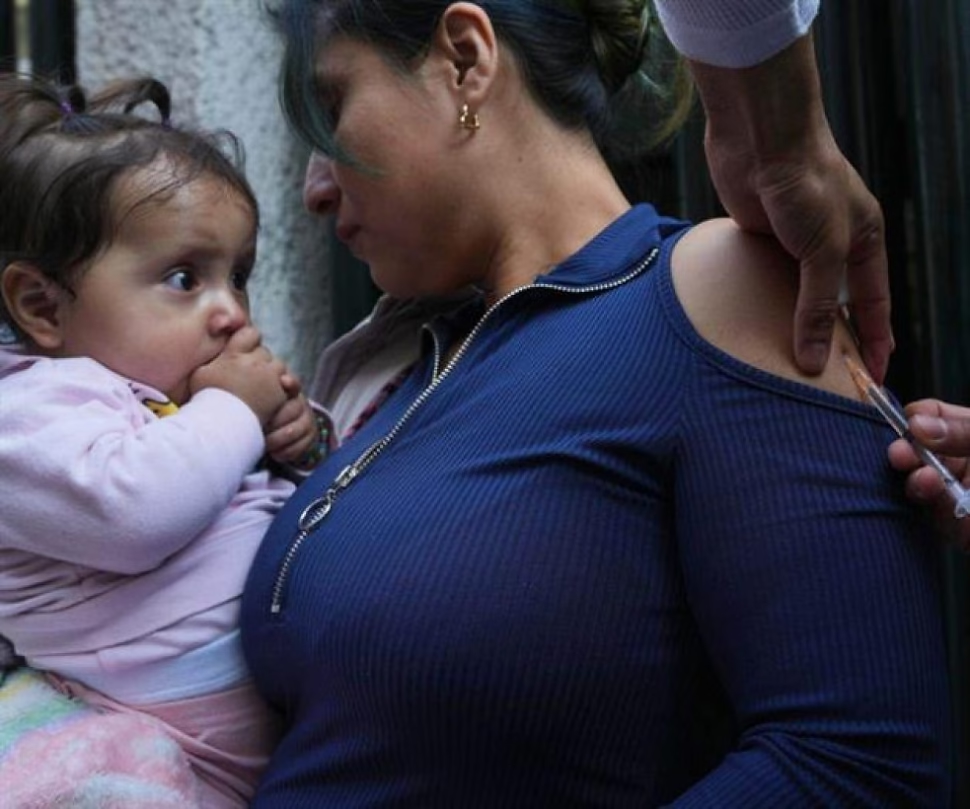
Measles triggers alerts and measures in Mexican schools

The State of Mexico reinforces filters in schools due to more than 2,000 cases of measles. The capital activates a massive vaccination plan.

The most populated neighbor joins the containment

The State of Mexico, that colossus of 17 million inhabitants attached to the capital, announced this Monday that it is reinforcing sanitary filters in its schools. The measure comes after Jalisco, the epicenter of the outbreak, imposed the mandatory use of face masks in Guadalajara.

The state Health Secretariat detailed that the controls include vaccination promotion, daily temperature taking and the use of face masks in closed spaces is recommended. There will also be training for school staff and monitoring of suspected cases.

“The situation remains ‘controlled’ and the infections are ‘mild’,” said secretary Macarena Montoya Olvera.

The official phrase contrasts with federal figures: more than 2,143 confirmed infections and almost 6,000 suspects throughout the country. Jalisco leads with 1,245 cases. The State of Mexico reports only 40.

RelatedMeasles forces face masks in World Cup host schools

Capital in emergency mode

Meanwhile, Mexico City did not wait. Since Sunday, it activated a massive plan with 300 health centers and 150 modules in public transportation and busy places like Chapultepec. Mayor Clara Brugada confirmed 166 cases in the city, 86 of them in minors.

Timing is everything. The Pan American Health Organization has already declared a regional epidemiological alert. Canada lost its measles-free status in November. Mexico and the United States could follow the same path before the World Cup.

Yes, that World Cup. Which begins in four months and will bring millions of tourists to locations such as Mexico City, Guadalajara and Monterrey. Specialists do not hide their concern: they fear that the virus will find the perfect vehicle to multiply in the tournament.

PAHO will review the situation in April. It will decide whether to withdraw from Mexico the certification that its northern neighbor has already lost. Measles is unforgiving: it is spread by droplets when talking or coughing and can live for hours in the air.

The authorities insist that it is under control. The national numbers tell a different story. And the clock for the World Cup is ticking.

Court analyzes whether decree on Frida Kahlo violates private property

The SCJN will review whether the 1984 decree that protects Kahlo's works is constitutional.

The SCJN reviews the decree that protects Frida Kahlo

The Supreme Court of Justice of the Nation (SCJN) will analyze the legality of the 1984 presidential decree that prevents the definitive export of works by Frida Kahlo. The plenary session admitted an injunction from the Ve por Más bank, owner of the oil painting Self-portrait with medallion, painted in 1948. The dispute pits the protection of cultural heritage against the right of private property.

Magistrate Giovanni Azael Figueroa promoted the case to establish whether the restrictions exceed the powers of the Executive. The Court will determine if the decree is constitutional.

Background: the Gelman collection

The review occurs in the midst of the debate over the Gelman collection, which includes 11 works by Kahlo loaned to Banco Santander. The Court’s resolution will set limits for future disputes over cultural property.

The ruling will be key to defining to what extent the State can intervene in the ownership of works considered national heritage.

Continue reading

IMSS and Fonacot update agreement to improve services for workers

IMSS and Fonacot renew their alliance until 2030 to streamline procedures and protect labor rights.

Strategic alliance for labor rights

The Mexican Social Security Institute (IMSS) and the National Fund for Workers’ Consumption (Fonacot) signed a collaboration agreement that updates their exchange of information and services. The objective: respond to the current operational, technological and regulatory needs of both agencies.

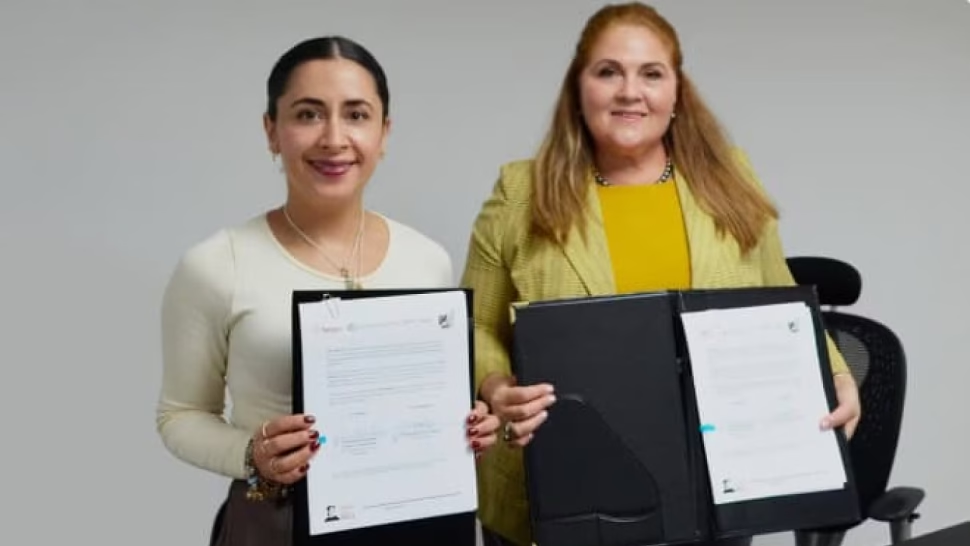
The agreement was signed by Wendolyne Retana Alarcón, general director of Fonacot, and Luisa Obrador Garrido Cuesta, director of Incorporation and Collection of the IMSS. It will be valid until September 30, 2030, with the possibility of extending it for two more years.

The relationship between both institutions dates back to 2007. Since then they have maintained a constant flow of data to facilitate procedures and guarantee better credit and social security conditions for working people.

With this update, the aim is to streamline processes, reduce response times and strengthen the protection of the rights of the country’s formal workers.

Continue reading

Energía Costa Azul makes first shipment of LNG in the Pacific

First shipment of liquefied natural gas from the Mexican Pacific marks an energy milestone.

The Energía Costa Azul project, in Ensenada, Baja California, completed the first shipment of liquefied natural gas (LNG) from the Mexican Pacific coast. The Sempra Infrastructure company confirmed that the shipment is part of the tests prior to the start of commercial operations.

International context

This movement occurs in a context of high demand for energy security. Tensions in the Strait of Hormuz, through which nearly 20% of global LNG trade passes, have accelerated the search for new supply routes.

Strategic advantage

Sempra Infrastructure noted that phase 1 of the project will connect North American gas with Asian markets, taking advantage of the strategic location of the Mexican Pacific coast. Researcher Adrián Duhalt highlighted that the proximity to the gas-producing basins of the United States represents a competitive advantage for Mexico.

Continue reading