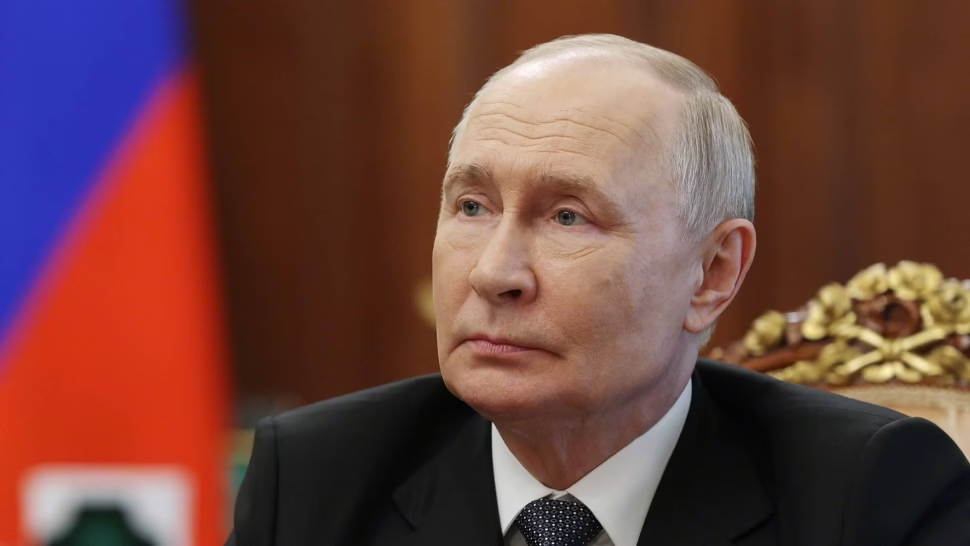
Russia and Ukraine carry out prisoner exchange as kyiv suffers attacks

A fragile humanitarian gesture contrasts with the escalation of war while kyiv suffers one of the most intense bombings.

A fragile agreement amid military escalation

This Saturday, Russia and Ukraine carried out a significant exchange of 307 prisoners on each side, as confirmed by both President Volodymyr Zelenskyy and the Russian Ministry of Defense. This move is part of a broader agreement negotiated in Istanbul on May 16, where both sides agreed to release 1,000 individuals in total. However, this humanitarian gesture contrasts sharply with the intensification of fighting on the ground, particularly in the Ukrainian capital.

kyiv under fire: tactical analysis of the attack

Hours before the exchange, kyiv experienced one of the most severe combined attacks since the start of the invasion, with 14 ballistic missiles and 250 Shahed drones launched against the city. Although Ukrainian defenses neutralized 90% of the targets (245 drones and 6 missiles), debris caused significant damage in six districts, including the burning of a residential building in Obolon. The kyiv Military Administration described the episode as “a difficult night,” with 15 injuries reported and anti-aircraft systems operating for seven continuous hours.

RelatedRussia launches largest drone attack in war against Ukraine

Testimonies from residents like Yurii Bondarchuk detail the human impact: “The balcony is completely destroyed […] smoking a cigarette to calm my nerves,” he said as emergency crews worked in his building. This attack underlines the Russian strategy of attrition through systematic bombing, even at times of diplomatic negotiations.

Diplomatic dynamics: progress and obstacles

Friday’s exchange – 390 prisoners initially released – represents the largest bilateral exchange since 2022, carried out on the border with Belarus. However, as the analysis of government sources warns, this process has not stopped the fighting in the 1,000 km of the front. Türkiye, a key mediator, described the agreement as a “confidence measure,” although the Kremlin admitted that differences persist over future rounds of negotiations.

Moscow promised to deliver draft conditions for a “sustainable” peace deal after completing the exchanges, as the EU accuses Vladimir Putin of deliberately delaying the process. Operational data reveals the continuity of hostilities: Russia claims to have intercepted 788 Ukrainian drones between May 20-23, while Ukraine reported 175 attacks with Shahed drones in 24 hours.

Strategic perspectives and humanitarian challenges

Experts consulted point out that these events reflect the complex duality of the conflict: specific advances in humanitarian areas coexist with aggressive military tactics. Ukrainian insistence on a temporary ceasefire – backed by the West – clashes with the Russian position of linking negotiations to territorial concessions. With casualties exceeding tens of thousands according to independent estimates, the conflict appears headed toward a prolonged war of attrition.

Share this analysis to keep your network informed about critical developments in Eastern Europe. Want to delve deeper into the geopolitical implications? Explore our related content on international security.
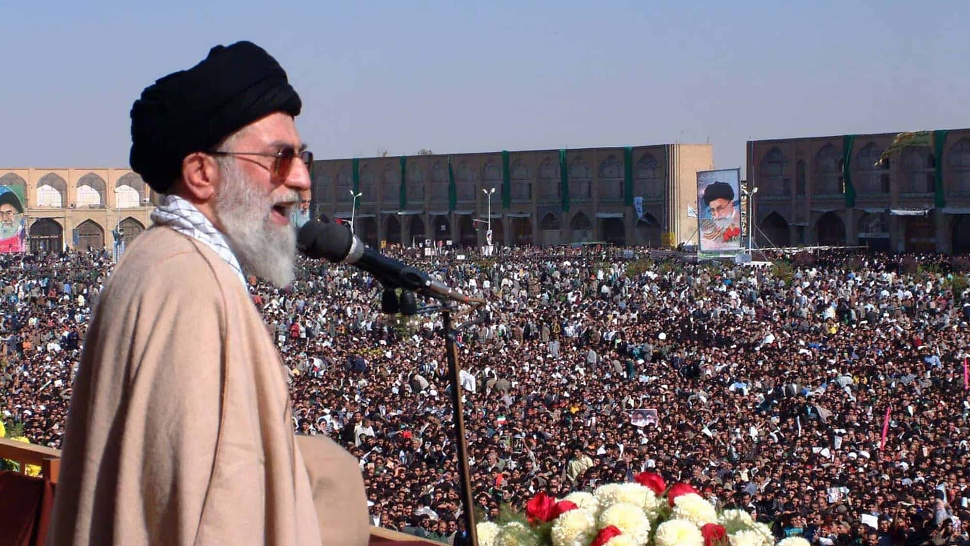
Iran fires Ayatollah Khamenei amid political uncertainty

Iran begins funerals for Ayatollah Khamenei, who led the country for more than three decades.

Iran began the funeral ceremonies this Saturday for Ayatollah Ali Khamenei, supreme leader of the Islamic Republic for more than three decades. His death occurred after the start of the war between Iran, the United States and Israel. The events will last for several days in an environment of uncertainty about the political future of the country.

Khamenei’s legacy

Khamenei assumed leadership in 1989, after the death of Ayatollah Ruhollah Khomeini. During his tenure he consolidated the power of the Revolutionary Guard, strengthened Iran’s regional influence and backed allied groups such as Hezbollah, Hamas and Yemen’s Houthi rebels. His government also promoted the development of Iran’s nuclear program, defying international sanctions for years.

Continue reading

Typhoon Bavi threatens Guam and Mariana Islands; could be super typhoon

The threat comes after the devastating passage of Sinlaku; authorities call to prepare.

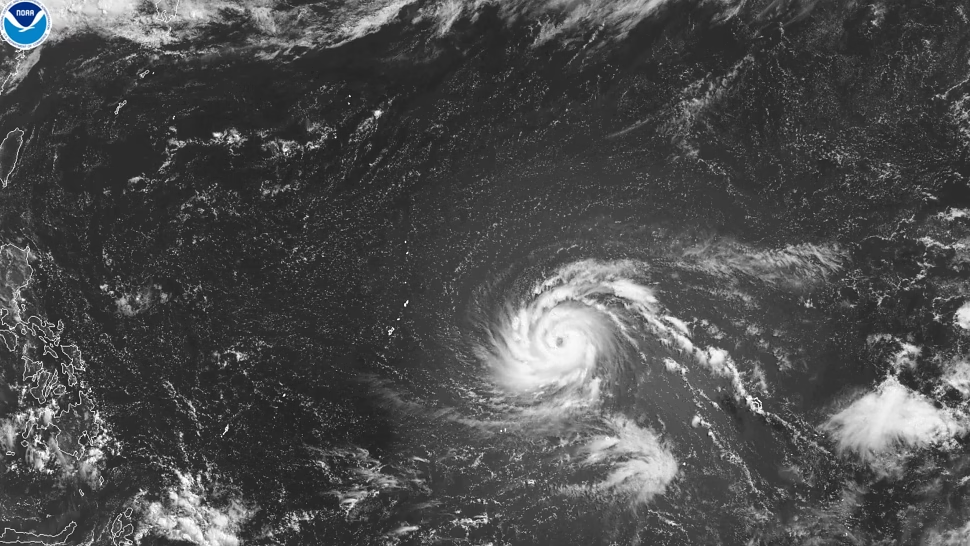
Typhoon Bavi advances strongly towards Guam and Mariana Islands

The authorities of Guam and the Commonwealth of the Northern Mariana Islands are on alert for the possible arrival of Typhoon Bavi. The system could become a super typhoon at the beginning of next week, according to reports from the National Weather Service.

This phenomenon occurs just months after the devastating passage of super typhoon Sinlaku, which left serious damage in the region and left thousands homeless.

Preparations and background

On Friday, Bavi was located about 1,223 kilometers east of Guam, with sustained winds of 129 kilometers per hour. Forecasts indicate that it could intensify rapidly, exceeding 241 kilometers per hour before approaching the Mariana Islands.

Faced with the risk, residents began to reinforce their homes with boards, stock up on fuel, and store food and water. On Saipan, many families have not yet fully recovered from Sinlaku: some remain without power and others remain in temporary shelters after losing their homes.

Meteorologists warn that Bavi could modify its trajectory, but recommend maintaining all prevention measures. Guam, where important US military bases are located, also remains under surveillance.

Specialists point out that the current cyclone season in the Pacific could be more active due to the influence of the El Niño phenomenon and the increase in global temperatures. While monitoring continues, authorities urge the population to stay informed and prepared for any changes in the trajectory or intensity of the typhoon.

Continue reading

Ukrainian attacks worsen energy crisis in Russia

Ukraine hits Russian refineries; Putin rejects truce and continues offensive.

The war between Russia and Ukraine intensifies with a new wave of cross attacks. Moscow faces a growing fuel shortage after the Ukrainian bombings against its refineries, while in Ukraine dozens of people are reported affected by the Russian bombings.

Impact on Russian energy

Since March, Ukraine has attacked more than 50 oil and energy facilities on Russian territory and on the Crimean peninsula. These attacks have affected about a third of the country’s refining capacity, according to analyst estimates.

Russian President Vladimir Putin maintains his position of continuing the military offensive and rejects any ceasefire proposal. The lack of fuel is beginning to be felt in several regions, while Ukrainian forces redouble their blows to enemy energy infrastructure.

The conflict shows no signs of de-escalation. Both sides are preparing for more clashes in the coming days, with energy supplies a key strategic objective.

Continue reading