The “miracle diet” that no one asked for
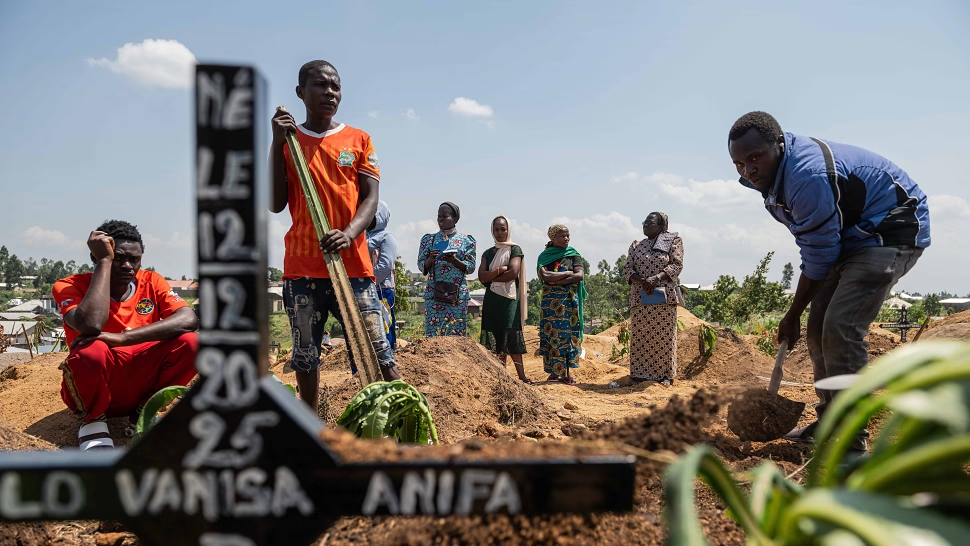
Imagine a place where the menu of the day is air with dust and the extra portion is despair. Welcome to Kakuma, Kenya, where 300,000 refugees are involuntarily participating in the cruelest reality show in the world: “Who survives on 3 kilos of rice a month?” The prize: not to die of hunger. What a thrill!
The protagonist of this episode is Martin Komol, a Ugandan father who, between tears and nervous laughter, explains how his family now practices forced intermittent fasting: “One meal a day, if we’re lucky. If not, we drink a glass of water and pretend it’s soup.” Human creativity has no limits, especially when the alternative is watching your children cry from hunger.
The genius behind the “humanitarian strategy”
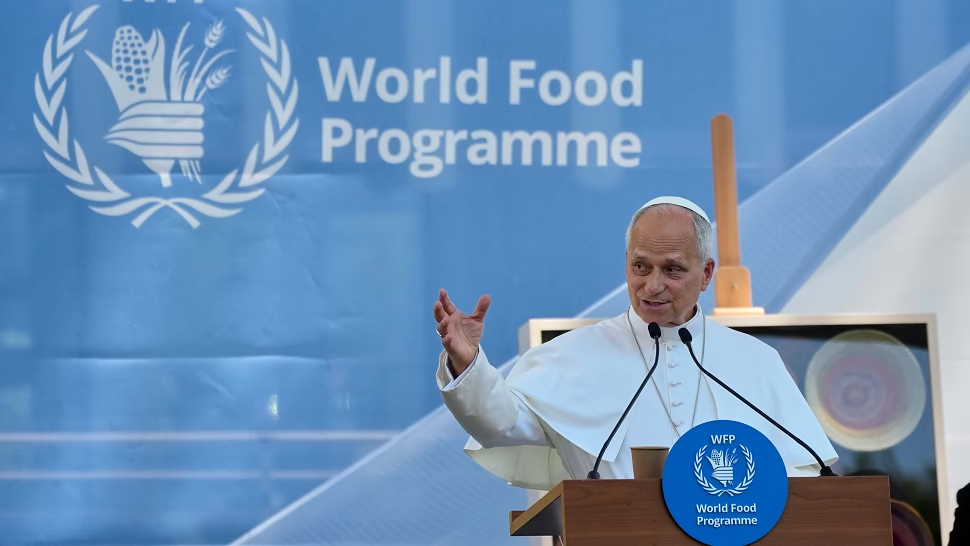
All this thanks to the brilliant plan of the World Food Programme (or what’s left of it), which now operates under the motto: “Less is… well, something.” Cuts by the US, the once “generous Uncle Sam” of international aid, have turned rations into a bad joke. 9 kilos of rice per person? Too much luxury! Now it’s 3 kilos, because, as we all know, refugees have Olympic champion metabolisms.
And don’t think that this is temporary. Not at all! As WFP’s Colin Buleti very seriously explains: “In August things will get worse.” What a consolation. It’s like telling someone who is drowning: “Wait, the water will rise higher.” Meanwhile, malnourished children line up at the hospital as if it were the Black Friday of survival, competing for some fortified milk.
The jewel in the crown: the school feeding program, that heroic effort to give children one hot meal a day (what a waste!). Because nothing says “quality education” like students fainting from hunger in class. Susan Martine, a Sudanese mother, sums it up perfectly: “I don’t know how we will survive.” Official response: “Let’s pray for another donor to appear. Or a miracle. Whichever comes first.”
And while the children play in the dust, oblivious to the fact that their future hangs by a thread (or a sack of rice), local businessmen mourn their economic losses. Because in the end, in this macabre circus, even tragedy has an impact on GDP. Business owner Chol Jook sees his sales disappear along with cash transfers. “People now buy on credit,” he says. Translation: debt is the new highlight on Kakuma’s menu.
Do you want to help spread this reality? Share this story and join the conversation about the forgotten humanitarian crisis. Explore more content about how international aid makes the difference between life and death.