Surveillance and prevention prevent the arrival of the screwworm to Nuevo León
Following the alert issued at the beginning of June about the possible arrival of the screwworm (Cochliomyia hominivorax) to Nuevo León, the Regional Livestock Union confirmed through an official statement that no cases have been recorded in the entity. This parasite, considered one of the most devastating pests for livestock in America, mainly affects warm-blooded animals, including cattle, sheep and goats, causing serious tissue damage and even death.
Containment strategies and official statements
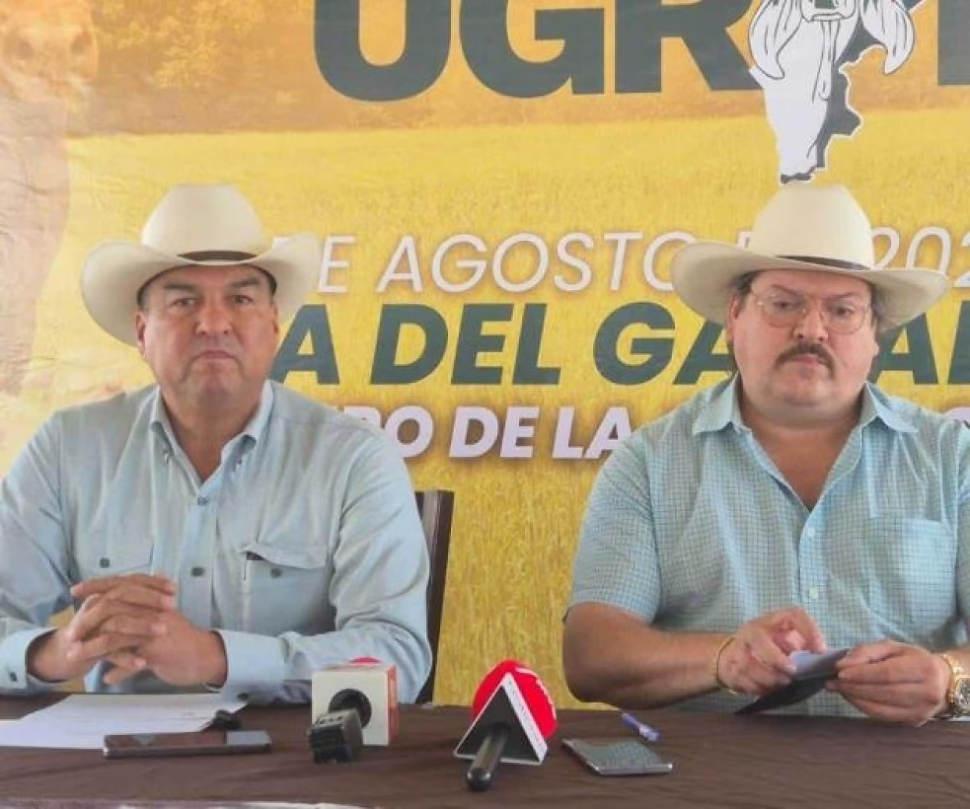
During a press conference, Noel Ramírez Mejía, president of the Livestock Union, highlighted that the health filters implemented by the State Government in collaboration with the Senasica (National Agri-Food Health, Safety and Quality Service) have been key to avoiding the introduction of infected cattle from other states. “The current measures are adequate, but we need to maintain vigilance,” said Ramírez, who also emphasized the need to reinforce protocols at strategic entry points.
The screwworm reproduces by depositing larvae in open wounds of animals, where they feed on living tissue. Its rapid spread could generate million-dollar economic losses, according to data from the World Organization for Animal Health (OIE). Given this, the Livestock Union has intensified training courses for producers, focused on early detection, treatment with specific insecticides and quarantine measures.
Regional context and call to action
Mexico has maintained the status of a country free of this pest since 1991, thanks to the Screwworm Eradication Program. However, recent outbreaks in neighboring states have raised the risk. Ramírez Mejía urged the authorities not to let their guard down: “Imported livestock must comply with rigorous health certifications to avoid reintroducing the disease.”
Experts in veterinary epidemiology emphasize that, although Nuevo León does not report cases, monitoring should be extended to wild species, which can act as vectors. In addition, they recommend the use of traps with pheromones and periodic inspection of herds, especially in border areas.
Why is this issue crucial? The livestock industry represents 12% of the agri-food GDP of Nuevo León, with more than 1.2 million heads of livestock. An outbreak would affect not only local production, but also meat exports to international markets.
Share this information to raise awareness about the importance of animal health and explore more content on innovations in pest prevention on our portal.