
Migrant panic turns Washington into a circus of rumors and suspicious vans

Paranoia takes over Washington as the shadow of ICE generates chaos and false alarms.

When ICE is the boogeyman and the black vans are the scare of the day

Ah, the rumors. That old human tradition of turning fear into a broken game of telephone. This time, the victim was the Washington Hispanic community, which went from worrying about morning traffic to fearing that ICE would ruin their breakfast. Because nothing says “good morning” like an immigration raid before coffee.

On Tuesday, dozens of parents — armed with anxiety and probably the occasional WhatsApp meme — crowded in front of the Mundo Verde bilingual school, convinced that immigration agents were going to interrupt math classes. The irrefutable proof? A black van that passed by twice. Spoiler: he was a cameraman. But hey, who needs facts when you have collective paranoia?

RelatedClassics of Mexican cinema that are still scary

False alarms and restaurants “invaded by fascists”

While schools were practicing their best Stranger Things impression (season: “ICE is Coming”), agents did show up… but in restaurants. Millie’s, a Northwest location, was raided, although staff preferred to call the officers “fascists” rather than, say, “officials doing their questionable work.” The owner, Bo Blair, was conspicuous by his absence from the comments, because why talk when you can hide?

ICE, for its part, followed its classic communication strategy: absolute silence. Raids? Arrests? A menu of the day? Mystery. It’s more exciting that way, like an immigration thriller where no one knows who will be next to disappear.

And meanwhile, the Hispanic community remains in suspense, wondering if Mayor Muriel Bowser will defend them or throw them under the bus—literally—to get in Trump’s favor. Because, of course, declaring yourself a “sanctuary city” in 2020 sounds nice until the president threatens to cut funding. Then, suddenly, it’s just an “expression of values” (read: a sticker on the refrigerator that no one takes seriously).

Preparing for the immigration apocalypse

Schools are not left behind in this dystopian reality show. “Private property” signs (because ICE cares as much as Instagram’s terms and conditions), training for staff (“How not to throw up in fear of an agent”), and even “custody agreements” in case Mom or Dad gets deported before the parents’ meeting. 35% undocumented students? Just a minor detail, like saying your house is “a little” on fire.

In February, a “Know Your Rights” workshop brought together dozens of families… on Zoom, because the fear of ICE surpasses even the universal hatred of video calls. Imagine having to learn your constitutional rights amidst power outages and screaming kids in the background. The American dream, version 2025.

Moral? In the era of Trump 2.0, living in Washington as an immigrant is like playing Russian roulette, but with more paperwork and less glamour. And if you see a black van, take a deep breath: it’s probably another journalist looking for clicks.

Did it outrage you or make you laugh? Share this gem of dystopian reality on your networks and continue exploring our content for more doses of informative sarcasm.
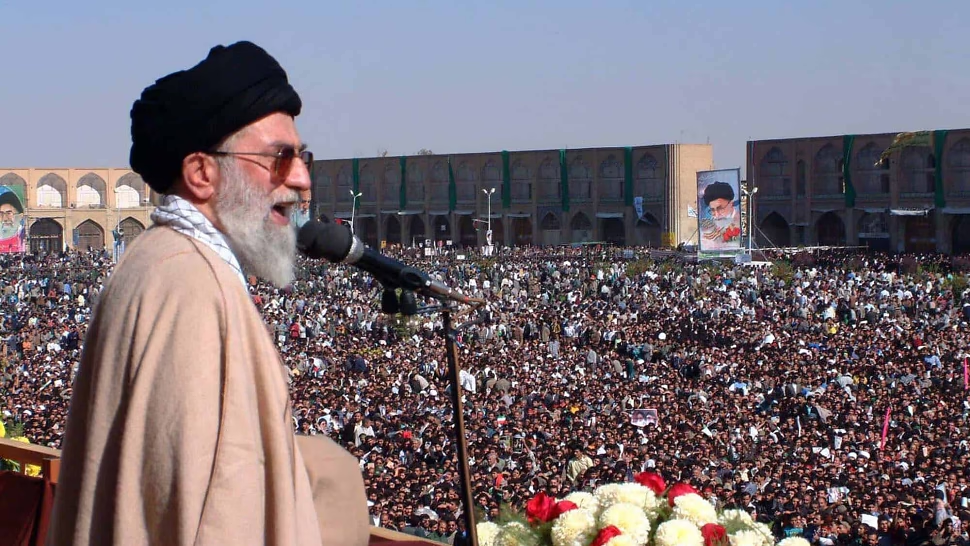
Iran fires Ayatollah Khamenei amid political uncertainty

Iran begins funerals for Ayatollah Khamenei, who led the country for more than three decades.

Iran began the funeral ceremonies this Saturday for Ayatollah Ali Khamenei, supreme leader of the Islamic Republic for more than three decades. His death occurred after the start of the war between Iran, the United States and Israel. The events will last for several days in an environment of uncertainty about the political future of the country.

Khamenei’s legacy

Khamenei assumed leadership in 1989, after the death of Ayatollah Ruhollah Khomeini. During his tenure he consolidated the power of the Revolutionary Guard, strengthened Iran’s regional influence and backed allied groups such as Hezbollah, Hamas and Yemen’s Houthi rebels. His government also promoted the development of Iran’s nuclear program, defying international sanctions for years.

Continue reading

Typhoon Bavi threatens Guam and Mariana Islands; could be super typhoon

The threat comes after the devastating passage of Sinlaku; authorities call to prepare.

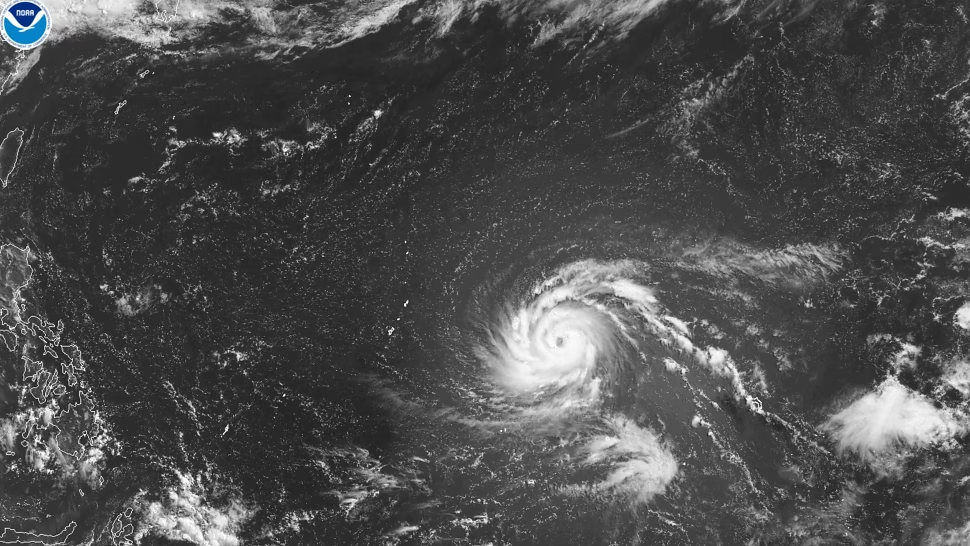
Typhoon Bavi advances strongly towards Guam and Mariana Islands

The authorities of Guam and the Commonwealth of the Northern Mariana Islands are on alert for the possible arrival of Typhoon Bavi. The system could become a super typhoon at the beginning of next week, according to reports from the National Weather Service.

This phenomenon occurs just months after the devastating passage of super typhoon Sinlaku, which left serious damage in the region and left thousands homeless.

Preparations and background

On Friday, Bavi was located about 1,223 kilometers east of Guam, with sustained winds of 129 kilometers per hour. Forecasts indicate that it could intensify rapidly, exceeding 241 kilometers per hour before approaching the Mariana Islands.

Faced with the risk, residents began to reinforce their homes with boards, stock up on fuel, and store food and water. On Saipan, many families have not yet fully recovered from Sinlaku: some remain without power and others remain in temporary shelters after losing their homes.

Meteorologists warn that Bavi could modify its trajectory, but recommend maintaining all prevention measures. Guam, where important US military bases are located, also remains under surveillance.

Specialists point out that the current cyclone season in the Pacific could be more active due to the influence of the El Niño phenomenon and the increase in global temperatures. While monitoring continues, authorities urge the population to stay informed and prepared for any changes in the trajectory or intensity of the typhoon.

Continue reading

Ukrainian attacks worsen energy crisis in Russia

Ukraine hits Russian refineries; Putin rejects truce and continues offensive.

The war between Russia and Ukraine intensifies with a new wave of cross attacks. Moscow faces a growing fuel shortage after the Ukrainian bombings against its refineries, while in Ukraine dozens of people are reported affected by the Russian bombings.

Impact on Russian energy

Since March, Ukraine has attacked more than 50 oil and energy facilities on Russian territory and on the Crimean peninsula. These attacks have affected about a third of the country’s refining capacity, according to analyst estimates.

Russian President Vladimir Putin maintains his position of continuing the military offensive and rejects any ceasefire proposal. The lack of fuel is beginning to be felt in several regions, while Ukrainian forces redouble their blows to enemy energy infrastructure.

The conflict shows no signs of de-escalation. Both sides are preparing for more clashes in the coming days, with energy supplies a key strategic objective.

Continue reading