Mexico consolidates itself as a global trade hub in artificial intelligence

The WTO projects a 40% boom in global trade driven by AI, with Mexico emerging as a key new manufacturing hub.

Mexico on the Global Map of Artificial Intelligence Trade

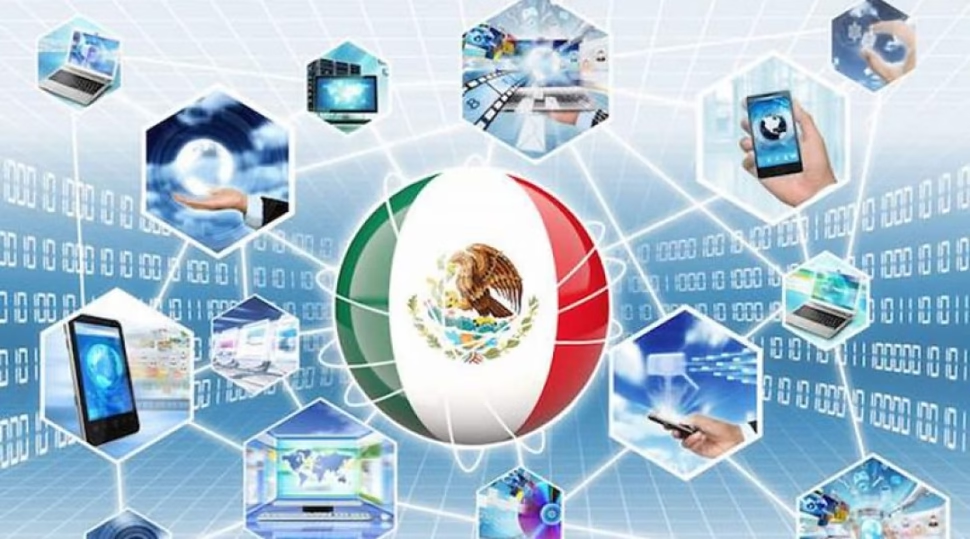
According to an exhaustive analysis by the World Trade Organization (WTO), Mexico has positioned itself strategically within the global supply chain of products and technologies linked to the development of artificial intelligence (AI). The nation figures prominently among countries that make significant imports and exports of raw materials, intermediate components, specialized equipment and finished products essential to this cutting-edge sector.

The global panorama is dominated by consolidated technological and economic powers. The main actors in this trade flow, both in the import and export aspects, are the United States, China, Hong Kong, South Korea and the European Union as a whole. However, the report highlights the rise of new manufacturing and supply hubs. Along with nations such as Malaysia, Vietnam and Thailand, Mexico has experienced a substantial increase in exports of intermediate inputs and equipment directly related to AI ecosystems.

RelatedChina renounces its developing country status in the WTO

The Transformative Impact of AI on Global Trade

The World Trade Report 2025, an official document of the WTO, projects an optimistic but complex horizon. Economic models suggest that widespread adoption of artificial intelligence has the potential to boost the value of international trade in goods and services by approximately 40% by 2040. This projection underscores the catalytic role this technology will play over the next decade and a half.

To contextualize this future growth, historical data offers a clear perspective. The total trade in goods associated with the development of AI reached an all-time high of 2.9 trillion dollars in 2022, followed by a correction to 2.3 trillion dollars in 2023. The WTO attributes this year-on-year contraction to a multifactorial set that includes the implementation of strategic trade restrictions, evolutions in international regulatory frameworks, adjustments in the export capacity of leading countries and Strategic inventory collection cycles by large technology corporations.

This commercial dynamism occurs within a broader process of transformation of the global economy, driven by rapid technological advances. This phenomenon is redefining fundamental concepts such as the nature of work, value creation and the distribution of economic opportunities within global society. Despite the inherent uncertainty and the challenges this poses to traditional trade policies and investment patterns, the WTO maintains a firm stance: international trade will act as the main facilitating mechanism for the global diffusion of these technological advances, mitigating the risk that their development will be concentrated exclusively in a few economies.

Leadership Development and Implications in the Labor Market

Leadership in core AI innovation, particularly in the field of generative AI models, remains highly concentrated. Until April 2024, the United States led the list with the development of 439 models, followed at a considerable distance by China with 117 models and the United Kingdom with 88. This concentration of innovation capacity contrasts with the growing geographical distribution of the supply chain and manufacturing, where countries like Mexico are gaining relevance.

The international organization identifies a vast potential for AI to substantially reduce the costs associated with international trade, increase sectoral productivity and create new avenues for the production and export of digital services. However, this progress is not without significant consequences for the global workforce. A significant impact is anticipated, especially in service sectors where digitally delivered commerce had opened promising development opportunities for low- and middle-income economies.

A crucial finding of the report addresses the evolution of salaries. Globally, real wages are projected to trend upward across different occupational groups. Paradoxically, the wage premium associated with very specific premium skills is expected to decline between 3% and 4% in various scenarios. This indicates that AI-driven automation will have a greater impact on the substitution of tasks within medium and high-skill occupations, instead revaluing certain manual and low-skill tasks that are less susceptible to being automated with current technology.

Was this analysis revealing about Mexico’s positioning in the economy of the future? Share this information on your social networks to expand the conversation and explore more related content on our site to stay at the forefront of technological and economic trends.

Registro de líneas telefónicas en México: pasos y fecha

Aún estás a tiempo de registrar tus líneas telefónicas. Conoce cómo.

Registro de líneas telefónicas en México

El proceso de registro obligatorio de líneas telefónicas continúa en marcha. Miles de usuarios buscan regularizar números asociados a su nombre o desvincular aquellos que ya no utilizan. La medida busca depurar el padrón de telefonía móvil en el país.

¿Cómo dar de baja líneas telefónicas? Los usuarios pueden realizar el trámite a través de los portales oficiales de sus compañías o de manera presencial en centros de atención. Se requiere identificación oficial vigente y un proceso de validación de identidad, que puede incluir verificación biométrica. Una vez realizada la solicitud, el sistema confirma la baja y genera un folio o notificación. En caso de fallas técnicas, las empresas recomiendan acudir a atención al cliente.

RelatedProcess and limit of attempts for the mandatory registration of mobile lines

Fecha límite y consecuencias El plazo para completar el registro vence el 30 de junio de 2026. A partir del 1 de julio, las líneas no registradas podrían enfrentar una suspensión temporal del servicio. Esto impediría realizar llamadas, enviar mensajes o usar datos móviles. Las compañías Telcel, Movistar, AT&T y Bait han habilitado plataformas digitales y sucursales para facilitar el registro. El trámite es gratuito y requiere CURP, identificación oficial vigente y que la línea esté activa al momento de la gestión.

Las autoridades han enfatizado la importancia de cumplir con este trámite para evitar inconvenientes. La regularización es fundamental para mantener un control adecuado en el uso de la telefonía móvil en el país.

Continue reading

Filtros de acceso en el Zócalo complican la movilidad en el Centro Histórico

Largas filas y confusión por el plantón de la CNTE en el Zócalo capitalino.

Congestión peatonal por plantón de la CNTE

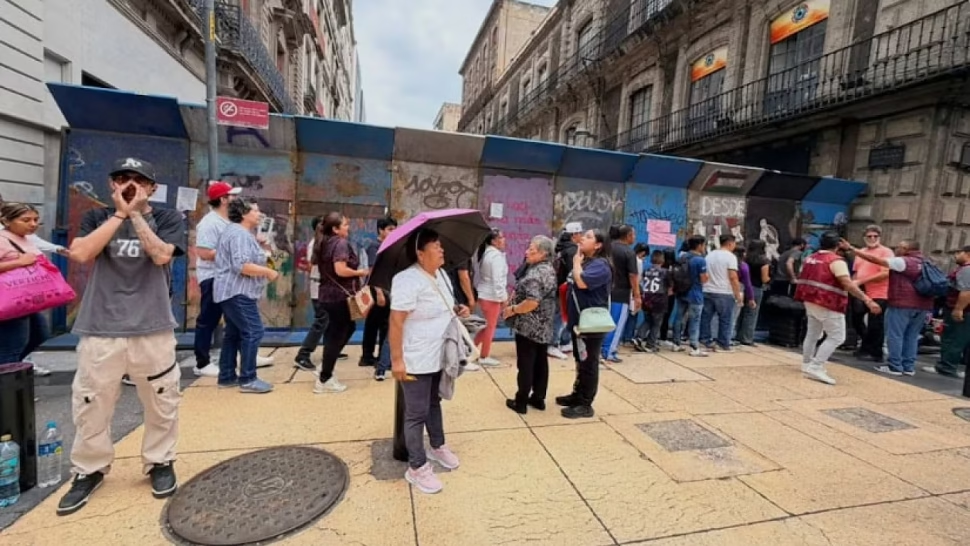
El Centro Histórico de la Ciudad de México registró alta congestión peatonal este fin de semana. La instalación de filtros de acceso y vallas metálicas en los alrededores del Zócalo generó complicaciones de movilidad, en el contexto del plantón de la Coordinadora Nacional de Trabajadores de la Educación (CNTE).

Desde el miércoles pasado, calles como Francisco I. Madero y Simón Bolívar tienen acceso controlado. Los peatones deben avanzar uno por uno para ingresar al primer cuadro de la ciudad. Esto ha provocado largas filas y confusión entre visitantes nacionales y extranjeros.

RelatedMassive concentration in the Zócalo commemorates the seventh anniversary of the 4T

Afectaciones a turistas y comercios

Turistas con equipaje buscaban sus hoteles dentro del perímetro restringido sin información clara sobre rutas habilitadas. Varios comercios del área permanecen cerrados. La actividad comercial se ha visto afectada.

En Tacuba y República de Brasil se habilitaron accesos peatonales adicionales. Personal del gobierno local orienta a los transeúntes y restringe el paso de vehículos, incluyendo motocicletas. Elementos de la Secretaría de Seguridad Ciudadana (SSC) mantienen filtros de control. Solo permiten el ingreso a quienes se dirigen a zonas específicas, como la Catedral Metropolitana.

Las autoridades locales supervisan el perímetro del Zócalo. Las restricciones continúan sin fecha de retiro informada. La movilidad y la vida comercial en el corazón de la capital siguen afectadas.

Continue reading

Morena denuncia compra de votos con códigos QR en Coahuila

Morena denuncia uso de códigos QR para comprar votos en Coahuila. El caso llega a la UIF.

Denuncia por coacción electoral

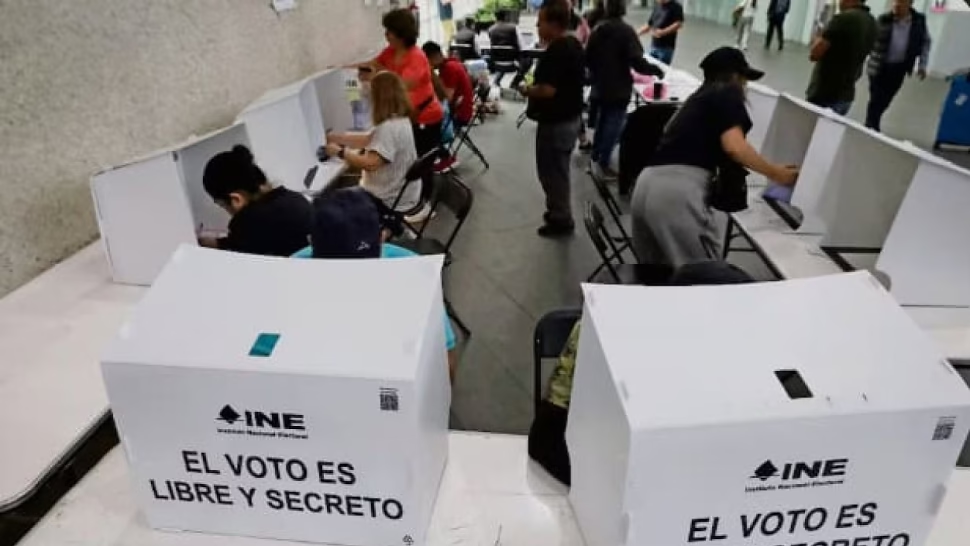
Morena presentó una queja formal ante el Instituto Electoral de Coahuila (IEC) por una presunta operación de compra de votos durante la jornada para renovar el Congreso estatal. Según el partido, se habrían usado códigos QR entregados a ciudadanos a cambio de dinero para favorecer al PRI.

Guillermo Santiago, diputado federal y representante de Morena ante el Consejo General del INE, señaló que existe una estructura tecnológica detrás del esquema. Por ello, el partido también acudirá a la Policía Cibernética para investigar aplicaciones, servidores y bases de datos.

RelatedMorena denounces the PAN for alleged triangulation of electoral resources

Acciones legales en curso

Además, Morena anunció que presentará una denuncia ante la Unidad de Inteligencia Financiera (UIF) para rastrear los recursos que, según sus acusaciones, habrían financiado esta estrategia. También solicitarán a la Unidad Técnica de Fiscalización del INE revisar el posible origen del dinero.

El partido aseguró que llevará el caso hasta las últimas consecuencias legales y pidió respetar la voluntad ciudadana. Hasta ahora, las autoridades electorales no han emitido una resolución sobre las acusaciones.

Continue reading