Mexico resumes sending letters to the United States after tense suspension

A crucial first step reestablishes the postal connection after a tense suspension that kept bilateral communication in suspense.

A Sigh of Relief in an Ocean of Postal Uncertainty

In a dramatic turn that seemed impossible just a few weeks ago, Correos de México woke up from its forced slumber. This September 12 will be burned into the nation’s postal history, marking the day when the sending of letters and documents without commercial value to the northern giant was freed from its chains. This glimmer of hope emerged after a gloomy August, when a shocking announcement froze the hearts of thousands: the total suspension of postal and package shipments to the United States, a measure of direct retaliation against the new edicts of Donald Trump’s government. The world held its breath, wondering if the flow of words and papers between the two nations would be buried forever.

However, this ray of light does not yet illuminate the entire path. The shadow of the restriction looms, long and ominous, over parcel shipments, couriers, and all printed publications, magazines and books. These remain in a distressing limbo, frozen in time until a new order, a new pact, decrees their release. Behind the scenes, in crisis rooms where tension is so palpable you could cut it with a knife, the Government of Mexico is waging a silent but fierce battle. Intense coordination work between the competent agencies and a permanent dialogue, full of urgency and consequences, with the US authorities, is carried out with a single monumental objective: to achieve agreements that fully restore postal services and return normality to millions of recipients.

RelatedMexico resumes sending letters to the US after tense postal suspension

The First and Crucial Step of a Long Negotiation

The Secretary of Foreign Relations (SRE), together with the heroine of this epic, Correos de México, announced in a solemn voice that this movement constitutes the first and most crucial advance in the titanic effort to resurrect postal services. This progress, although fragile, emerges as a beacon of hope after the implementation of the draconian Executive Order 14324 of the US government, a regulation that shook the foundations of global commerce and communication by applying to all countries in the world without distinction. Every word at the negotiating tables weighs like a stone, every gesture is analyzed, every concession is a victory won with tenacity.

And what does this partial victory mean for the common citizen? From that historic date, September 12, the doors of the more than 1,500 Correos de México offices spread throughout the country are opened wide to provide attention to a fundamental human need: connection. Users will be able to send, with a lump of hope in their throat, exclusive shipments of letters and documents with final destination to the United States. Written letters containing sighs, whispers and confessions; postcards that capture moments of beauty; administrative, legal or academic roles that support futures and destinies. But the warning echoes: everything must be worthless, a reminder that the broader economic battle rages on.

The origin of this postal conflict dates back to a day that many would like to forget: last August 27. In a move that sent shock waves through global supply chains, the US government brutally suspended duty-free entry for packages containing goods worth less than $800. This exemption, known in economic circles as the “de minimis” clause, was more than just a regulation; It was the lubricant that allowed the flow of countless small businesses and entrepreneurial dreams. Its disappearance created an abyss of uncertainty, of which this restart of the mail service is the first fragile bridge that has been built to cross it.

The road ahead is paved with challenges. Every letter that now crosses the border is a testament to the resilience of human communication in the face of political adversity. It is a reminder that even in the moments of greatest diplomatic tension, the longing to connect, to share, to express, finds a way to break through. The reactivation of this service is, without a doubt, the first chapter of a long and complex negotiation, a fragile truce in a trade war whose fronts extend far beyond the post offices. The fate of packages, magazines and books still hangs in the balance, and the world is anxiously watching the next move on this geopolitical chessboard.

Do you think this is the beginning of the end of postal restrictions?Share this crucial news on your social networks and stay up to date with us so as not to miss the next and decisive chapter of this negotiation that affects millions.
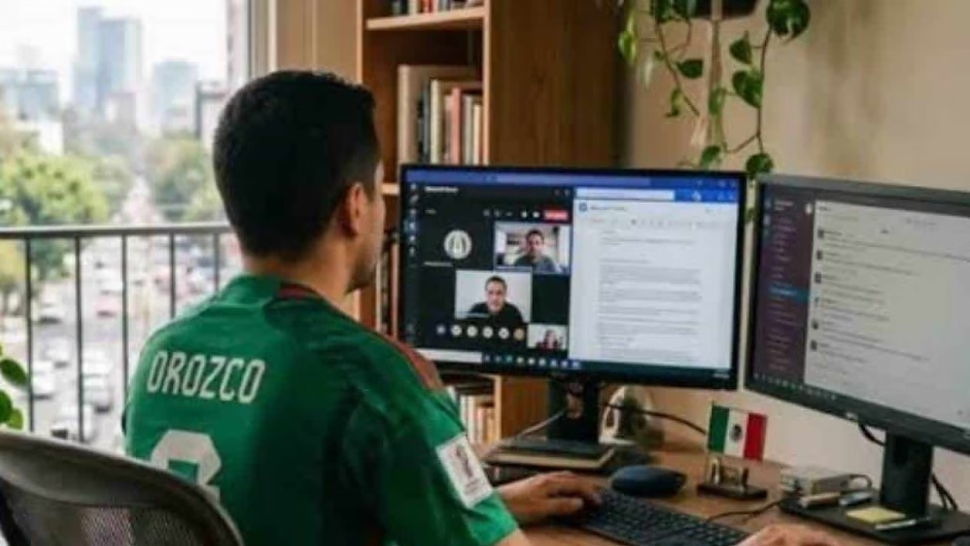
Decreto oficial impulsa teletrabajo en CDMX para el arranque del Mundial

Gobierno publica decreto para fomentar teletrabajo el 11 de junio durante el Mundial 2026.

A dos días del inicio del Mundial 2026, el Gobierno federal publicó este martes un decreto con medidas administrativas para la Ciudad de México. El objetivo: mejorar la movilidad urbana, la seguridad vial y garantizar la continuidad de servicios públicos durante el evento.

Medidas clave para el 11 de junio

El decreto exhorta al sector privado y social a implementar teletrabajo o modalidades flexibles el 11 de junio, para actividades no esenciales. Las dependencias federales con sede en la capital también deberán adoptar esquemas remotos, privilegiando tecnologías de información para mantener sus funciones.

RelatedCDMX declares an official holiday for the opening of the 2026 World Cup

Se excluyen actividades esenciales como salud, emergencias, protección civil, seguridad nacional, control migratorio y aduanero, así como la operación de infraestructura crítica (transporte, energía, agua, telecomunicaciones). También quedan fuera las labores directamente vinculadas con la organización y seguridad del Mundial.

El decreto enfatiza que los servicios prioritarios y la atención a la población deben continuar, incluso si requieren presencia física. La medida entra en vigor hoy con su publicación en el Diario Oficial de la Federación.

Continue reading

México y EU refuerzan cooperación en seguridad y comercio

México y EU acuerdan mantener diálogo sobre seguridad, migración y revisión del T-MEC.

El diálogo entre México y Estados Unidos no se detiene. Tras una llamada telefónica entre el secretario de Estado, Marco Rubio, y el subsecretario de Relaciones Exteriores, Roberto Velasco, ambos países acordaron mantener una comunicación permanente para avanzar en seguridad, migración y la revisión del T-MEC.

Cooperación en seguridad y migración

Velasco informó que la conversación duró cerca de media hora y se desarrolló en un ambiente “cordial y respetuoso”. Uno de los temas centrales fue la cooperación en seguridad fronteriza. Para dar seguimiento a los acuerdos, este viernes se realizará en la Ciudad de México una reunión del grupo bilateral de trabajo.

RelatedMexico and the United States establish security cooperation program

En materia migratoria, México reiteró su compromiso de respetar los derechos humanos y proteger a los connacionales. Además, destacó una reducción del 76% en las incautaciones de fentanilo en la frontera desde que inició la administración de la presidenta Claudia Sheinbaum.

Revisión del T-MEC y próxima reunión presencial

Otro punto clave fue la próxima revisión del Tratado entre México, Estados Unidos y Canadá. Ambos países coinciden en la importancia de que las negociaciones lleguen a buen puerto. Velasco citó a Rubio:

“Me dijo que está dando seguimiento personalmente a este tema y vamos a estar ambos en comunicación sobre esto y otros asuntos.”

El funcionario adelantó que buscarán concretar una reunión presencial en fecha próxima. Además, el próximo viernes se reunirán equipos de seguridad de ambos países en la CDMX, con representantes mexicanos, funcionarios de la Embajada de EU y el embajador Ronald Johnson. Se abordarán seguridad fronteriza, combate al crimen organizado transnacional y finanzas ilícitas.

Velasco confió en que el encuentro fortalecerá la coordinación bilateral bajo principios de respeto mutuo.

Continue reading

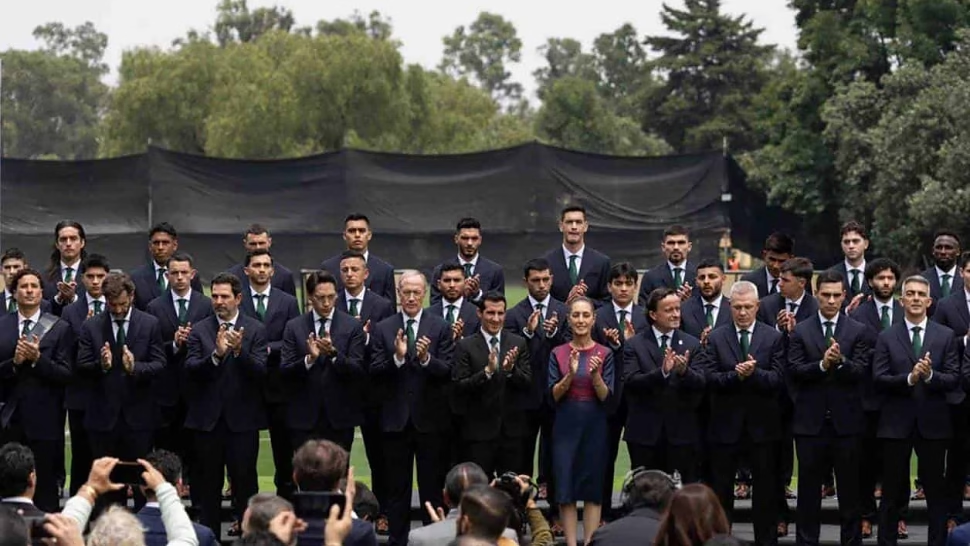
Sheinbaum y FMF lanzan estrategia nacional de formación futbolística

Gobierno y FMF presentan plan para impulsar el futbol desde la infancia con academias y becas.

La presidenta Claudia Sheinbaum y la Federación Mexicana de Futbol (FMF) presentaron la Estrategia Nacional de Formación, un programa que busca que niñas, niños y jóvenes tengan acceso al deporte desde temprana edad hasta el alto rendimiento. El anuncio se realizó en el marco de la Copa Mundial FIFA 2026.

“Es una buena noticia el compromiso de iniciar una etapa distinta del futbol mexicano; sobre todo, que las niñas y los niños participen”, afirmó Sheinbaum en la conferencia matutina.

RelatedSheinbaum y FMF acuerdan estrategia nacional de formación futbolística

¿Cómo funcionará el plan?

La estrategia arranca con futbol escolar: en 2026 participaron 28 mil escuelas y más de 1.13 millones de estudiantes. Incluye competencias federadas y detección de talentos para canalizarlos a academias de clubes profesionales. La FMF certificará academias; ya hay 2 mil registradas con cerca de 168 mil menores, y 510 más en proceso.

Mikel Arriola, comisionado de la FMF, explicó que el sistema acompañará al futbolista desde los 5 o 6 años hasta el alto rendimiento, con disciplina y valores. “Se forjarán comunidades y se les alejará de contextos de riesgo”, señaló.

Los 18 clubes de la Liga MX reforzarán esquemas de becas deportivas y académicas en secundaria, preparatoria y universidad. También se otorgarán apoyos para inscripción y mensualidades, para que los jóvenes continúen estudiando mientras se desarrollan.

En 2025, más de 11 mil jugadores y jugadoras fueron observados a través de la red nacional de detección. Se realizaron 315 invitaciones a pruebas en clubes profesionales y 97 a selecciones nacionales. En las selecciones juveniles, las mujeres representan el 94% de las convocatorias.

Rommel Pacheco, director de la Conade, indicó que esta coordinación busca garantizar que las niñas, niños y jóvenes puedan cumplir sus sueños.

Continue reading