Mexico promotes a multilateral diplomatic initiative
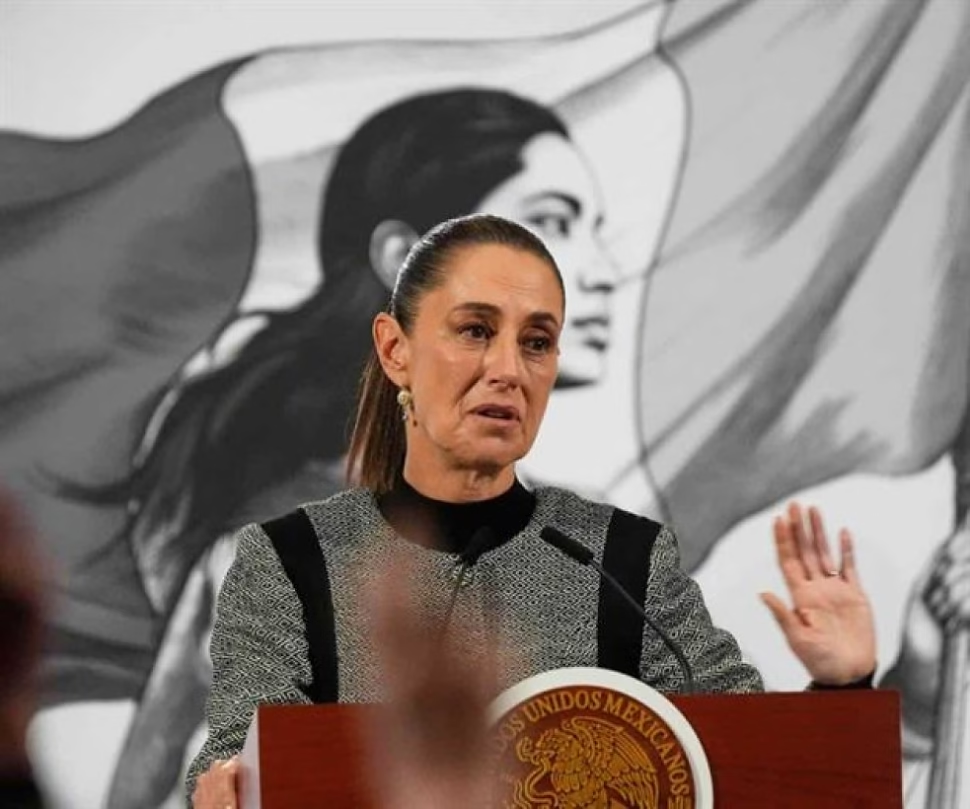
The president of Mexico, Claudia Sheinbaum, announced this Thursday that her administration is working on the formation of a diplomatic front composed of several nations. The strategic objective of this coalition is to achieve a negotiated and peaceful solution to the growing crisis between the governments of the United States and Venezuela. During her morning conference, the president expressed confidence that this foreign policy stance will not negatively affect bilateral ties with Washington, underlining the existence of pre-established cooperation and coordination mechanisms.
Sheinbaum reiterated his deep concern about the recent escalation of tensions and emphasized that the Mexican search, together with other regional actors, focuses on guaranteeing a “peaceful resolution” that excludes any form of military intervention or foreign interference. He clarified, however, that so far he has not received formal requests from other governments to join this initiative, which suggests that the efforts are in a preliminary phase of consultations and proposals.
Context of the escalation and the Mexican position
Frictions between Washington and Caracas experienced a significant uptick this week following President Donald Trump‘s statement. The US president announced the blockade of sanctioned oil tankers operating in Venezuelan waters, a measure that comes days after the US Armed Forces took control of a tanker off the coast of Venezuela. This movement coincides with an increase in the US military contingent deployed in the region, raising alarm about a possible intensification of the conflict.
In his statements, Trump accused Venezuela of using oil revenues to finance drug trafficking and other illicit activities, promising an escalation of the military presence until the return of alleged assets. Faced with this scenario, President Sheinbaum recalled the existence of “all the mechanisms established by the United Nations” to resolve disputes peacefully, calling for the participation of all parties involved. Its position is framed in the Mexican constitutional principle of non-intervention and respect for the self-determination of peoples.
The president also defended the bilateral cooperation that Mexico maintains with Cuba, a historical relationship that has generated disagreements with Washington. Sheinbaum argued that this collaboration, based on humanism and sovereignty, should not interfere with the relationship with the United States. This statement comes after the Deputy Undersecretary of the State Department, Katherine Dueholm, publicly criticized Mexican support for Havana and urged Mexico to align itself more with US foreign policy objectives in the region.
Regional reactions and the call for sovereignty
The Mexican initiative finds echo in other voices in the region. From Colombia, President Gustavo Petro advocated this Thursday for respect for Venezuelan sovereignty, urging an internal solution between the country’s political sectors and explicitly rejecting any eventual military invasion. Petro, who recently described the Caracas government as a “dictatorship“, made a crucial distinction: “dictatorship is one thing and invasion is another thing; invasion is worse.”
However, the Colombian president rejected the call that the Venezuelan president, Nicolás Maduro, made to the Colombian military to defend joint sovereignty. Petro was categorical in stating that Maduro does not have the authority to give orders to the armed forces of another country, emphasizing that the union of the two nations could only occur through “constituent power and popular sovereignty.” This position reflects the complexity of the Latin American political landscape, where criticism of internal regimes coexists with a firm defense of the principles of non-intervention and peaceful resolution of disputes.
In summary, Mexico’s proposal represents an effort to channel multilateral diplomacy as a tool to de-escalate a conflict with broad regional implications. By seeking to form a common front with other countries, the Sheinbaum administration not only defends a historic stance of its foreign policy, but also attempts to position itself as a key mediating actor in a geopolitical scenario marked by power asymmetry and the risk of greater confrontation.
Do you think regional diplomacy can stop further escalation? Share this analysis on your social networks to expand the debate and explore more content on Latin American geopolitics on our site.