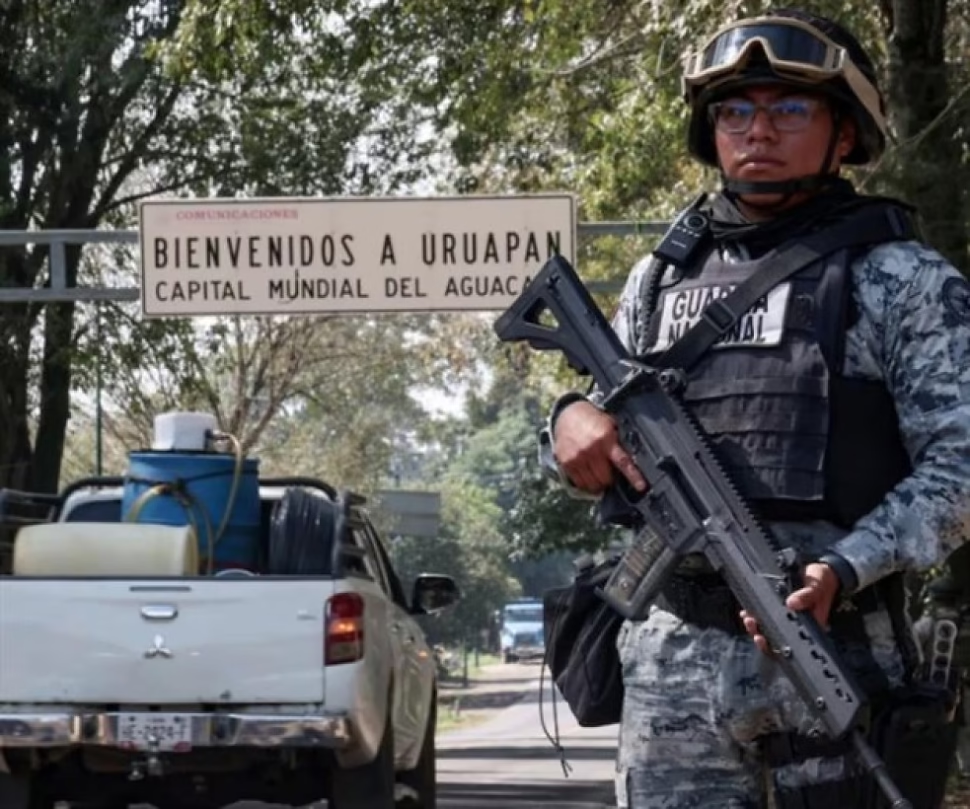
Historical Reinforcement for Security in Michoacán
The state of Michoacán has been the scene of the most significant operational deployment in recent times, with the arrival of more than 10,500 elements of the Mexican Army and the National Guard. This tactical movement, which is part of the comprehensive strategy called Plan Michoacán for Peace and Justice, had as its initial concentration point the facilities of the 21 Military Zone in Morelia. The mobilization represents an unprecedented coordinated effort to restore order and public safety in a region that has faced persistent crime challenges.
The execution of this plan began with a high-level inter-institutional coordination meeting at the same military headquarters. The meeting was chaired by Juan Carlos Oseguera, head of the Ministry of Public Security of the State of Michoacán. The central objective of this meeting was to align the strategies and tactics between the different corporations, guaranteeing optimal operational synergy to meet the established objectives. The state agency highlighted in its official statements that this unified work is aimed at strengthening actions on the ground to prevent crimes and guarantee citizen tranquility.
The Paricutin Operations Plan: Strategy and Scope
The conceptual basis of this massive deployment was announced on Sunday by General Secretary Ricardo Trevilla, head of the Secretariat of National Defense (SEDENA). Under the name Paricutin Operations Plan, which functions as the executing arm of the Michoacán Plan, the commitment to a total deployment of 10,506 military and National Guard troops was formalized. The mission assigned to this contingent is multifaceted in nature, focusing on the execution of specialized operations against high-impact crimes such as extortion, intentional homicides, community violence, drug trafficking and the containment of confrontations between antagonistic groups.
A primary tactical objective of the operation is the location and apprehension of the main generators of violence identified in the region. This precision approach seeks to dismantle criminal leaders and dismantle their chains of command, which can potentially have a catalytic effect in reducing crime rates. The strategy combines a massive deterrent presence in hot spots with intelligence operations and surgical intervention.
Integration of Capacities and Future Perspectives
To complement the land effort, the incorporation of 1,781 elements of the Secretary of the Navy (SEMAR) has been planned, which brings the total number of federal troops committed to more than 12,287 military personnel and federal forces. The integration of the Navy expands operational capabilities, allowing more effective control in coastal, lake and difficult-to-access areas, where naval infrastructure provides a significant logistical advantage. This joint effort seeks to reinforce the security fabric throughout the state and guarantee an environment of peace and legality for citizens, in a regional context where violence by organized crime groups has been a recurring issue of national concern.
The success of this initiative will not only be measured by immediate results in arrests or crime reduction, but by its ability to lay the foundations for sustainable security. The permanence and evolution of this deployment, together with complementary social policies, will be determining factors to consolidate the peace and justice pursued by the homonymous plan. The expectation is that this concerted action marks a turning point in the security of Michoacán.
Do you consider that these types of integrated operations are the key to improving security in your region?Share this information on your social networks to keep your community informed and explore more analysis on national security strategies on our site.