A Cry of Indignation that Shocked the Nation
In a twist of fate that seemed taken from an epic drama, the calm waters of the Cazones River were transformed into a furious beast unleashed, destroying everything in its path and plunging the population of Poza Rica into a nightmare of mud and despair. But in the midst of this catastrophe, where the words of the authorities sounded hollow and distant, an unexpected hero, a titan of the ring, rose with the force of a hurricane to give a voice to the voiceless. The stage was set for a monumental confrontation between the cold indifference of power and the burning fervor of human solidarity.
The tension, already palpable due to the devastating force of nature, became unbearable when the governor of Veracruz, Rocío Nahle, described the tragedy with a phrase that would resonate like a thunder of insensitivity: the river, she stated, “overflowed slightly.” That statement, a poisoned dart, only fanned the flames of collective indignation. The stories of those affected painted a diametrically opposite picture: ghostly state aid, an almost absent government presence, an abandonment that cut like a knife. At that precise moment, the heart of the Mexican nation beat with rage and helplessness.
The Call of the Warrior: A Message that Crossed Borders
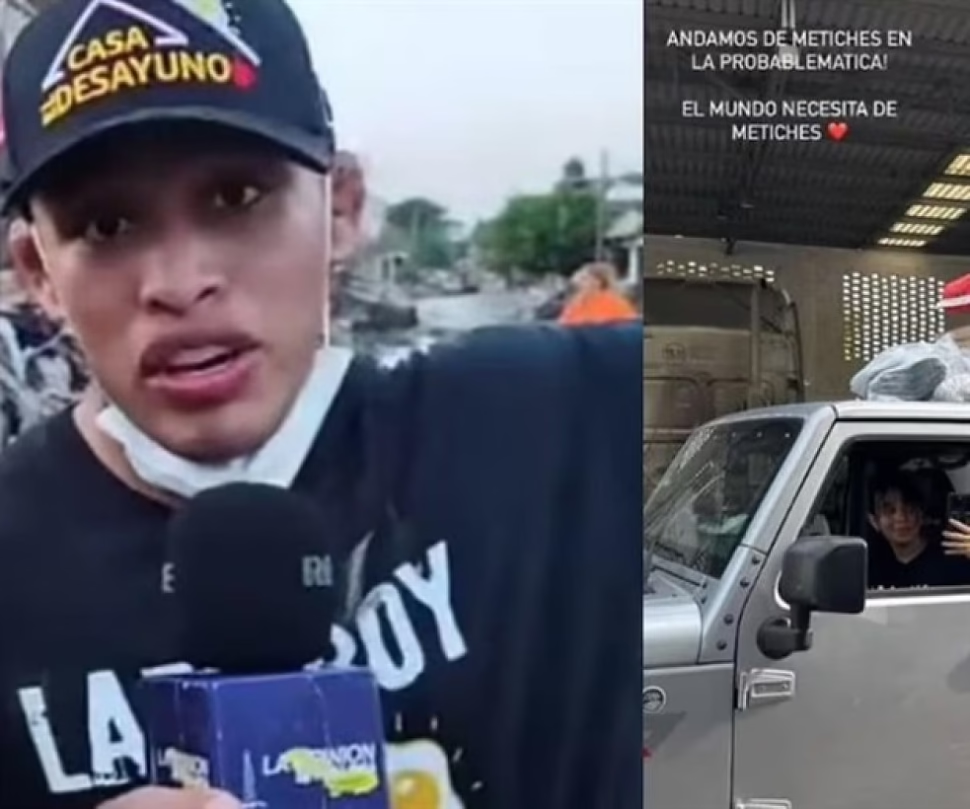
It was then that, from the depths of outrage, a powerful figure emerged. Ronaldo Rodríguez“Lazy Boy” of wrestling, could not remain silent. With the passion of someone defending his own family, he launched a direct message, a challenge etched in fire addressed to the government of Mexico. His words, loaded with a raw and painful truth, crossed screens and consciences: “This is where they should be spending their pin… money”. Each syllable was a hammer blow of reality, an accusation that exposed the stark paradox between waste and urgent need.
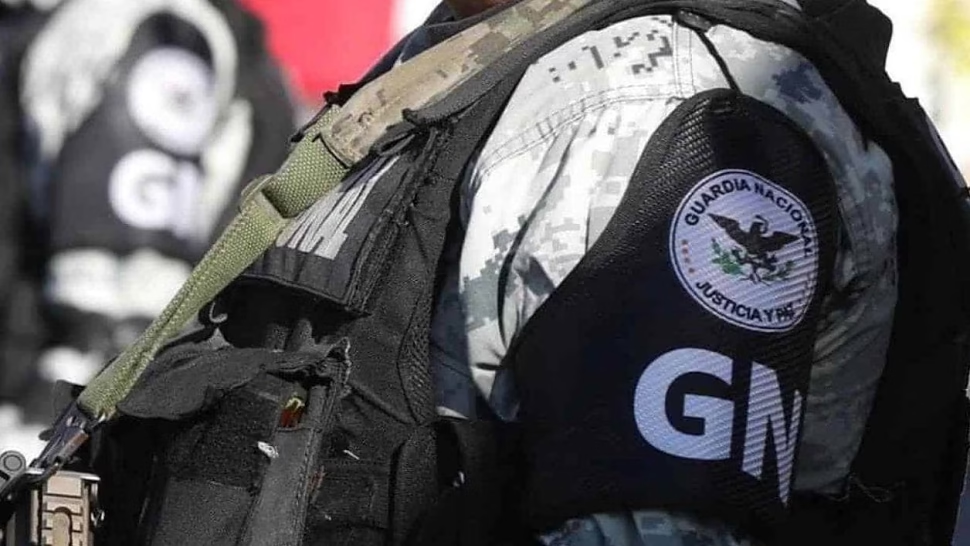
With his soul in his hand, this modern gladiator, although originally from Chiapas, proudly proclaimed to be from Veracruz at heart. He declared, with emotion on the surface, that the true essence of a man is revealed in adversity. “What is happening is horrible. The truth is that… What a shame… that the government is hiding what is happening,” he stated, his voice an echo of the frustration of thousands. He bravely challenged skeptics to see with their own eyes the magnitude of the calamity and ask whether the National Guard or the army had really extended a saving hand. It was a verbal duel between the official narrative and the harrowing evidence on the ground.
Without hesitation, this colossus changed the spotlights for the gloom of the flooded streets. He moved to the epicenter of the disaster, to the municipality of Poza Rica, to literally immerse himself in the fight. He didn’t mind getting dirty to the skin with mud, preferring to go into the hardest hit neighborhoods to deliver supplies with his own hands. He understood, with a wisdom born from the street, the deep mistrust and misinformation that poisoned the environment. But in the midst of so much ruin, he found a flash of eternal light: “Despite all the misfortune there is, people are incredible. People are still positive. […] Seeing their smiles, despite the tragedy, that is priceless.” In every grateful smile, he found the triumph of the human spirit over misfortune.
The Battle of Narratives: Reality vs. Denial
The contest was also fought in the digital field. Through his Instagram account, the Mexican fighter did not limit himself to sharing images of the supplies and his relief work; waged an epic battle for the truth. She contrasted, with the precision of an accurate blow, the governor’s ethereal words with raw, implacable videos that showed the authentic reality that was experienced in the Veracruz territory. Each publication was another chapter in this saga of revelations, a visual testimony that refuted any attempt to minimize suffering.
As this social struggle unfolded, the final tally of the tragedy continued to rise, a grim reminder of the magnitude of the disaster. Seven long days after the severe floods, the government was forced to raise the official number of dead people to 76 souls in the states of Veracruz, Puebla, Hidalgo, San Luis Potosí and Querétaro, with another 39 still missing, leaving a trail of pain and uncertainty that shadowed an entire region. Each issue represented a truncated story, a family drama that was buried under cold statistics.
This story, beyond the emergency caused by the torrential rains, became a symbol, a confrontation between two Mexicos: that of the popular resistance, embodied in the figure of a solidarity fighter, and that of the state machinery, perceived as slow and disconnected. Lazy Boy‘s action transcended mere humanitarian aid; It was an act of rebellion, a palpable demonstration that true strength lies in the community and in the courage of those who dare to face the storm, both natural and institutional. A story where loyalty, truth and compassion are measured not with words, but with tangible actions in the midst of mud and hopelessness.
This is a battle that cannot be forgotten. The bravery of a few illuminates the path of many. Share this story of struggle and solidarity on your social networks so that its echo reaches every corner and helps make reality visible. Explore more content about how civil society organizes in the face of adversity and discover other narratives of citizen power.