
From child star to tragic tendency: the case of Tylor Chase
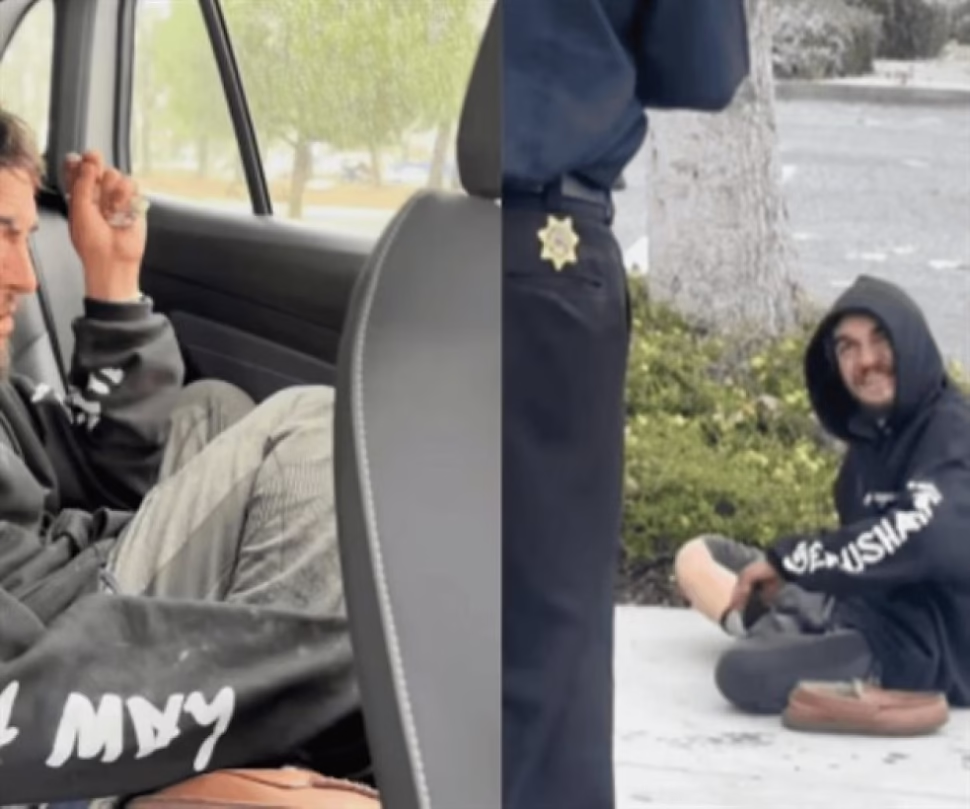
The story of Tylor Chase is the kind of plot twist that not even the most edgy Netflix screenwriter would dare to write. The one who was our screen crush in “Ned’s School Survival Manual” now stars in a much murkier reality show: the fight to get off the streets. During the past holidays, when we were all uploading stories with elves on the shelf, the worrying state of the actor captured, once again, the collective morbidity of the internet. The hardest thing to digest wasn’t seeing him in that situation, but his constant rejection of help, even from former teammates like Daniel Curtis Lee, who took a road trip from Los Angeles only to be met with a “no, thank you” in person. A real “let me rock in my chaos” mood.
The plot complicates when a character who seems to come out of a Mexican drama series with influencer touches enters the scene. Jesús Ignacio, alias “El Chiquilín”, leader of the now famous Spiritual Patrol. This guy and his team have gone viral for their unorthodox method: approaching homeless people with phrases like “Have they told you that you’re a golden mug?” and practically ship them to their rehabilitation center in Tijuana. His most recent mission, and the one that has everyone tagging him to death, is to locate Chase. The plan, according to their videos, is for someone in the United States to take the actor to the border so that they can take charge of his treatment. Basically, a cross-border rescue operation organized by Instagram.
A lifesaver with geographical conditions
Here is the ironic catch-22 of the digital century: the group that claims to be able to help has its clinic in Mexico, and the actor is in California. El Chiquilín has said it clearly: he needs the digital community to act as his eyes, feet and Uber. Let them label him when they find him, convince his family, and hopefully bring him to Tijuana. It is a call to action that mixes network activism with the logistics of an international transfer. Above all, ask for the family’s “vote of confidence,” because in the end, detoxification and recovery cannot begin without the person’s consent. And that, friends, is the most frustrating cliffhanger: having the apparent solution, but not being able to apply it.
Behind the facade of memes and catchy phrases, the work of the Spiritual Patrol brings to the table an uncomfortable conversation about childhood fame, the consequences of entertainment and the limits of help. While some celebrate the intervention, others question the methods. Is this a genuine act of charity or humanitarian content for the feed? The only thing clear is that the fall of a former Nickelodeon icon confronts us with how fragile the path can be after the final credits. The offer of a new chapter is on the table, but the protagonist has not yet decided if he wants to turn the page.
Do you think viral interventions like this are the way to help homeless people?Share this story to broaden the conversation and explore more content about the less glamorous sides of fame and community rehabilitation efforts in our reporting section.


