The Catholic Church and its call to action for national peace
The Catholic Church in Mexico has stated emphatically that the nation urgently requires peace. According to his position, sowing this desired tranquility is a shared responsibility that must be exercised daily by all sectors of society: from those who hold government positions, to those who dedicate themselves to teaching, spiritual accompaniment, and even those citizens who, from their faith and hope, pray and suffer the consequences of violence.
In an editorial published in its medium Desde la Fe, the ecclesial institution expressed: “Peace is built day by day. It is woven in the small, in the everyday, often far from the spotlight. It is the fruit of justice, forgiveness and the active good that each one decides to do.” This statement emphasizes a practical and constant approach, far from spectacular solutions, and places it as the tangible result of concrete actions and personal decisions.
Concrete initiatives to promote harmony
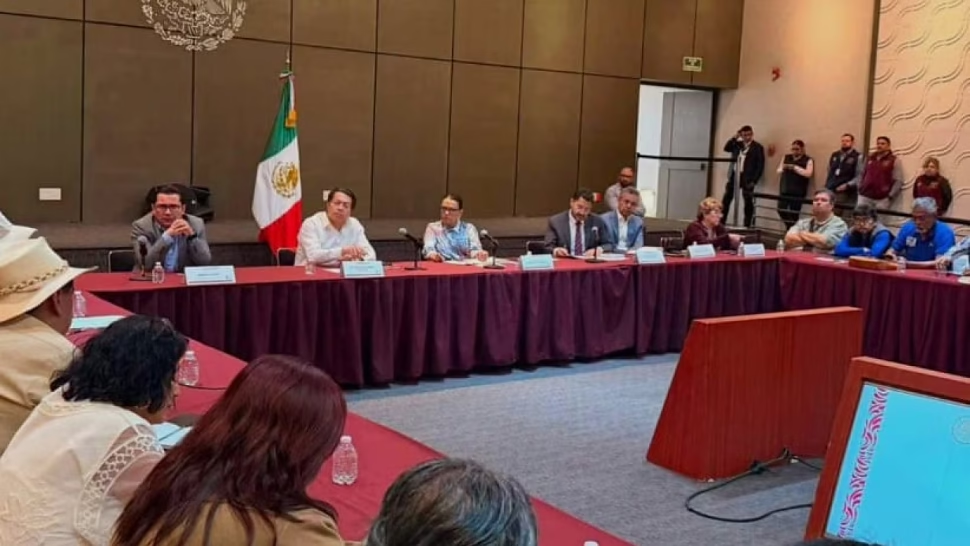
The pastoral document highlights the emergence of brave spaces dedicated to this purpose. One of the most significant is the National Dialogue for Peace initiative, a project that promotes conversations in universities, parishes and community centers. In these forums, victims of violence, young people, academics, believers and non-believers come together with the fundamental purpose of listening and being heard, creating a more resilient social fabric.
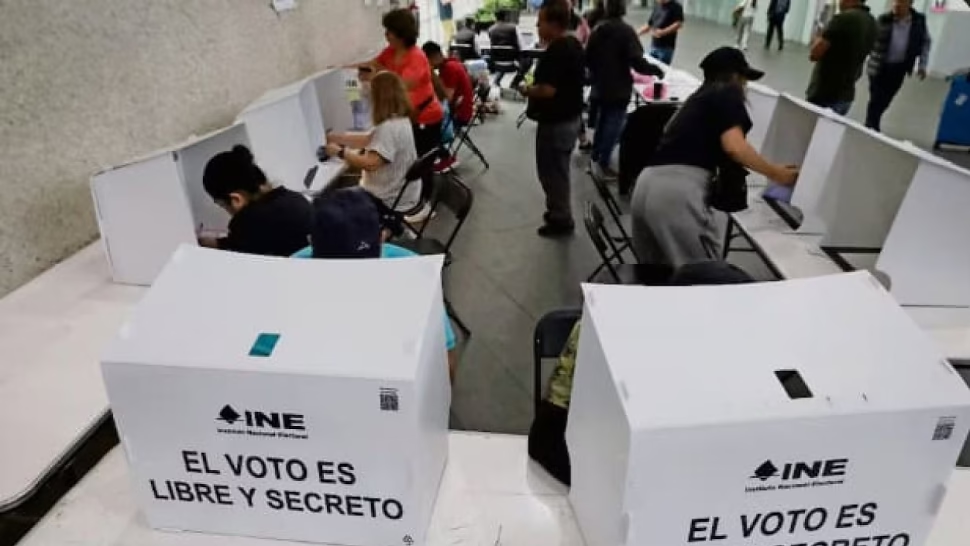
In parallel, peace mailboxes have been installed in various parishes of the Archdiocese of Mexico. These small boxes function as a channel for the faithful to deposit requests, write the names of missing people, offer words of comfort or express intentions seeking emotional and spiritual relief. It is a symbolic and at the same time deeply human mechanism to externalize burdens.
Complementarily, the Church reports the strengthening of its listening centers. In these places, priests, duly trained lay people and pastoral agents provide specialized accompaniment through assertive listening to individuals who carry stories marked by fear, loss or injustice. This service represents a fundamental pillar in the healing of social wounds.
A crucial advance noted is the opening of more spaces within parish communities so that victims of violence have presence, voice and, above all, dignity. The Church insists that these people “are not numbers in a statistic, but children of God who deserve a safe place,” thus promoting an approach centered on the person and their inherent value.
The origin of peace: the family and the immediate environment
The editorial makes a deep reflection on the origin of true peace, identifying the family as the first school where the fundamental skills for coexistence are learned. It is in this core where, according to the doctrine, one learns to dialogue, to resolve conflicts without resorting to humiliation, and to cultivate the ability to ask for and offer forgiveness.
In addition, it is emphasized that peace arises in the immediate environment of each individual. This materializes in everyday decisions: when you choose not to respond with violence, when you do a job honestly, when you accompany a sick neighbor or when you dedicate time, talent or simply listen to those who need it. It is these seemingly minor actions that build the foundations of a harmonious society.
Finally, the Church calls to remember and act according to the invitation of the Conference of the Mexican Episcopate (CEM), urging that all communities unite in concrete actions for peace. “We reinforce this invitation so that each community, each parish and each family does something concrete for peace, even if it seems simple,” the text concludes, quoting the Beatitudes of the Gospel: “Blessed are those who work for peace, for they will be called children of God”. This message reinforces the vision that peacebuilding is a collective mission and a fundamental human vocation.
Do you support these initiatives? Share this information on your social networks to help spread the message of peace and explore more content related to building the social fabric on our site.