Treasury announces historic investment in Economic Package 2026

An unprecedented bet that redefines the destiny of national resources and sets the course of the country.

The Dawn of an Unprecedented Fiscal Era

In a turn that will mark the destiny of the nation, the Secretary of Treasury and Public Credit, Edgar Amador Zamora, emerged as the herald of a monumental transformation. With the solemnity of someone revealing a state secret, he declared that the Expenditure Budget Project 2026 is built on unbreakable foundations: without a tax reform that shakes the foundations of taxpayers, without altering taxes in a drastic way, and with a fierce and relentless fight against the cancer of corruption. Under this new dawn, tax revenues are projected into the stratosphere, reaching a historic 15.1%.

What is the secret weapon behind this feat? An all-out offensive. The intensification of the combat against tax evasion and avoidance becomes a national crusade. The simplification of bureaucratic procedures is not a mere promise, but a bridge to efficiency. And customs modernization is the digital fortress that will guard every penny, sealing the cracks through which the people’s heritage escaped.

RelatedThe 2026 Economic Package redefines social investment in Mexico

The Pillars of an Epic Economic Battle

At the heart of this epic financial battle, a strategic move left everyone breathless: the deductibility of the multiple banking fees intended for the payment of Fobaproa liabilities. Amador Zamora, with the mastery of a great strategist, explained that this is not a simple accounting adjustment. It is an act of fiscal harmony that aligns Mexico’s destiny with that of giants like the United States and Canada, where such a deduction simply does not exist. It is a move that balances the balance between contribution and deduction, a calculated sacrifice that could reduce an expense intended to rescue the banks themselves, diverting those resources towards the true hero of this story: the people.

But the plot thickens. Contributions to sugar-sweetened beverages and other goods are not a mere collection tax. No! They are the cornerstone of a much more ambitious master plan. They have a deep and visionary logic: finance health spending, inscribing it in the administration’s health policy. Every peso raised is a bullet in the chamber to win the war for the well-being of Mexicans.

And then, the announcement came that resounded like thunder in the silence of uncertainty. Edgar Amador, with a voice full of the conviction of someone who is writing history, assured that the Economic Package 2026 is, neither more nor less, Historical in social investment. The figures, so colossal that they defy the imagination, were revealed one by one, like the treasures of a legendary kingdom. The wellness programs reach the astronomical figure of 987 billion pesos, representing something never seen before: a little more than 2.5% of the Gross Domestic Product. It is a total commitment, an injection of life and hope directly into the hearts of the most vulnerable families.

The final breakdown is the map of a new possible world. A destination where 966 billion are allocated to health, strengthening hospitals and saving lives. 399 billion for housing, building homes and dreams. Education, the pillar of the future, receives a monumental injection of 1.1 billion pesos. The investment in the country’s tomorrow is estimated at 1.3 billion, and security, that desire for peace, will have 201 billion to protect each citizen. This is not just an economic proposal; It is a promise of national redemption, a definitive chapter in the fight for progress.

This is the time to be part of history! Share this news on your social networks and let’s echo a transformation that will define our future. Explore more content related to public finances and stay informed.
Maestros de la CNTE bloquean Cuernavaca; exigen abrogación de ley ISSSTE

Miles de docentes exigen eliminar el sistema de cuentas individuales y regresar a pensiones solidarias.

Protestas magisteriales en Morelos

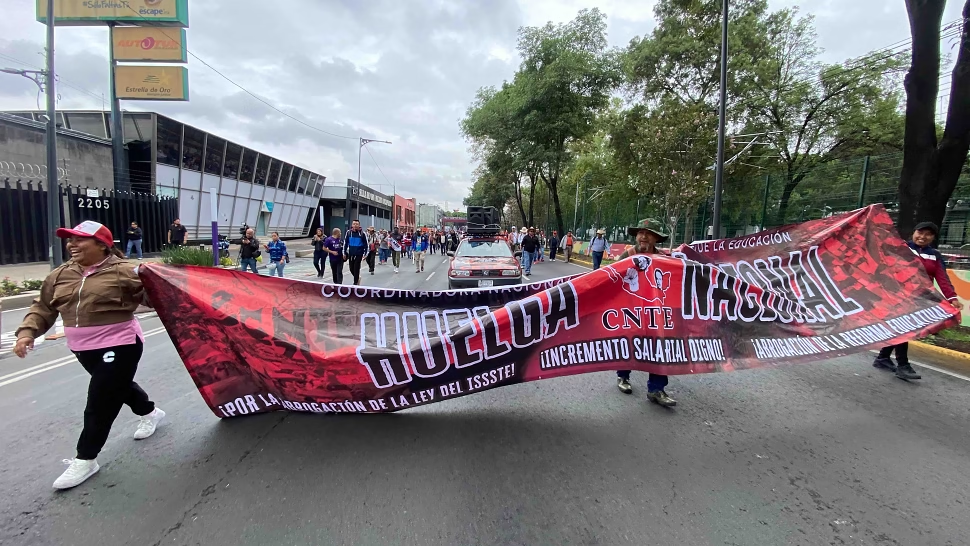
Este martes, contingentes de docentes de la Coordinadora Nacional de Trabajadores de la Educación (CNTE) realizaron bloqueos y toma de casetas en varias entidades. En Morelos, más de cuatro mil maestros marcharon en Cuernavaca para apoyar a sus compañeros en la Ciudad de México y exigir la abrogación de la Ley del ISSSTE de 2007.

Las afectaciones viales paralizaron gran parte del centro de la capital morelense durante horas. Una comisión negociadora se reunió con autoridades estatales en Palacio de Gobierno.

RelatedCNTE teachers block Pensionissste in demand of fair pensions

¿Qué demandan?

“La exigencia central es eliminar el sistema de cuentas individuales y regresar al régimen de pensiones solidarias”, explicó Julita Villalba, vocera del Movimiento Magisterial de Bases (MMB).

Aunque reconoció que existe una propuesta para modificar el esquema de Afores, insistió en que los trabajadores buscan recuperar un modelo que garantice mejores condiciones de retiro.

Los docentes pidieron a la presidenta Claudia Sheinbaum demostrar el carácter humanista de su gobierno y atender una demanda que consideran ignorada.

Próximas acciones

El movimiento anunció que las protestas continuarán. Mañana realizarán una nueva marcha de El Calvario al Zócalo de Cuernavaca. El jueves partirán de Plan de Ayala, a la altura del IMSS, hacia el centro de la ciudad. Además, un contingente viajará a la capital del país para reforzar las movilizaciones nacionales.

Las autoridades estatales no han emitido un pronunciamiento oficial sobre los acuerdos alcanzados en la reunión con la comisión magisterial.

Continue reading

Morena denuncia presunta compra de votos con códigos QR en Coahuila

Morena presentó fotos y videos de un sistema con códigos QR para comprobar el voto.

Morena señala presunto esquema de coacción electoral

La dirigencia nacional de Morena denunció un supuesto mecanismo de compra de votos durante las elecciones en Coahuila y Durango. Según la acusación, el PRI habría perfeccionado un sistema para influir en los resultados.

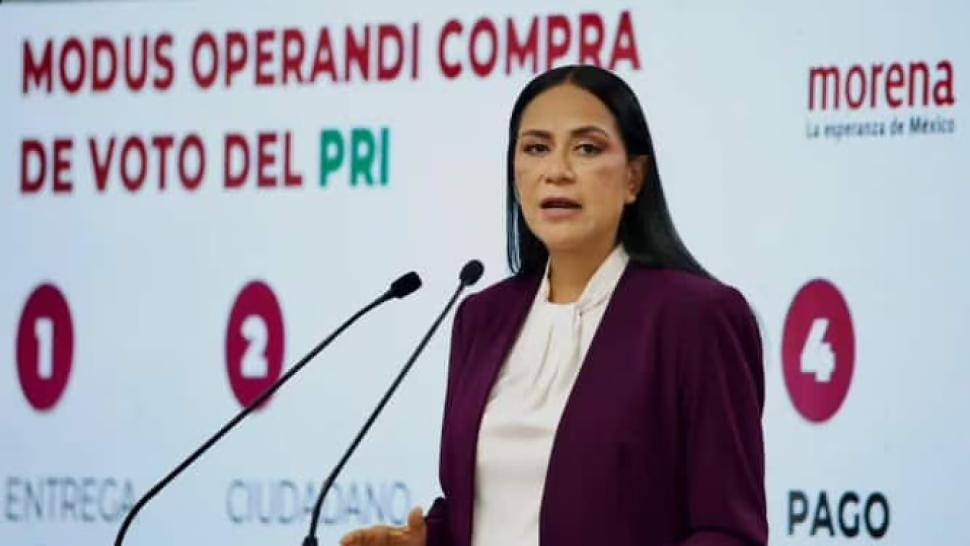
Ariadna Montiel, presidenta nacional de Morena, afirmó que cuentan con pruebas fotográficas y de video. Mostrarían la operación de un sistema basado en códigos QR, utilizados para identificar a ciudadanos que presuntamente recibían dinero a cambio de emitir su voto por el PRI.

RelatedMorena denuncia compra de votos con códigos QR en Coahuila

El mecanismo detrás de los códigos QR

De acuerdo con la versión de Morena, los operadores entregaban códigos a los ciudadanos antes y durante la jornada electoral. Luego, los votantes debían subir a una plataforma una imagen de su boleta para comprobar el sentido del voto y recibir el pago.

Montiel señaló que este método ya se habría probado en elecciones municipales de Durango, y que en Coahuila se repitió. Allí, el PRI ganó los 16 distritos para el Congreso local.

Acciones ante las autoridades

La dirigente morenista pidió a las autoridades electorales investigar estas prácticas. Aseguró que su partido seguirá presentando pruebas para defender la legitimidad del voto y denunciar lo que calificó como irregularidades.

Continue reading

Investigan a presunta célula radical de Ayotzinapa por explosivos

Hallan 59 artefactos caseros en autobuses; apuntan a célula de Ayotzinapa.

Autoridades investigan a presunta célula radical de Ayotzinapa

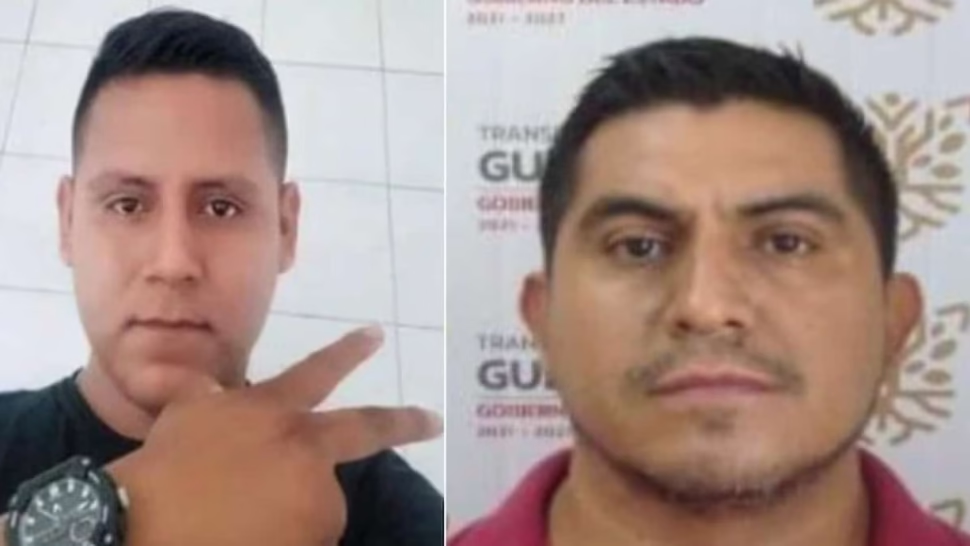
Las autoridades mantienen bajo la lupa a un grupo vinculado al Comité Estudiantil de la Normal Rural “Raúl Isidro Burgos” de Ayotzinapa. El hallazgo de 59 artefactos explosivos de fabricación casera desató las pesquisas. Los dispositivos fueron encontrados en autobuses donde viajaban estudiantes y padres de los 43 normalistas desaparecidos.

De acuerdo con reportes de inteligencia, la célula habría organizado la fabricación y traslado de cientos de artefactos improvisados para su posible uso en movilizaciones en la Ciudad de México.

RelatedAseguran 59 explosivos en autobuses de Ayotzinapa en la México-Cuernavaca

Señalados clave en la investigación

Entre los implicados figura Jesús García Estrada, conocido como “El Coquillo”, a quien ubican como operador de la estructura. También se menciona a Juan Miguel Hernández Carbajal, alias “El Padrino” o “El Mamado”, quien tendría influencia sobre grupos radicales relacionados con Ayotzinapa. Las autoridades analizan redes de apoyo y mecanismos de financiamiento.

El hallazgo ocurrió en la caseta de cobro número uno Tlalpan, sobre la autopista México-Cuernavaca. Según los primeros análisis, los explosivos estaban elaborados con tubos de PVC, pólvora y mecanismos manuales de activación.

Continue reading