


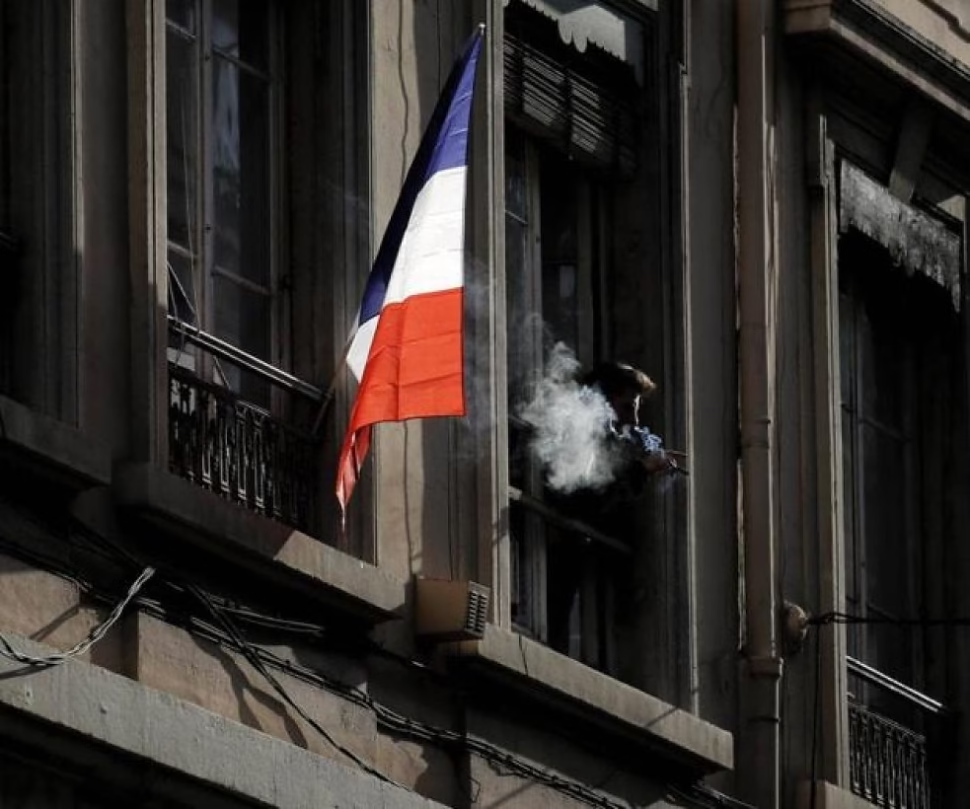
France tightens its anti-smoking legislation in public spaces
The French government has taken a decisive step in its battle against smoking by implementing a comprehensive ban in parks, beaches, sports venues and school environments. This measure, which will come into force on July 1, seeks to reduce the exposure of minors to smoke and denormalize cigarette consumption in society.
Technical details of the new regulations
The decree published last Saturday establishes specific perimeters around educational institutions and children’s congregation areas, where the act of smoking will be completely prohibited. Unlike previous regulations (such as those of 2007-2008 that affected bars and restaurants), this regulation focuses on open spaces, an area where traditionally there was greater permissiveness.
According to data from the Ministry of Health, the measure responds to alarming figures: 75,000 deaths annually from diseases linked to tobacco, with a special incidence in adolescents (15% of 17-year-olds are regular smokers). Despite record taxes (packages over €12), France maintains one of the highest consumption rates in Europe (30% in adults).
Social impact and reactions
Philippe Bergerot, president of the French League Against Cancer, explains the cultural challenge: “In France the perception persists that these laws limit individual freedoms”. However, he emphasizes that the objective is to protect collective health, especially against the black tobacco market that flourishes despite the restrictions.
Citizen opinions show division: while mothers like Anabelle Cermell applaud the measure to protect their children, other citizens like Natacha Uzan consider it “excessively repressive”. It should be noted that electronic cigarettes are excluded from the ban, a decision that has generated debate among lung health specialists.
European context and next steps
France thus follows the example of countries like the United Kingdom and Sweden, although with nuances: restaurant terraces (prohibited in Spain) remain permitted areas. The ministerial order that will define the exact geographical limits will be published in the coming days, completing the legal framework.
This policy is part of a comprehensive strategy that combines economic deterrence (taxes), spatial restrictions and educational campaigns. Public health experts highlight its potential to reduce passive smoking and deter new generations, although they warn that its success will depend on constant control and alternatives for adult smokers.
Does this measure seem right to you? Share this analysis on your social networks and join the debate on public health. Explore more content on health legislation in our specialized section.


